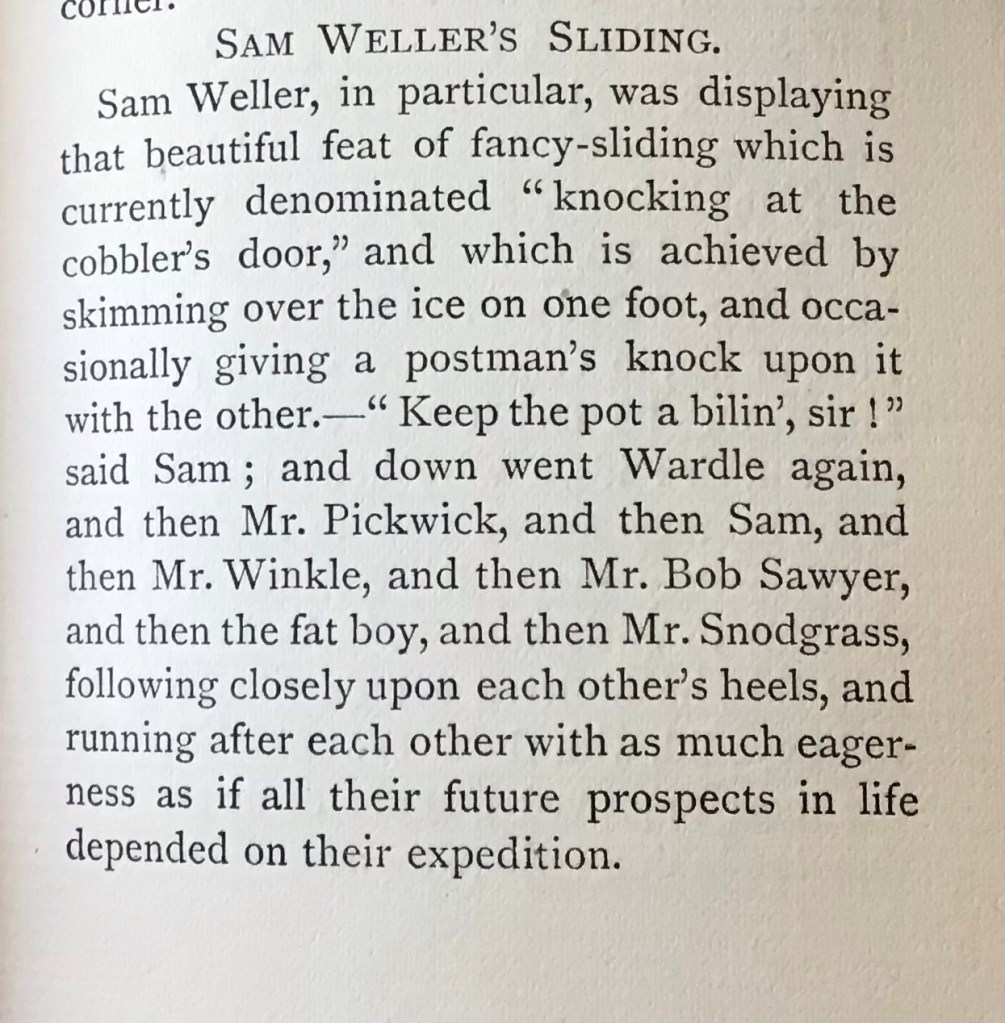
A post for icy weather…

No small part of the success of ‘The Pickwick Papers’ published in 1837 was the inspired creation by Dickens of Samuel Weller, Pickwick’s servant and right-hand man and the creation of his father, coachman Toby Weller. It’s hard not to love this little picture of a group of respectable gentlemen inspired by Sam enjoying the ice on a freezing day.

So popular were the characters of Weller and his father that they were to appear again in ‘Master Humphrey’s Clock’ – a periodical published by Dickens between 1840 and 1841 and where he tried out the early chapters of both ‘The Old Curiosity Shop’ and ‘Barnaby Rudge’ were tried out.
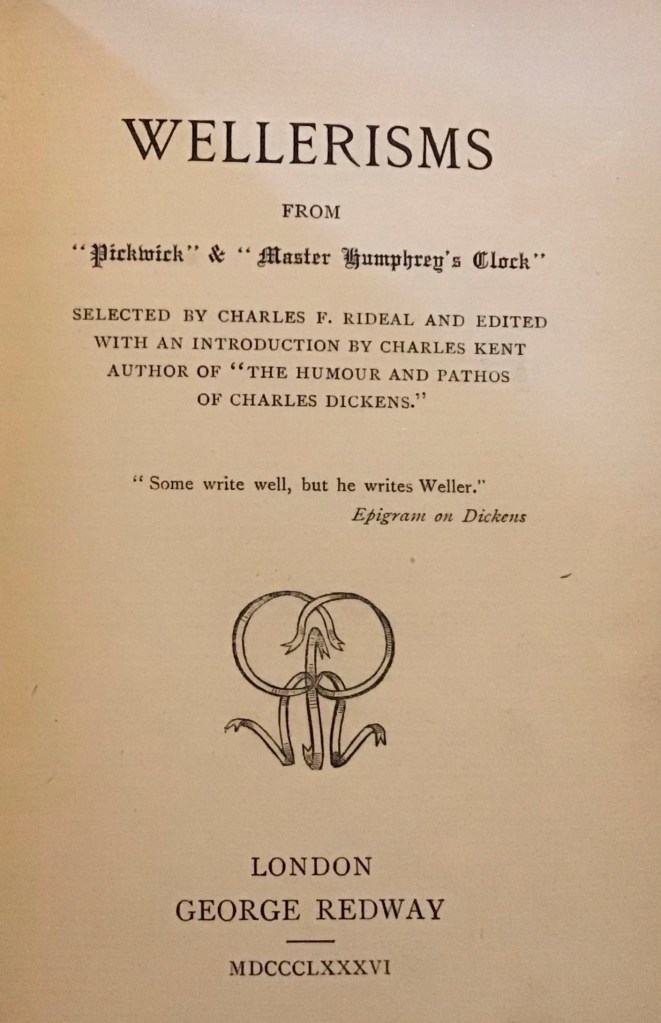
Even forty years later their popularity remained such that this volume of their sayings and exploits could still be successfully produced.
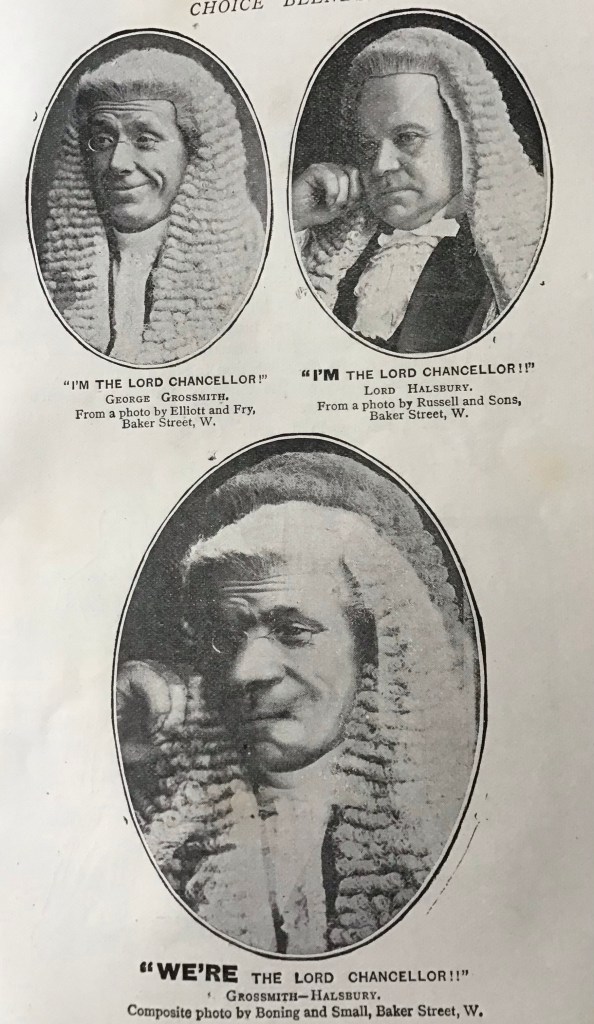
A couple more glimpses….

A couple more moments from ‘The Idler’ of 1892. Another of the magazine’s modern ‘Choice Blends’ – the creation of a composite photograph from individual pictures. This one contains a neat joke. The image on the right is Lord Halsbury who served as the British Lord Chancellor in 1885, from 1886-1892 and again from 1895-1905. The photograph in the left shows the great comic actor, singer, composer and author George Grossmith (1847-1912). Grossmith created the great comic roles in a number of Gilbert and Sullivan comic operas. In 1882 he had a created a significant success as the Lord Chancellor in ‘Iolanthe.’ Hence the charming composite above.

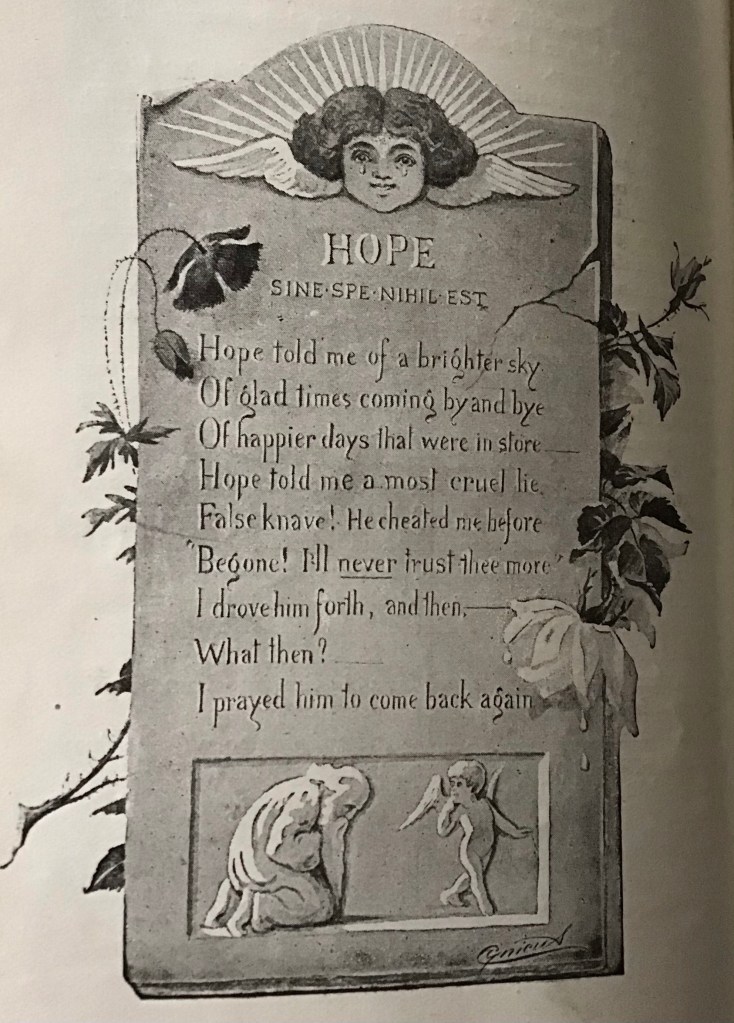
This little verse seems to me to capture the changing time a little too. It begins with the Victorian sentimentality we might expect from the date but with a neat, modern twist at the end.

Changing times

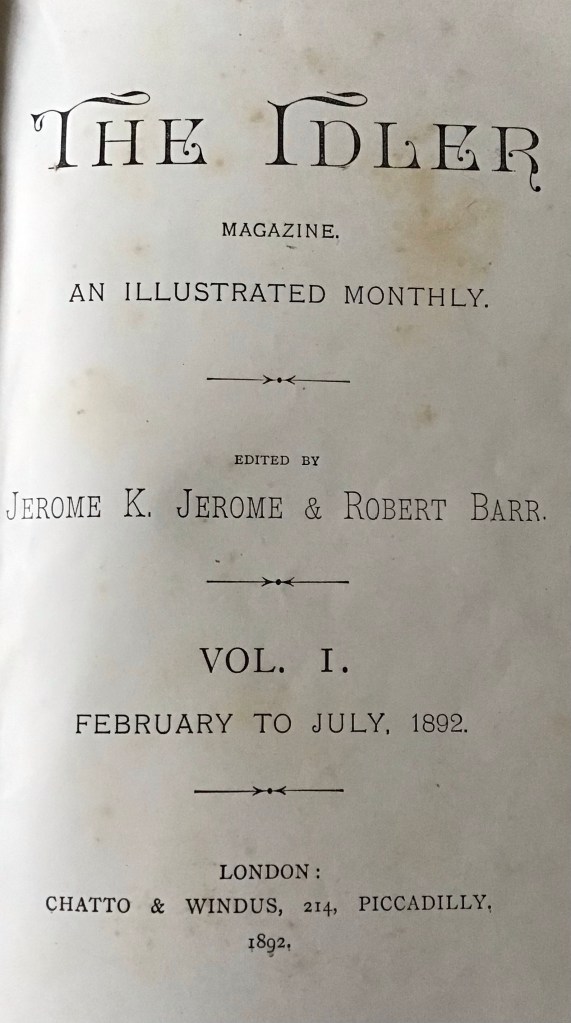
Now, a couple of posts about a magazine that seems to me to catch the modern mood. This is a volume comprising the first issues (February to July 1892) of ‘The Idler’ magazine published between 1892 and 1911. Founded by Robert Barr it was a journal for the idle gentleman, a mix of humorous pieces of all sorts, short stories and serials, illustrations by some of the finest writers and illustrators of the time. Barr brought in Jerome K Jerome in help editorially – a shrewd choice. Jerome was at the height of his game following the extraordinary success of ‘Three Men in a Boat’, published in 1889 and still filling the public imagination.

A Victorian magazine but full of a different mood. It belongs to the 1890s, such a transitional decade for the arts and society. It’s satiric, forward-looking and light-hearted. ‘The Yellow Book’ was soon to follow in 1894.

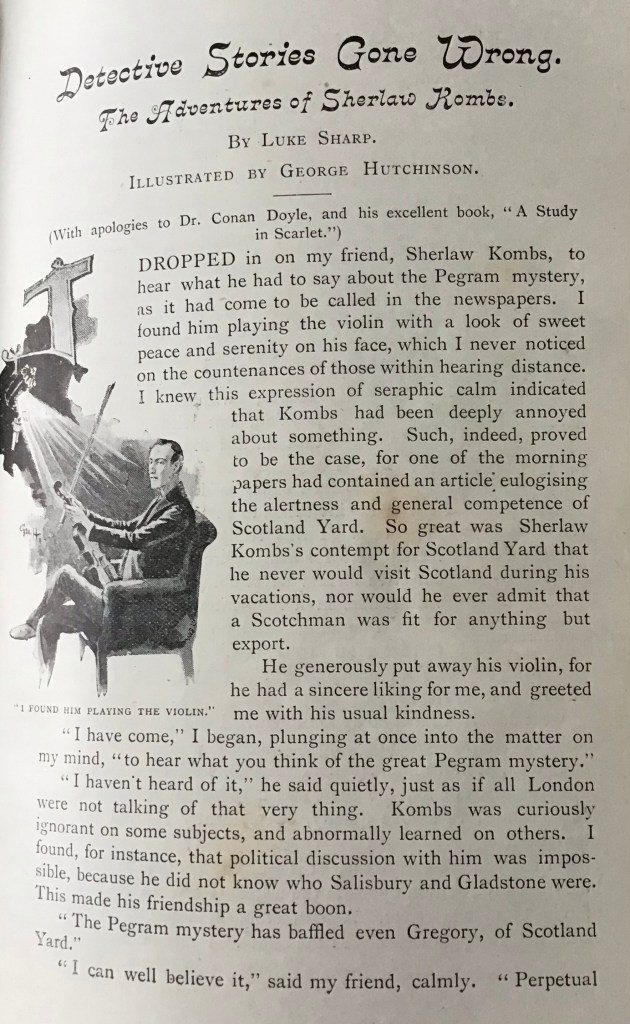
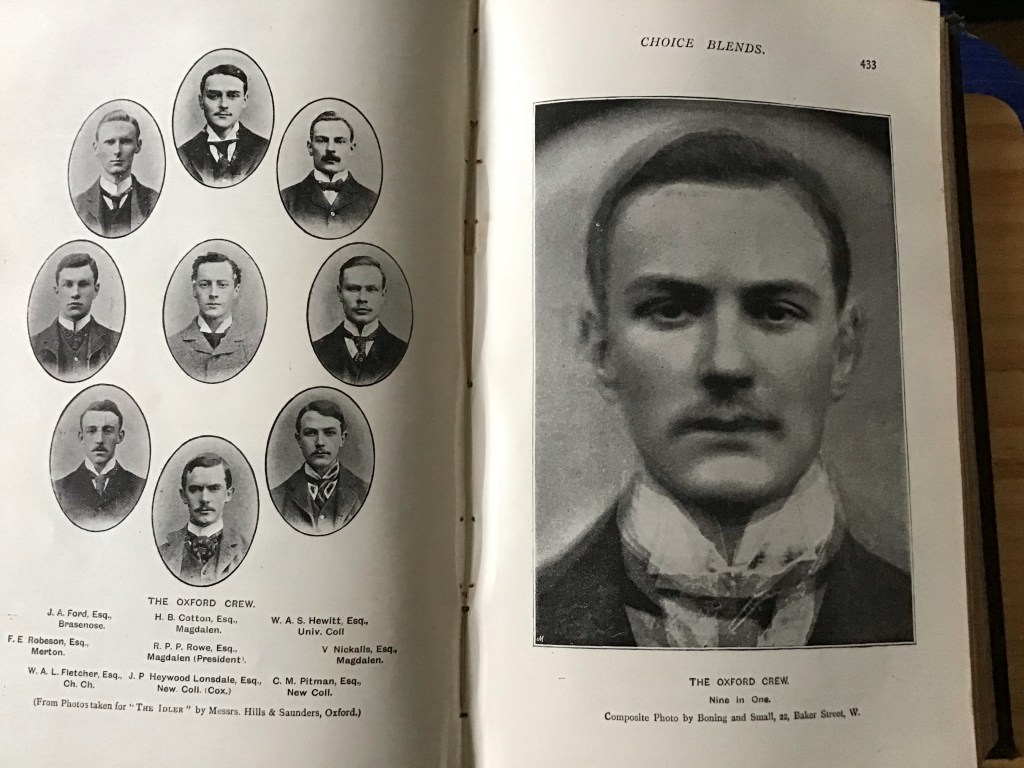
Two things that capture the mood of the magazine. The first is the beginning of a neat little Sherlock Holmes parody (above). Sherlock Holmes was at the height of his powers too, ‘The Sign of Four’ had been published in 1890 and this satire was a year before Holmes was supposedly to fall from the Reichenbach Falls. Then, what could be more modern with what ‘The Idler’ called ‘Choice Blends.’ State of the art camera technology must have been used to merge individual photos to form a composite image. In the one below the faces of the Oxford University Boat Race crew have been merged into one image. Modern, indeed.

A story for winter…

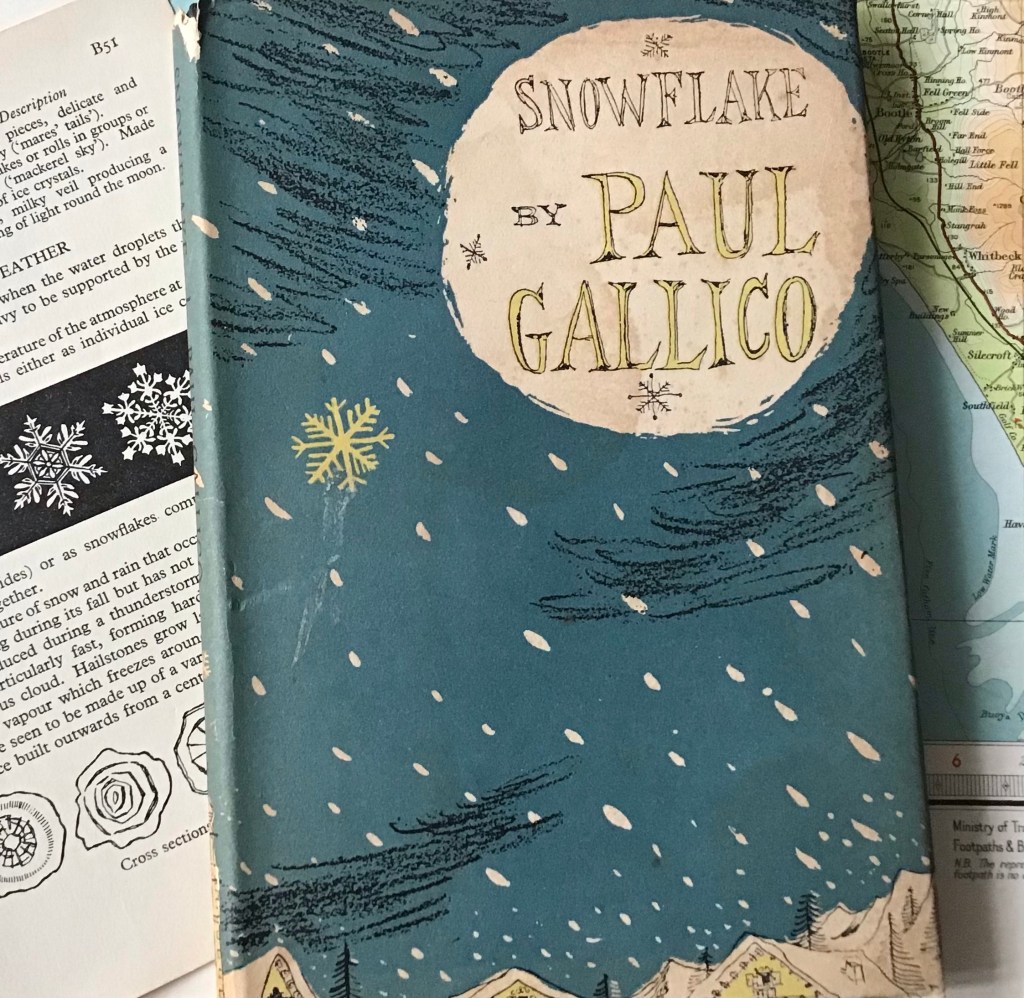
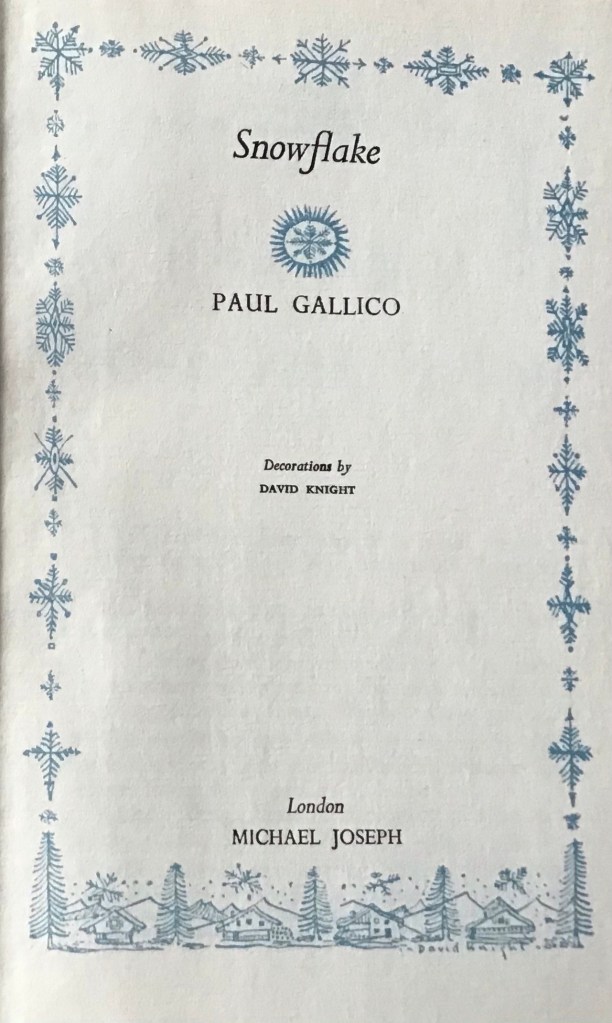
‘The Snowflake was born on a cold, winter’s day far up in the sky, many miles above the earth.

Her birth took place in the heart of a grey cloud that swept over the land driven by the icy winds.

It all came about from one moment to the next.’

Before I write a little bit more about the book, I’d like to talk about how I got my copy. There is a special excitement in handling a book which has been chosen for you especially when it’s been chosen by someone who you’ve never met but with whom you’ve shared the story of your reading life. This is how I received ‘Snowflake.’ It came from a wonderful subscription service provided by the bookshop Lost in Books in Cornwall (www.lost-in-book.co.uk). Each book comes with a specially curated selection of ephemera (I’ve included some in the first photograph) which is a delight. Wonderful.

Like much of Gallico’s work, ‘Snowflake’ seems deceptively simple in style but builds to a moving fable of the nature of being alive. Snowflake finds herself inexplicably alive and falling into a new world. She begins to explore and understand the world, partners, has a family, loses them and returns back into a greater whole.

This first edition is a delicately produced, beautiful book.

A Christmas Carol

A final Christmas post…

Every Christmas, more or less, belongs to ‘A Christmas Carol.’ It is densely woven into our idea and vision of what Christmas is. This year, however, the story of Scrooge and his second chance, seems to have been omnipresent. Adaptations, stagings and dramatised readings have abounded. Live on stage ‘The Bridge’ (wonderful), live streamed from the Old Vic (visceral) and a tremendous one-man show from the Dickens Museum.

First published in December 1843, the story has travelled far beyond the narrow confines of its time. What pulls us back again and again to the story? Few of us would choose to identify ourselves with Scrooge, I suppose, but we can all identify with the hope of a second chance and to make some degree of peace with the events of the past.

Perhaps this year the memorable moment we should take away from the story is Scrooge’s exultation on awakening after his final ghostly visitation, to find himself still alive, able to enjoy the next day and the next.

“Best and happiest of all, the Time before him was his own, to make amends in!”

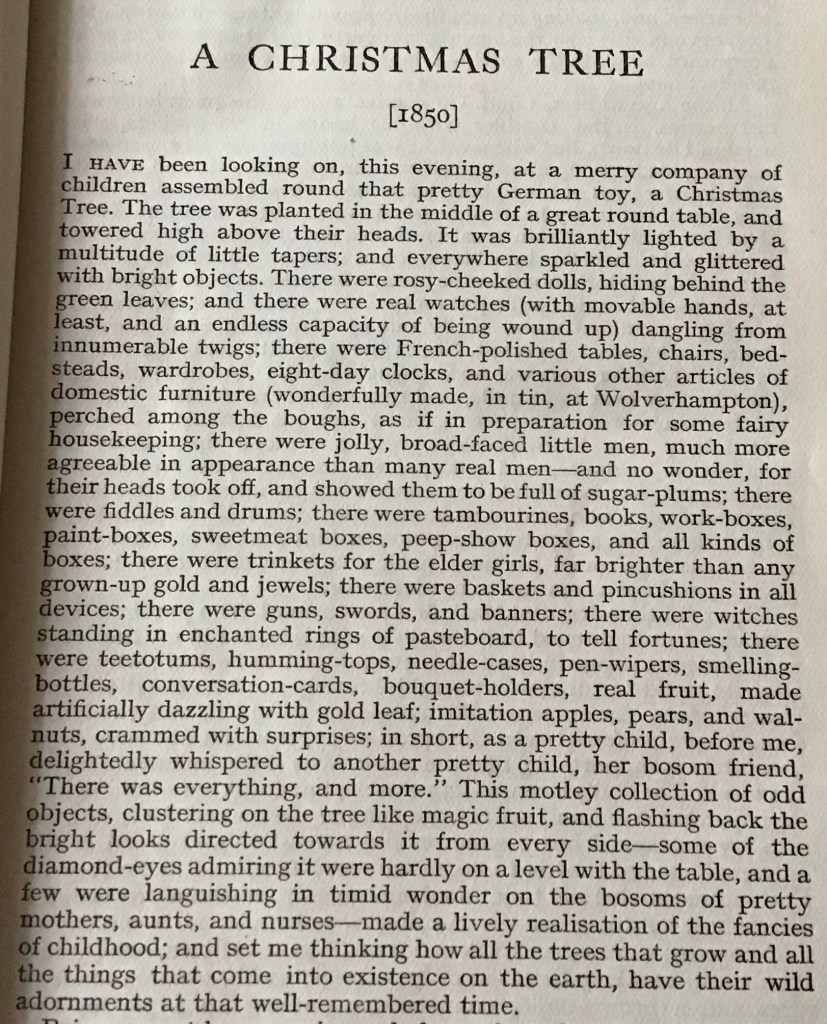
The Christmas Tree

Between Christmas and New Year is a great time to keep appreciating the Christmas Tree. This wonderful, excessive piece of Christmas description is Dickens, of course, from a magazine piece of 1850. This is later than two of the great descriptions of Christmas excess with which we are far more familiar – ‘A Christmas Carol’ published in 1843 and the wonderful Christmas section of ‘The Pickwick Papers’ written in 1836.

There are lots of points of interest here. The opening of the piece reminds us of the relative newness of the Christmas tree as a central feature of household celebrations. The multitude of toys and small gifts hung from the tree are enough to fill anyone with wonder. Dickens captures perfectly the transformative nature of light and occasion as he describes the cheap tin toys acquiring weight and lustre on the tree and in the eyes of the watchers.

Dickens goes on in the remainder of the piece to reminisce about his own memories of toys and playthings, the power of toy theatres, storybooks, dolls houses and their power to delight and sometimes terrify.

Winter weather

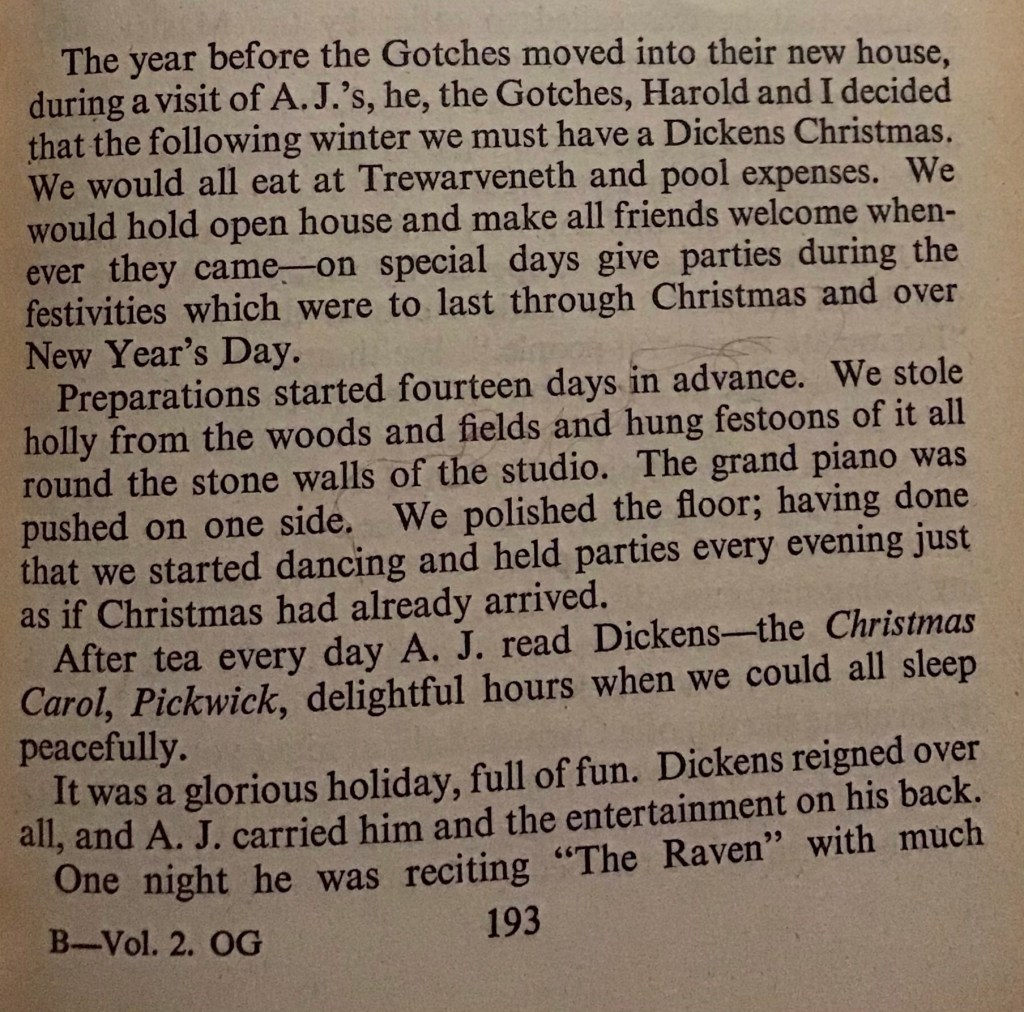
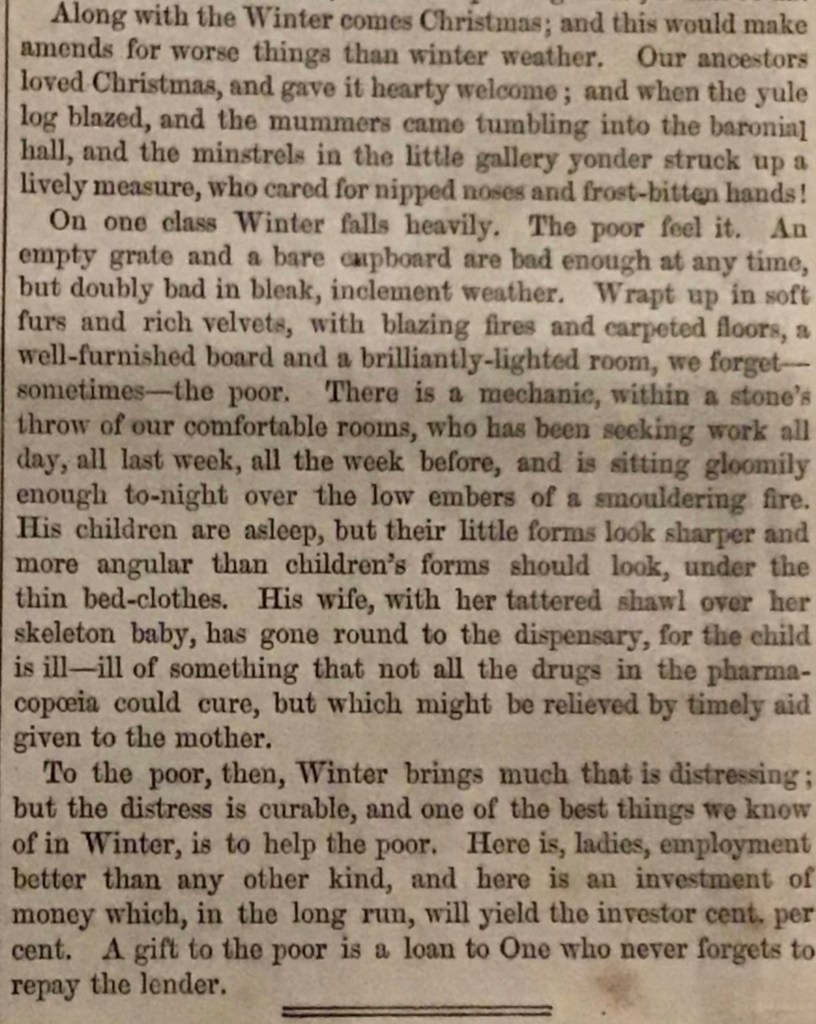
We only have to think of Dickens, everywhere from ‘A Christmas Carol’ to ‘The Pickwick Papers’ to think of vivid, bitter descriptions of the cold. Here ‘The Ladies’ Treasury’ magazine of 1858 reflects on the impact of the bitter cold of the winter as a call to arms for ladies to act to help those poor and in need – a plea Dickens would no doubt have supported.

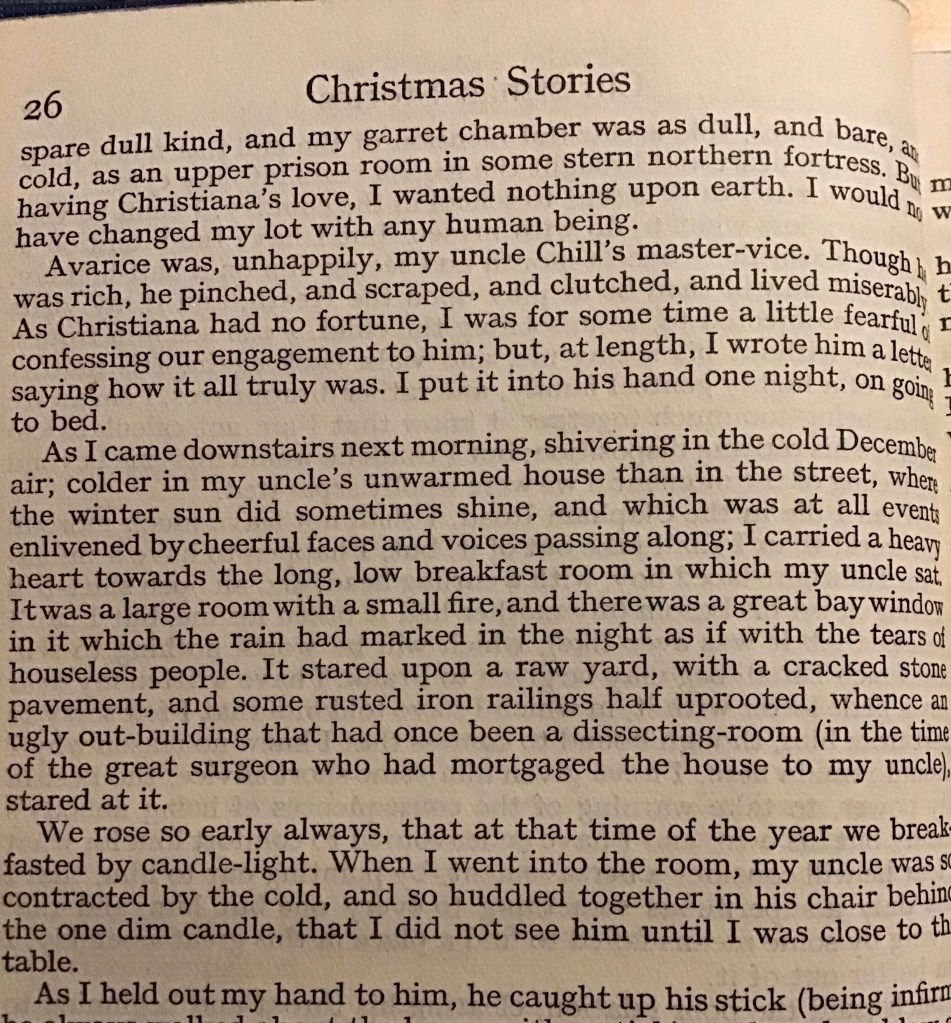
Cold weather, cold heart is certainly the case in ‘The Poor Relation’s Story’ written by Dickens in 1852. The narrator tells us of his hopes to marry as a young man while he lived in the house of his uncle Chill (the clue is there in the name. The coldness of his uncle’s heart freezes the household.

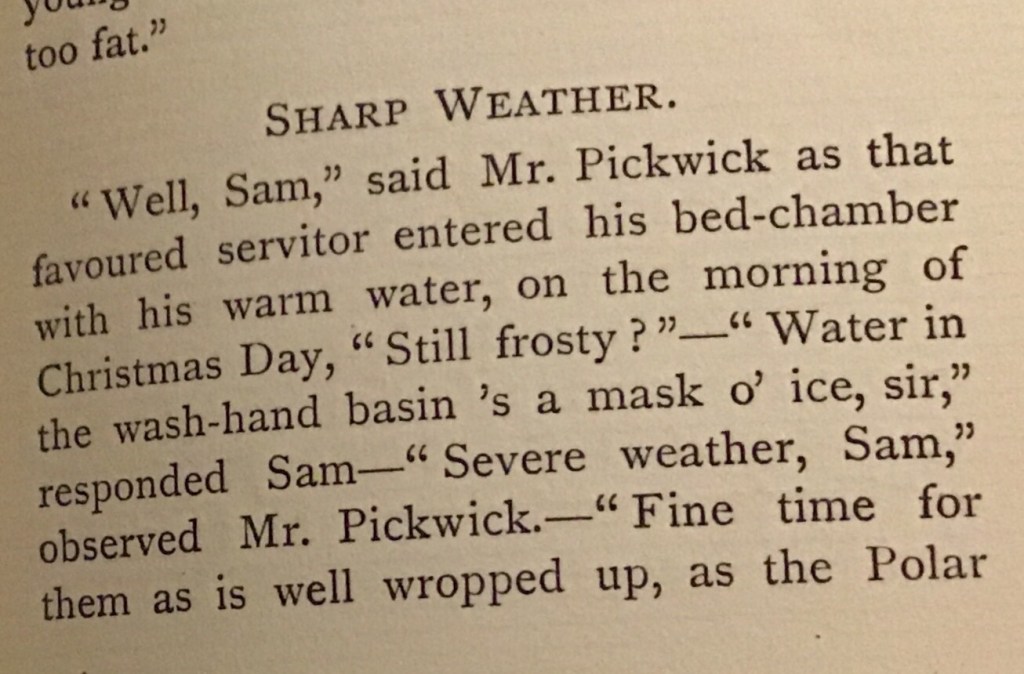
The last word today though belongs to Sam Weller, Mr Pickwick’s wonderful servant whose wisdom runs through that extraordinary novel.