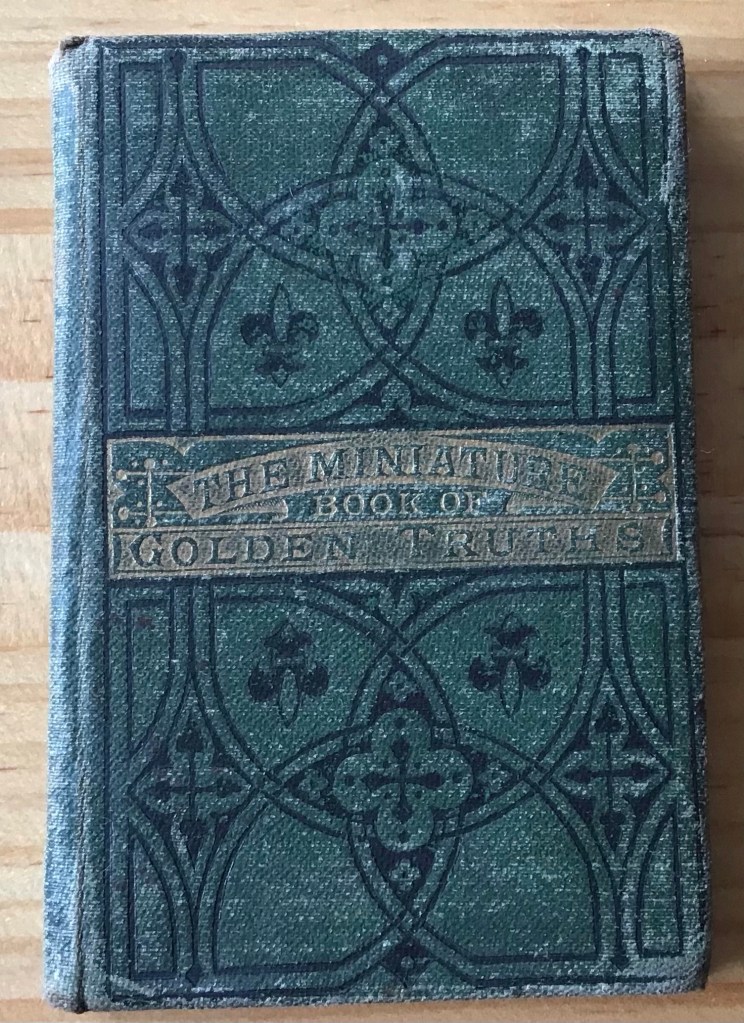
We see again the enduring popularity of these little collections of thoughts for every day, maxims to live by in this little book published by Ward, Lock & Tyler. The book is undated but must I think belong to the period 1865 and 1873 when the publishers Ward and Lock had Tyler as an additional partner.
Perhaps a prize or a birthday gift…..
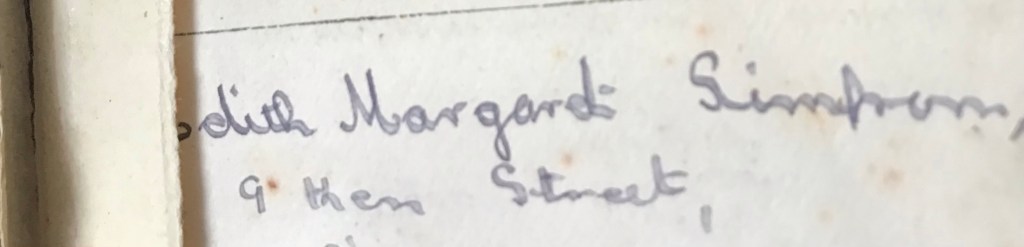
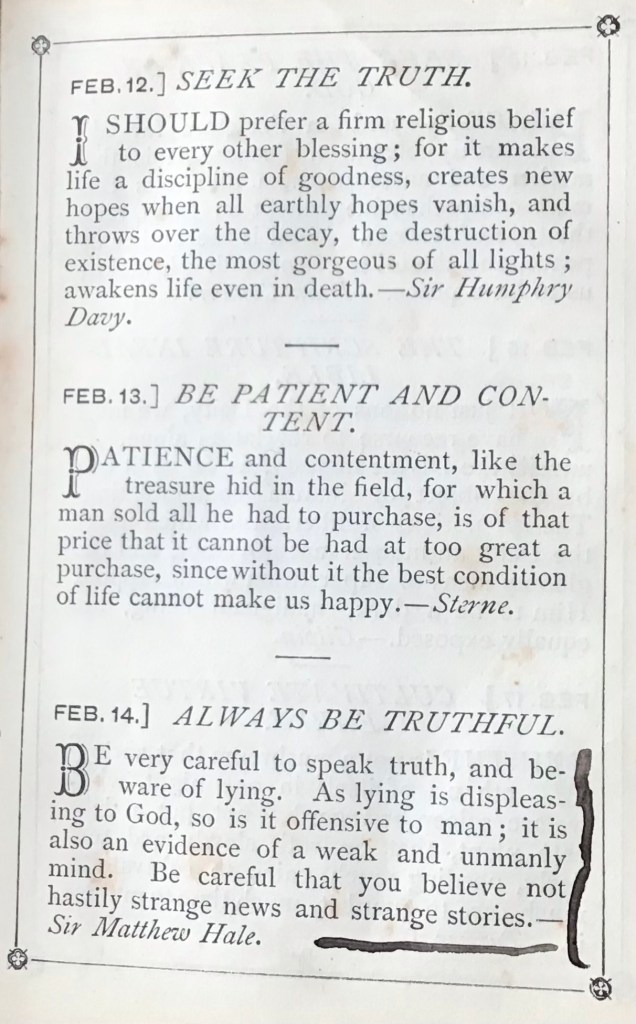
Much given as gifts or prizes, these neat, small books, easily held in the hand or carried, were very popular. The owner of this copy, Edith Margaret Simpson, had underlined one particular thought, her birthday perhaps…
The ‘Treasure Trove’, close to a hundred years old, shows us the great pleasure and consolations of the collecting up of small things from the past, from our reading and our learning. Half-remembered quotes or reflections are easily found or checked now but a hundred years ago a reader would need something like the newspaper column or anthology here.
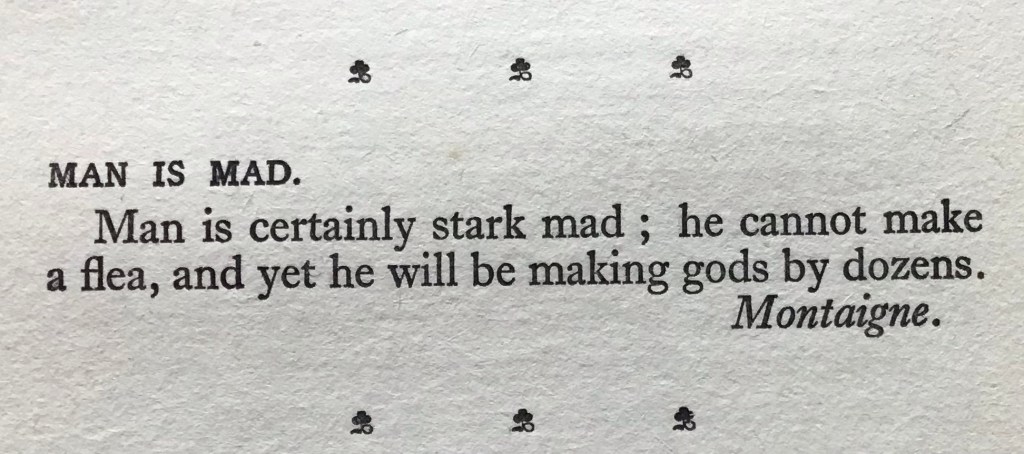
A small book gathered full of ideas and thoughts to live by is a grand thing – whether you agree with them all or not…
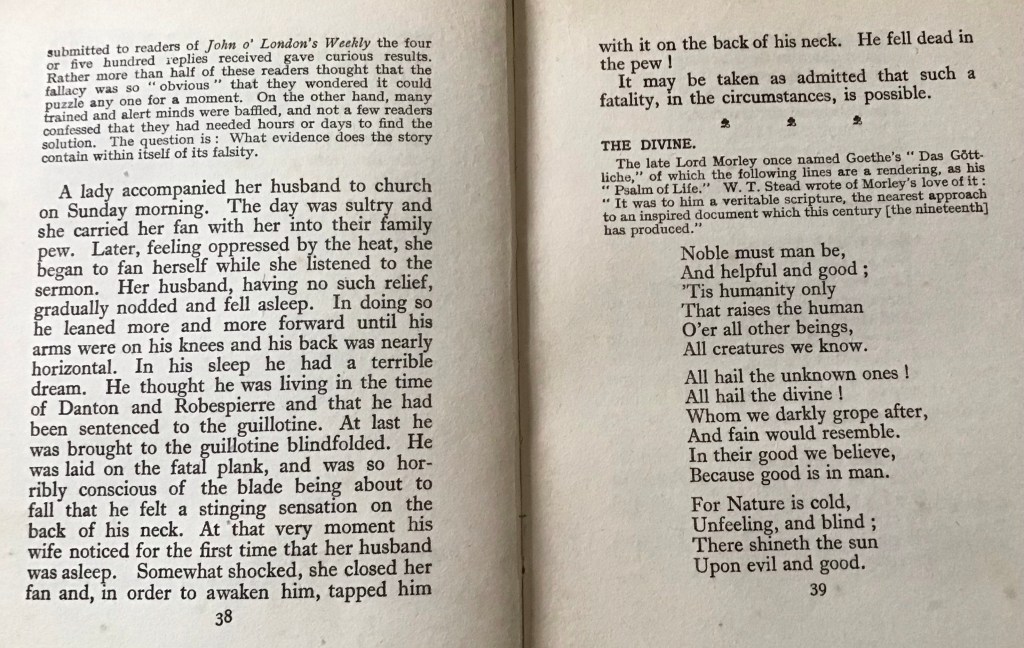
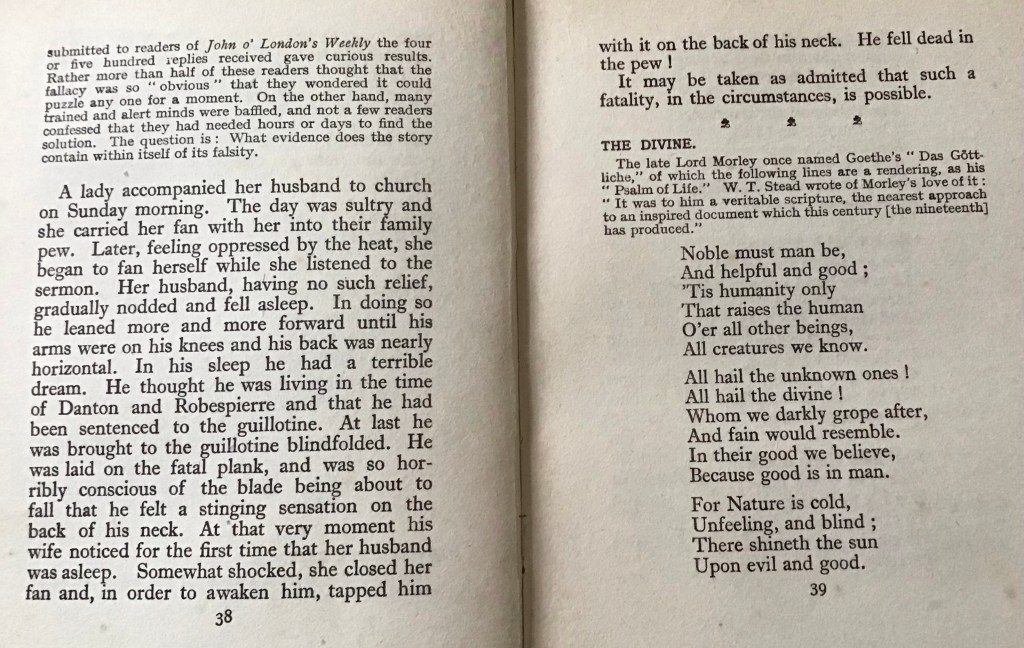
In my last post I posted this puzzle which Jack O’London printed in his ‘Treasure Trove’ – an anthology based on notes and queries submitted to his newspaper. He said this puzzle split its readers – some seeing it as ridiculously simple, others failing to see it at all….
And the answer is… how can we know what the husband dreamed when he died before he awoke?
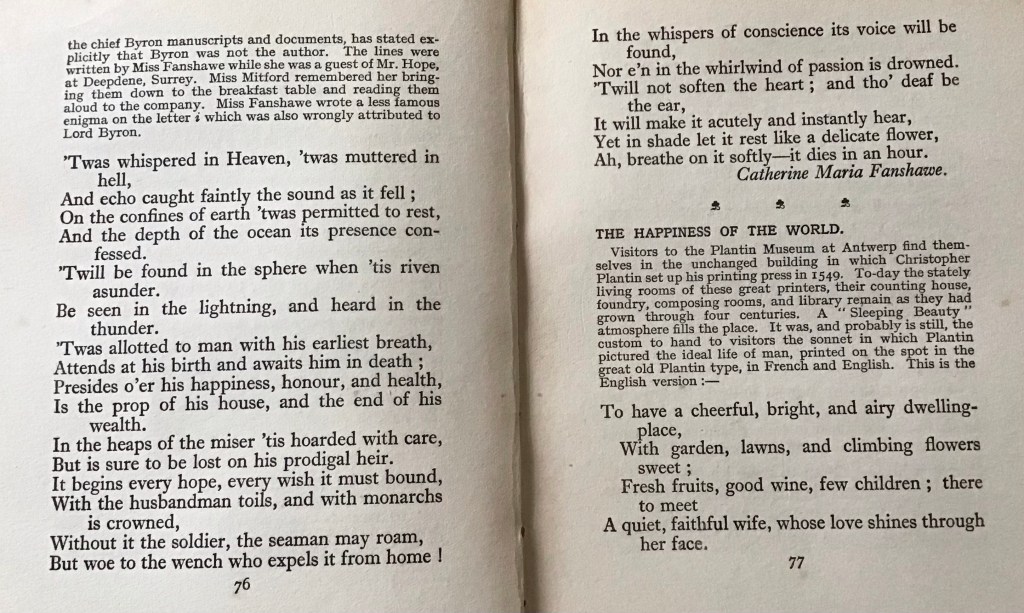
Another nice piece Jack O’London included in his anthology was this neat little riddle on the letter H.
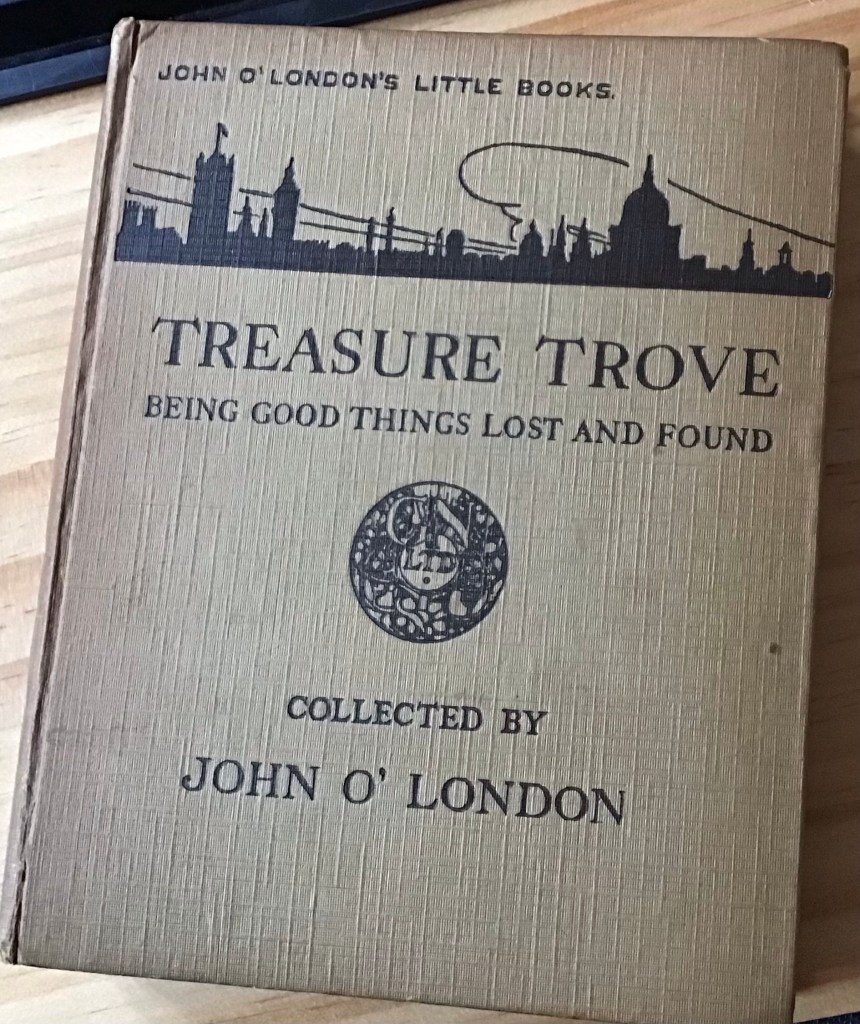
‘Treasure Trove – Being Good Things Lost and Found’ was a a spin-off title, one of number published between 1924 and 1932 linked to the popular and influential magazine ‘Jack O’London’s Weekly’ published between 1919 and 1954 by George Newnes Limited.
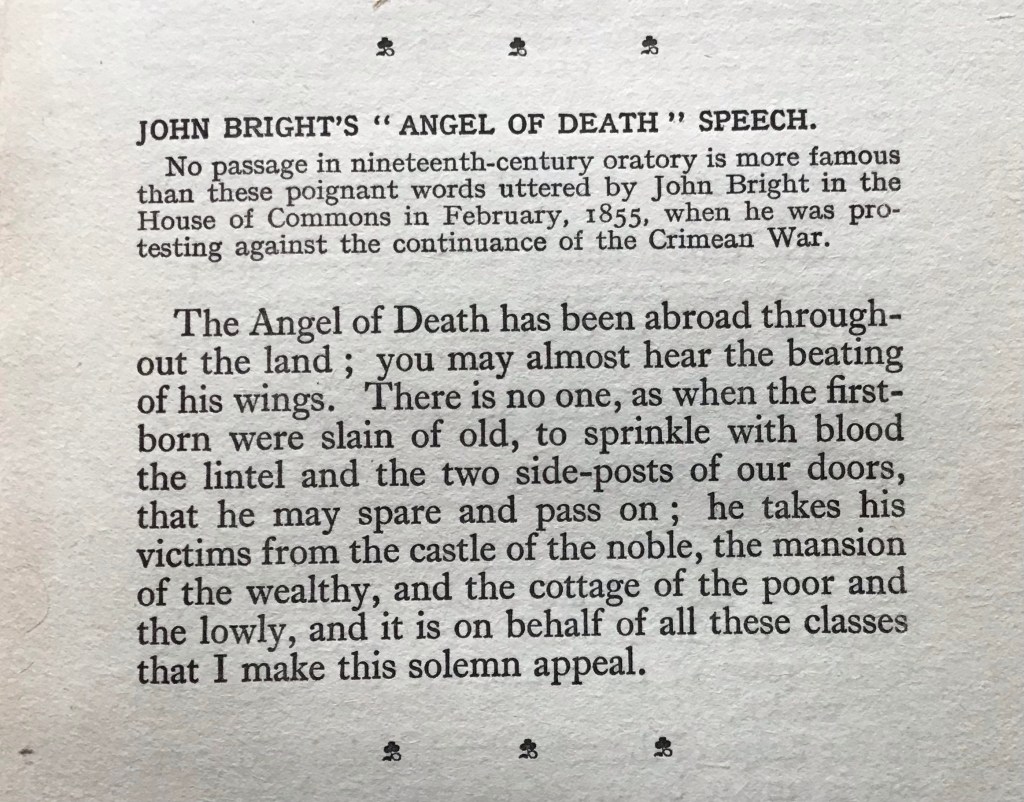
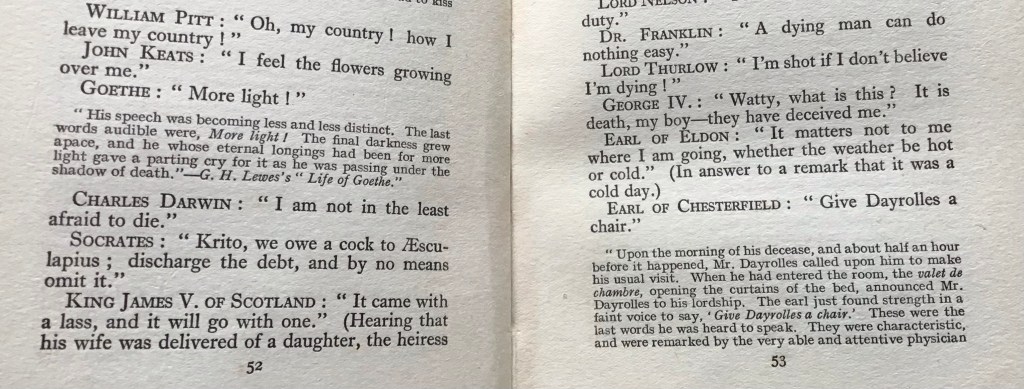
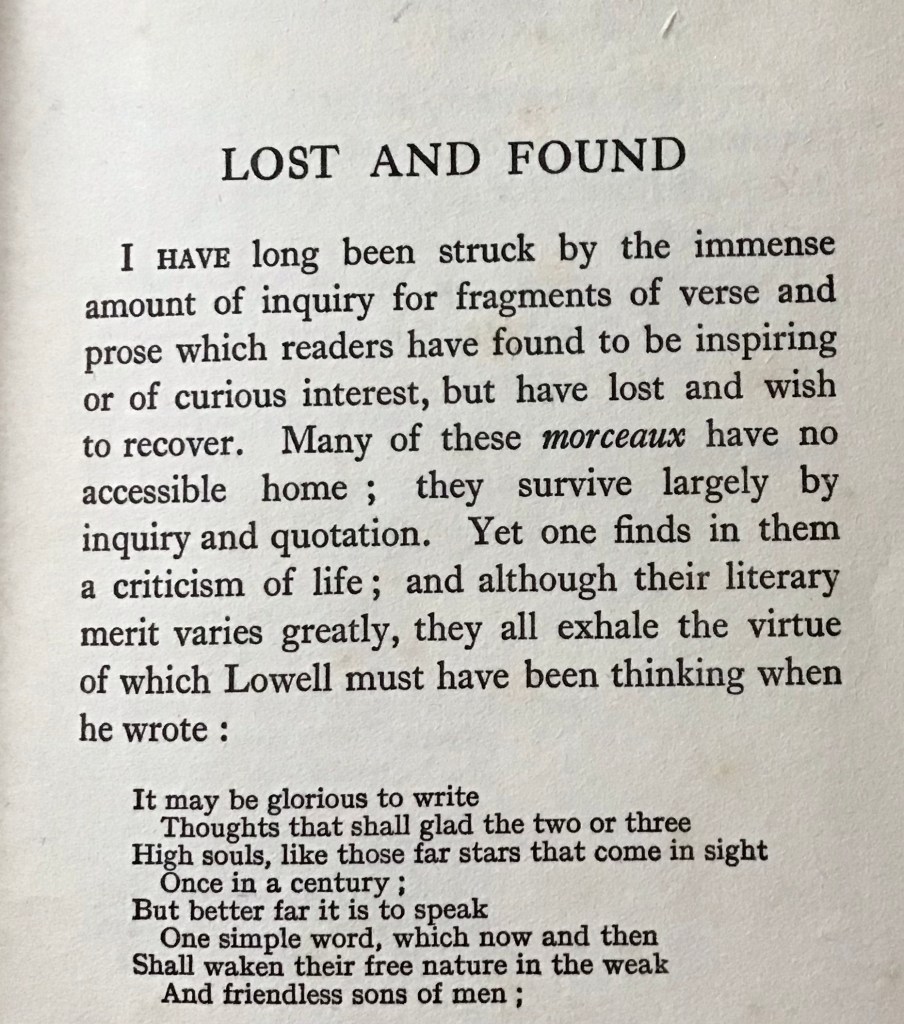
The purpose of the little volume, which is satisfyingly square and robust, is made clear from the introduction. The magazine and subsequent book was a place for people to find the answers to those infuriating things people half-remembered, had at the edge of their minds and one suspects argued with their friends about.
So, for the next couple of posts, a few things Jack O’London chose from the queries of his readers.
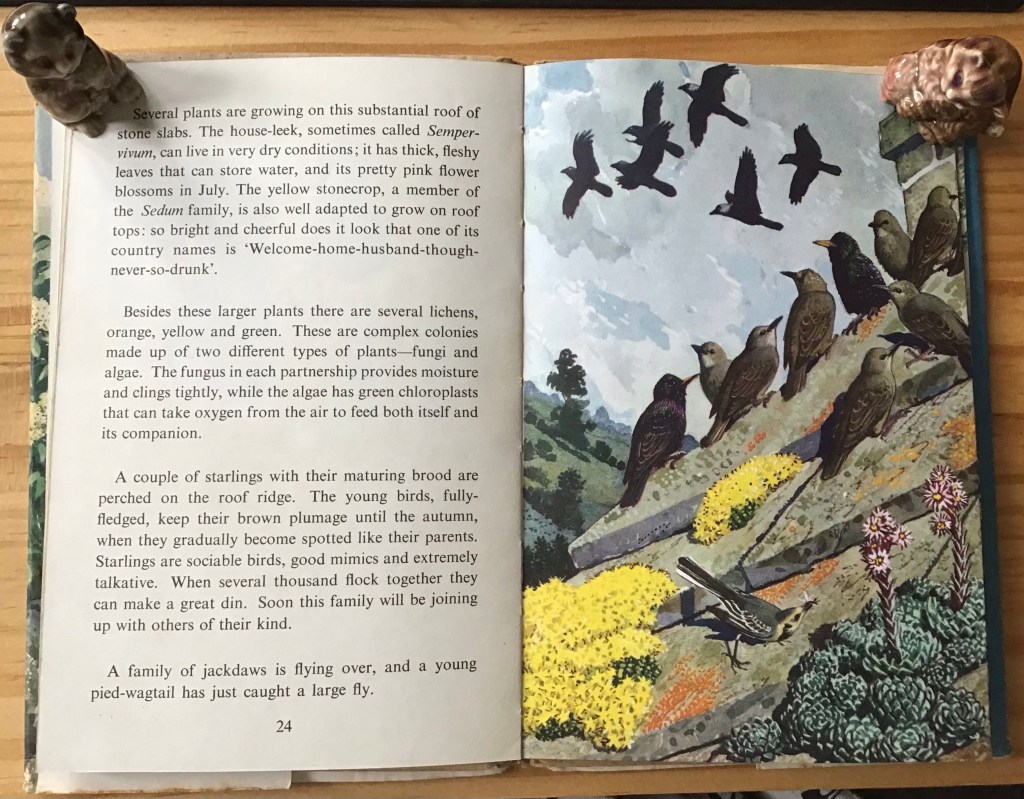
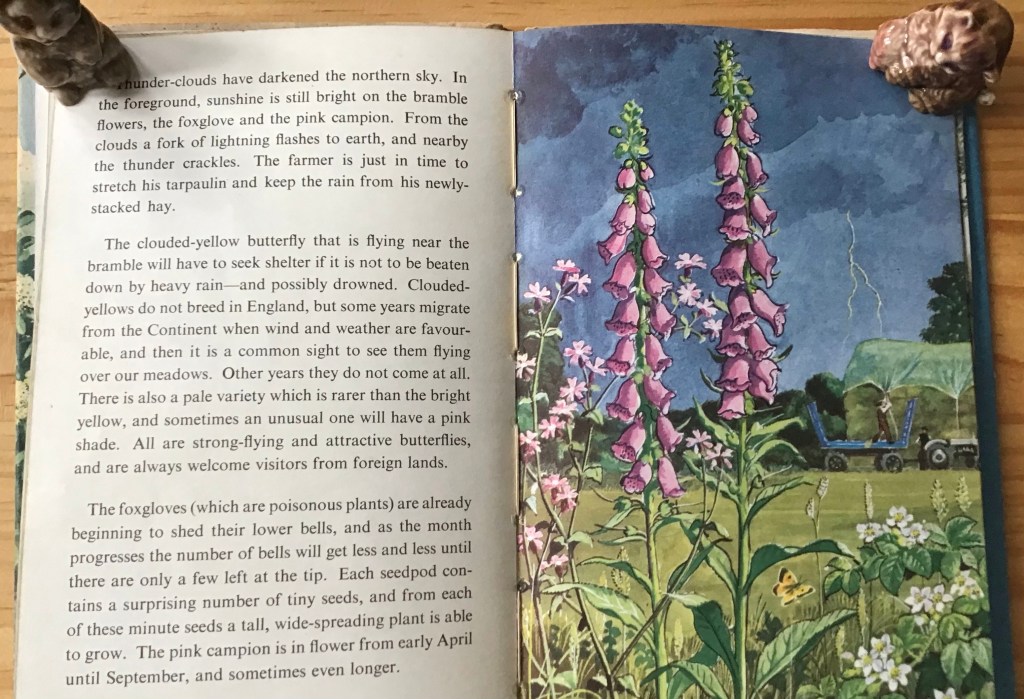
Earlier this year I posted about the Ladybird book -What to Look For in Spring – a wonderful coming together of the naturalist E. L. Grant Watson and the artist C. F. Tunnicliffe to produce information books for children of the highest quality. Here is the next in the series with a couple of pages shown here which capture the two contradictory sides of July weather.
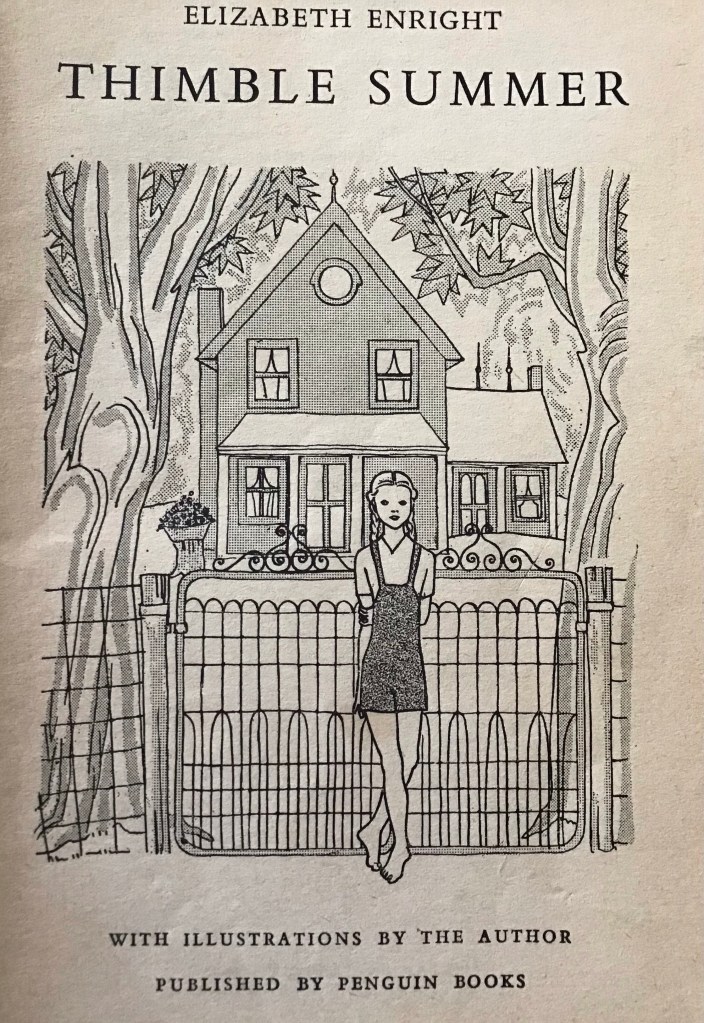
This delightful American children’s book published in 1938 and winner of the Newbery Medal of 1939 is the story of one family and their summer in rural America seen through the eyes of the daughter of the family, Garnet Linden. In many ways an idyllic capturing of the events of summer beginning with the discovery of a silver thimble by the Garnet which becomes for her a talisman of the summer, but the hardship and risks of the agricultural life lie close to the surface throughout the book.
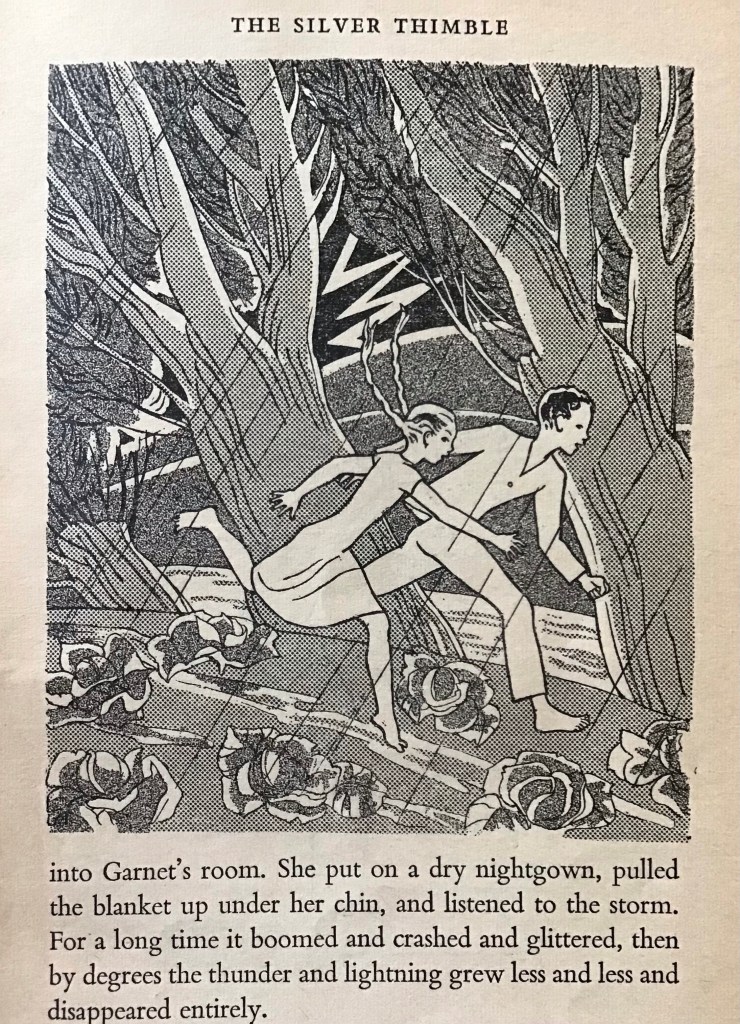
The family befriend an orphan Eric and even through the muted, intended for children account of the hardness of his life before he joins the Linden family we can sense the hardships and sometimes horrors of rural poverty. (1939 was also the year of ‘The Grapes of Wrath’). But in general the book is a wonderful evocation of a child’s life, from the moment that Garnet finds the silver thimble and in her imagination ends the drought in exultant style which had been left the farm facing disaster. A moment here to admire Enright’s wonderful illustrations.
We have highlights of the summer, threshing and harvesting and, of course, a fair. In many way the novel prefigured E.B White’s. ‘Charlotte’s Web’ – there’s even a prize-winning pig raised by Garnet. It’s a delightful read by Elizabeth Enright (1907-1968) – I also love her book ‘The Saturdays.’
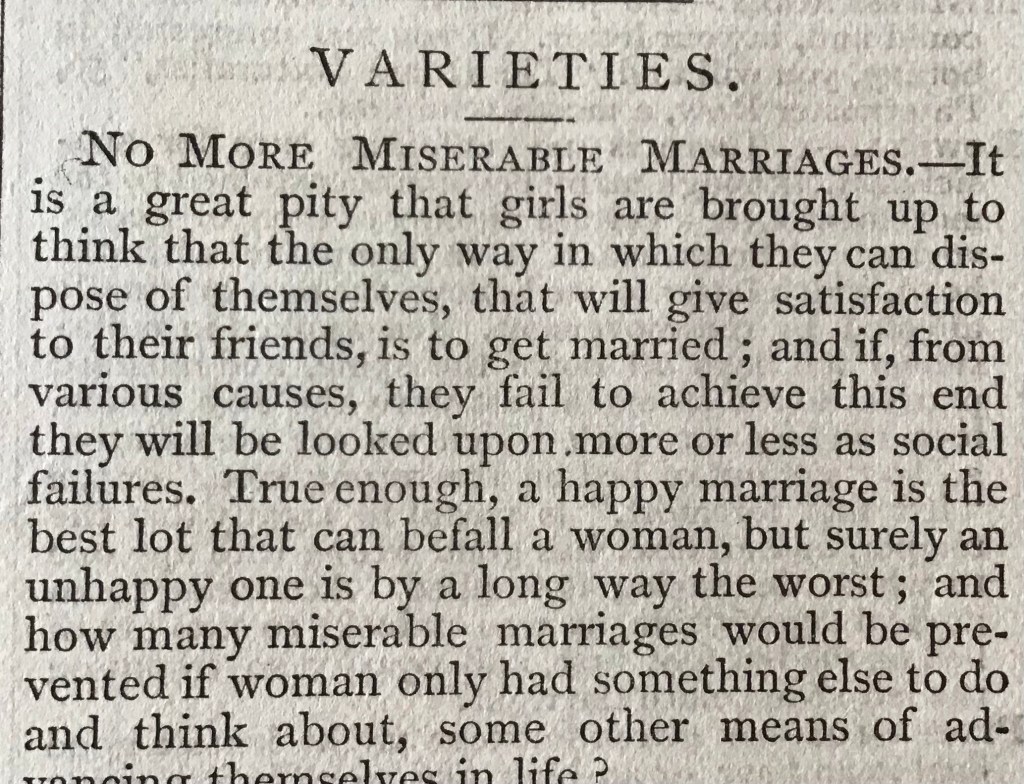
In my last post I wrote about the transitional world of work for women in 1880. The beginning of what might be seen as a widening of the career base of women, a realisation that lack of economic opportunities for women to earn their own livings was forcing them to enter into sterile, unhappy marriages deeply unsatisfying to all concerned.
Separately, there were growing fears that work in education, the only respectable option for middle-class, was leading to women entering the profession who were unsuitable with poor outcomes both for women themselves and their charges.
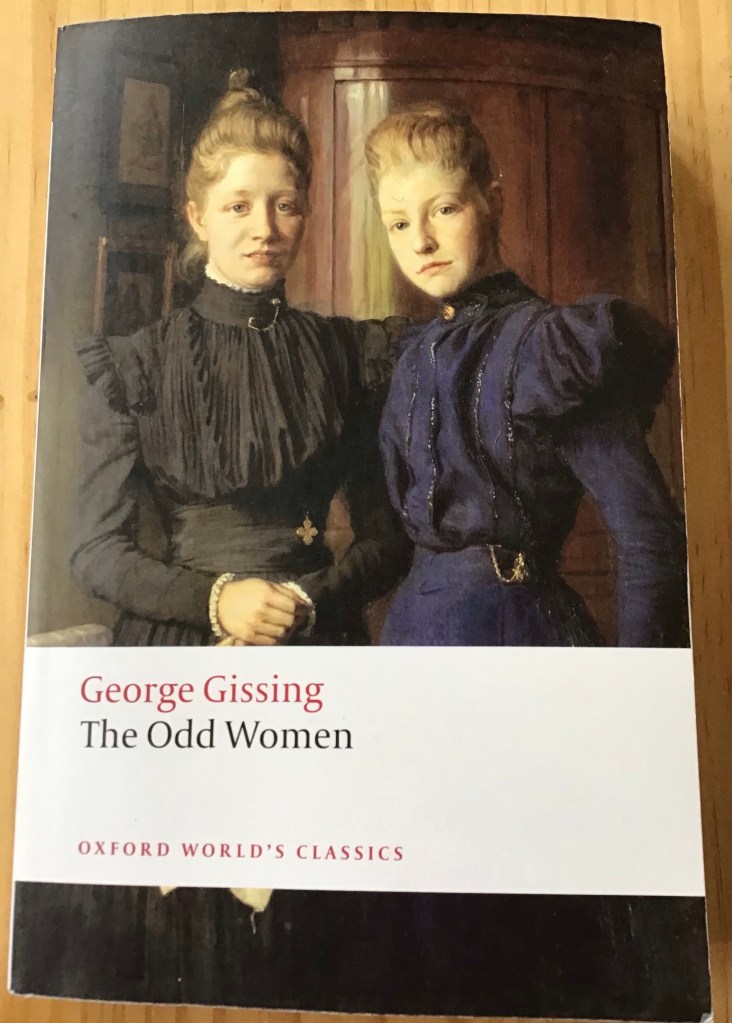
Into this world comes George Gissing’s extremely interesting novel ‘The Odd Women’ published in 1893. Gissing’s complex relationships, brief spell in prison and financial problems have somehow left him a little beyond the mainstream. But ‘The Odd Women’ is a fine novel on a complex issue of the role of women in the economy as the nineteenth century drew to a close. The novel opens with a widowed country doctor, comfortable off and hoping for greater affluence, walking with the oldest of his six daughters,
“So to-morrow, Alice,’ said Dr Madden as he walked with his eldest daughter on the coast-downs by Clevedon, ‘I shall take step for insuring my life for a thousand pounds.”
But the doctor is killed in an accident that very night.
Fifteen years later and three of the sisters are dead. As we follow the three remaining sisters through the book we see the dilemmas faced by women with breeding but insufficient fortunes. Two are condemned to work as companions and governesses for which they are wholly unsuited, their health, physical and mental, deteriorating rapidly. The youngest and prettiest is condemned to shop-work, enters a loveless marriage with an older man for economic reasons, triggering a catastrophic series of events for them all.
As a vivid counterpoint to this unsatisfactory wastefulness of the energies and skills of these women, we are offered Miss Barfoot and Miss Nunn who open a college. They offered middle-class girls who must make their own economic way in the world, typing and similar skills to meet a new world of work for women.
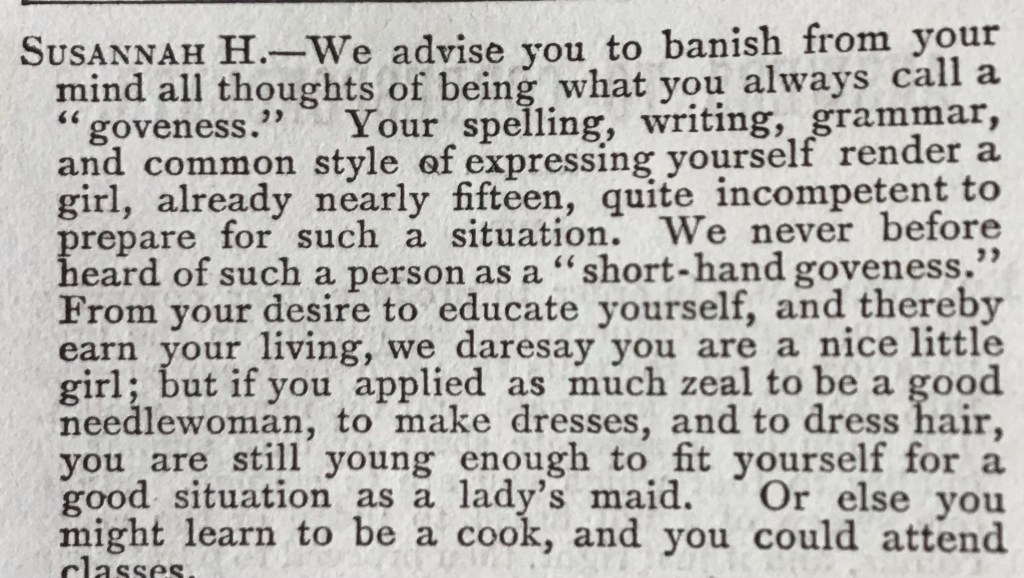
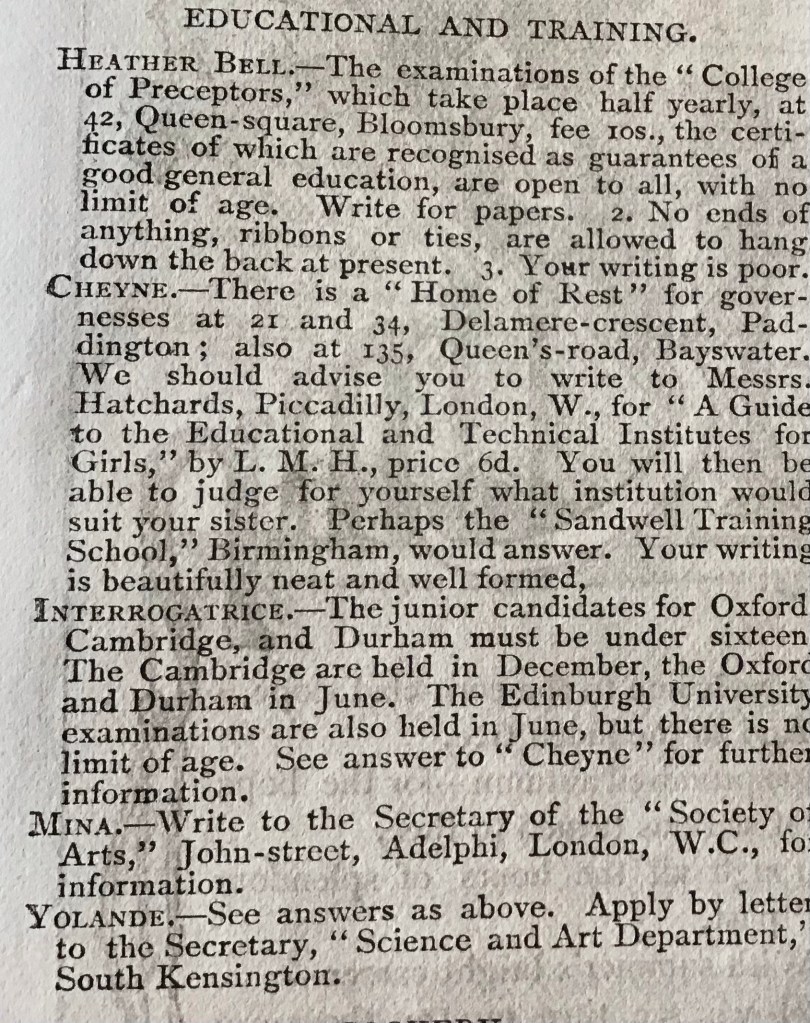
Over my next couple of posts I want to talk a little about the position women as regarded their opportunities in the world of work in the last twenty years of the nineteenth century. I was prompted to reflect on this after reading an extraordinary novel – ‘The Odd Women’ by George Gissing published in 1893. I’d like to blog about the book itself next time but this time I’d like to capture some of the realities and tensions of this window of time as young women began to confront the reality, the possibility of earning their own livings, courtesy of the Girl’s Own Paper of 1880.
Women caught between the twin barriers of class and money – educated within a limited middle class way but without sufficient funds to live unsupported faced particular problems. Education, governess or teacher, was seen as the only respectable profession women in this position could pursue.
But things were beginning to change. We can tell from the advice columns that girls were beginning to expand their horizons. We can only feel for Violet Brandon above….
It was in this world that Gissing set his novel. Of which more next time…
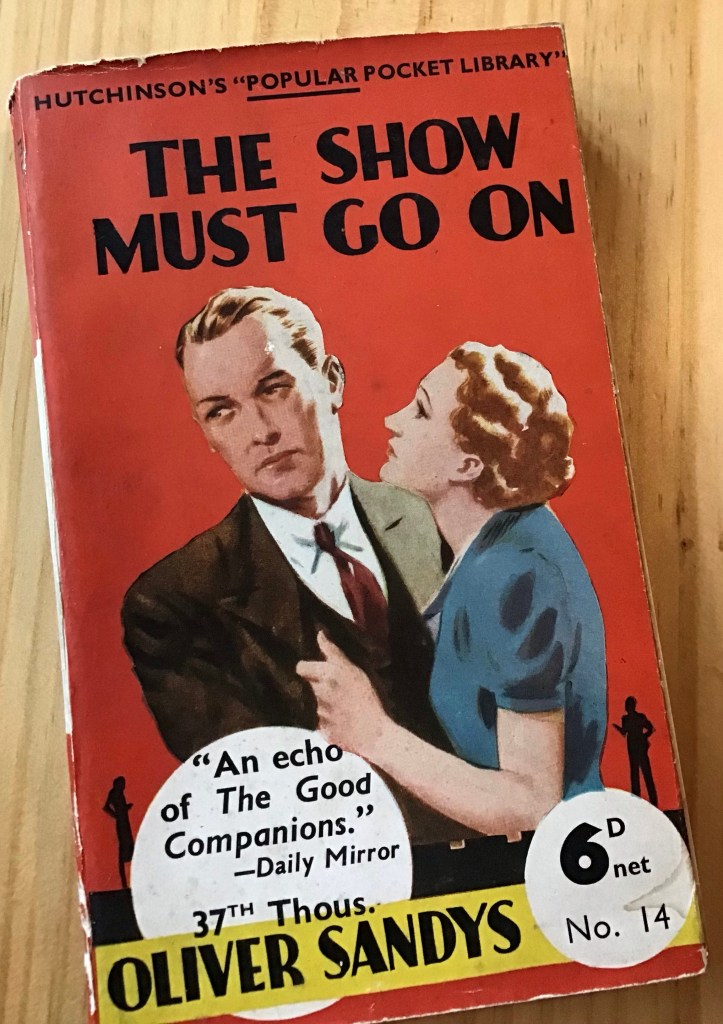
A popular read from 1938. It is easy to imagine this relatively cheap edition delighting commuters and others and it formed part of a list aimed at a wide readership. The cover statement that it was already in its 37th thousand shows just how much it was finding its market. It must have been an enjoyable piece of escapism for readers in an increasingly worrying world.
But there is no doubt, as the cover suggests, the plot owes a great deal to J.B. Priestley’s ‘The Good Companions’ published nine years earlier in 1929. Priestley’s book had enjoyed considerable success on publication and on the stage in 1931 and its first film version in 1933.
In this version, a wealthy benefactor (this time Simon Hayseed, a 38 year old, recent inheritor of the wealth of ‘Baby’s Soothing Balm’) escapes from under the thumb of his family. He encounters a down-at- heel acting troupe in Cardiff as they are cast out on the street and becomes their financial salvation. From then on, a sentimental love affair, theatrical failure and, of course, triumph, a touch of religion, an arrogant beauty brought low and disfigured.
Author Oliver Sandys knew her audience. Her name is larger than the title on the spine and reflects her very considerable success. Oliver Sandys was a pseudonym, one of a number used by the British writer and screenwriter Marguerite Florence Laura Jarvis (1886-1964). Thirty-eight of her some 130 worked were published under this name including an early success ‘The Honeypot’ in 1916.
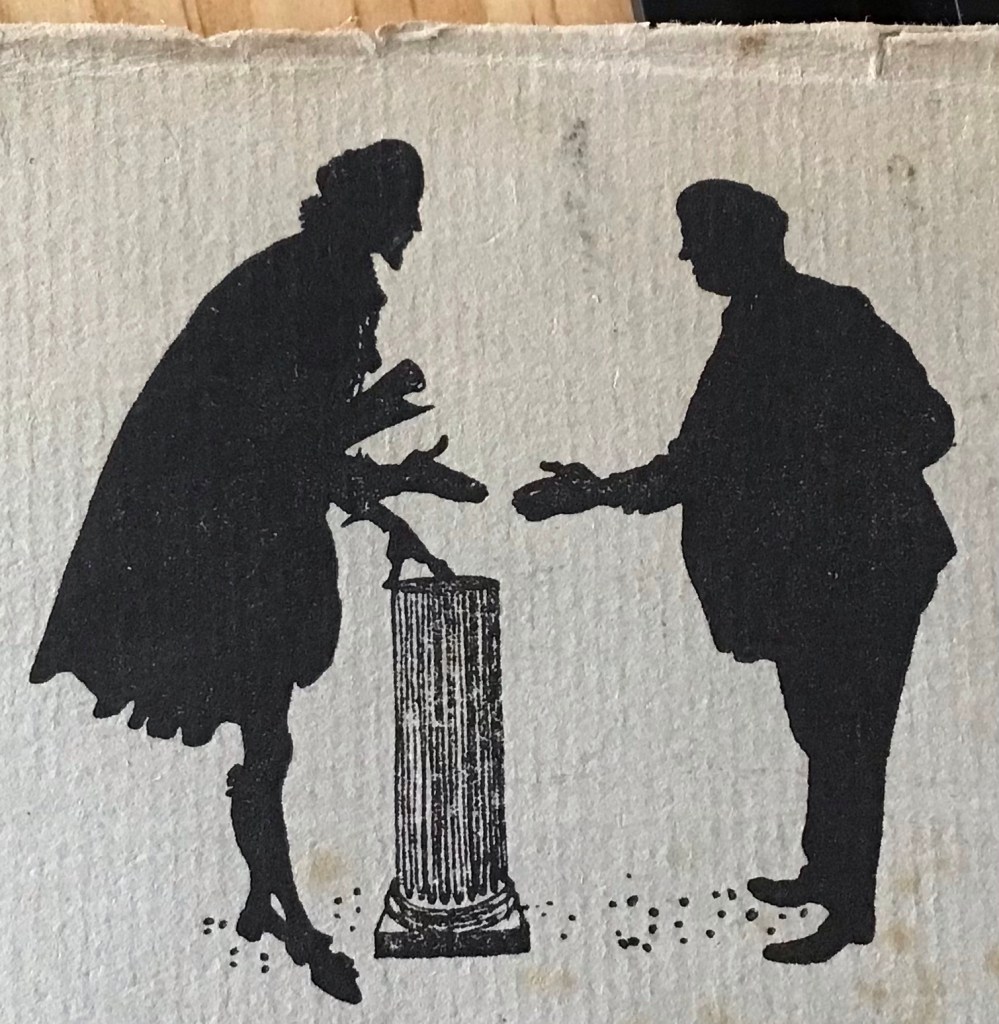
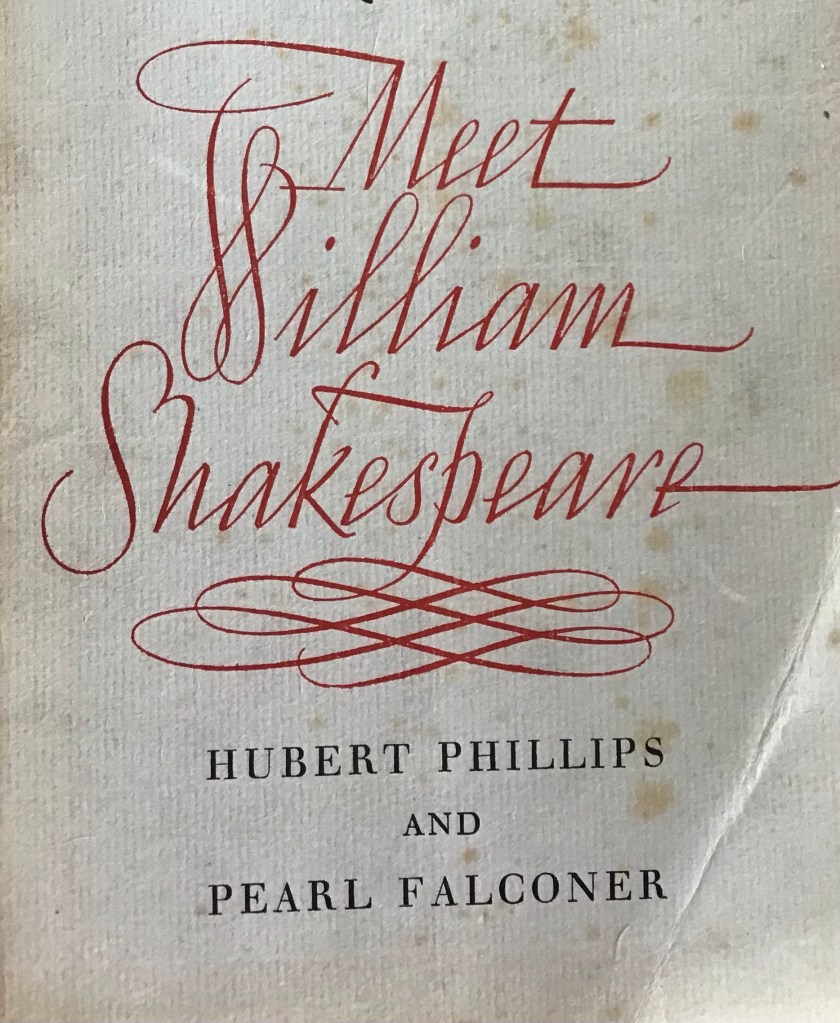
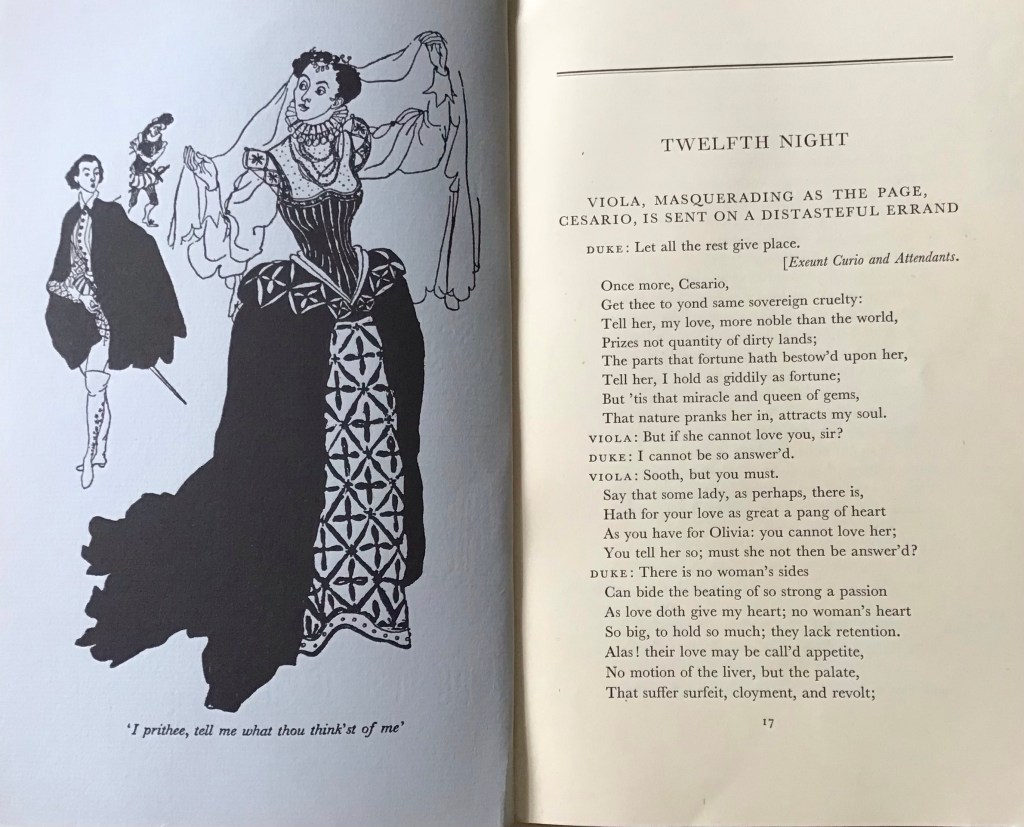
In 1949 Hubert Phillips, puzzle maker and writer on indoor games, who I have blogged about before, published with the illustrator Pearl Falconer this handsome volume intended to be the first in a series about different writers.
This is a handsomely produced volume produced by The Cornleaf Press and poses an interesting question. Hubert Phillips tells us, with his mathematical and problem solving brain, is keen to tell us that the samples he offers us represent a three per cent sample of Shakespeare’s works. His intention is a book for readers not students to demonstrate ‘the range and the depth of Shakespeare’s poetic genius.’ For Phillips, this genius is most easily captured from the tragedies rather than elsewhere.
So which plays are in? Phillips first choice is ‘Richard II’, choosing three short pieces. He goes on to choose pieces from ‘Twelfth Night’, ‘The Tempest,’ ‘Romeo and Juliet,’ ‘Macbeth’ ‘Othello’, ‘Anthony and Cleopatra’ and ‘Hamlet.’
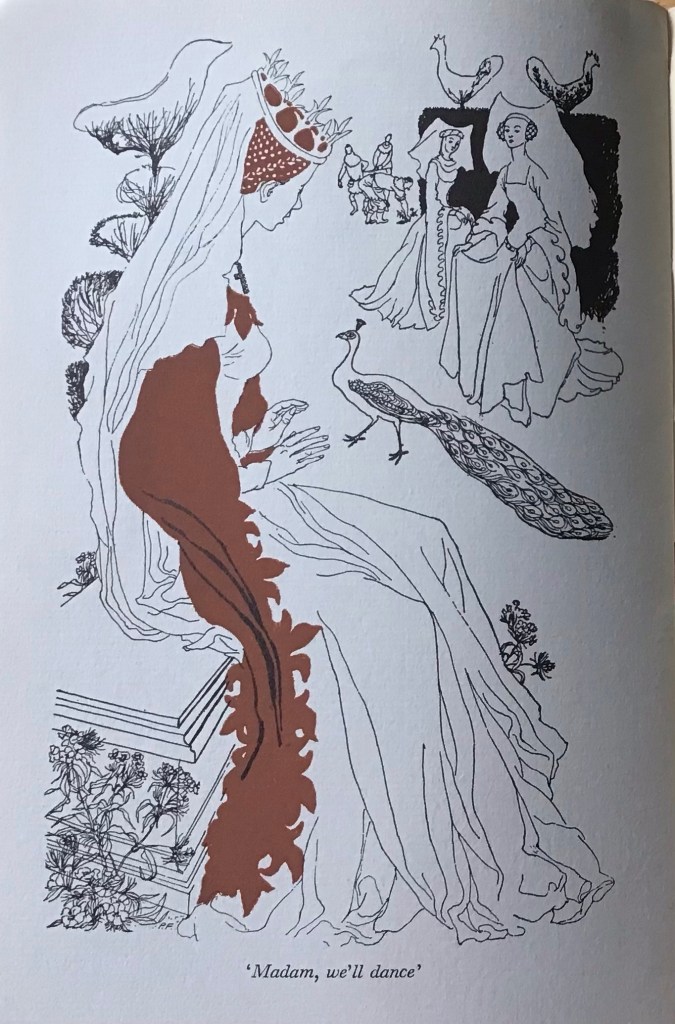
Falconer’s pictures are a delight.
The Queen and her ladies in the Duke of York’s garden – ‘Richard II.’Olivia receives Cesario, the disguised Viola as emissary from Orsino.
One hundred or so pages, eight wonderful pictures this small book captures much of the resonant beauty and drama of Shakespeare. A considerable achievement.





 The Solitary Reader