A Year with Alexander Pope (8) – sickness

The impact of bodily suffering.

William Wycherley – his ‘little, tender, crazy Carcase.’

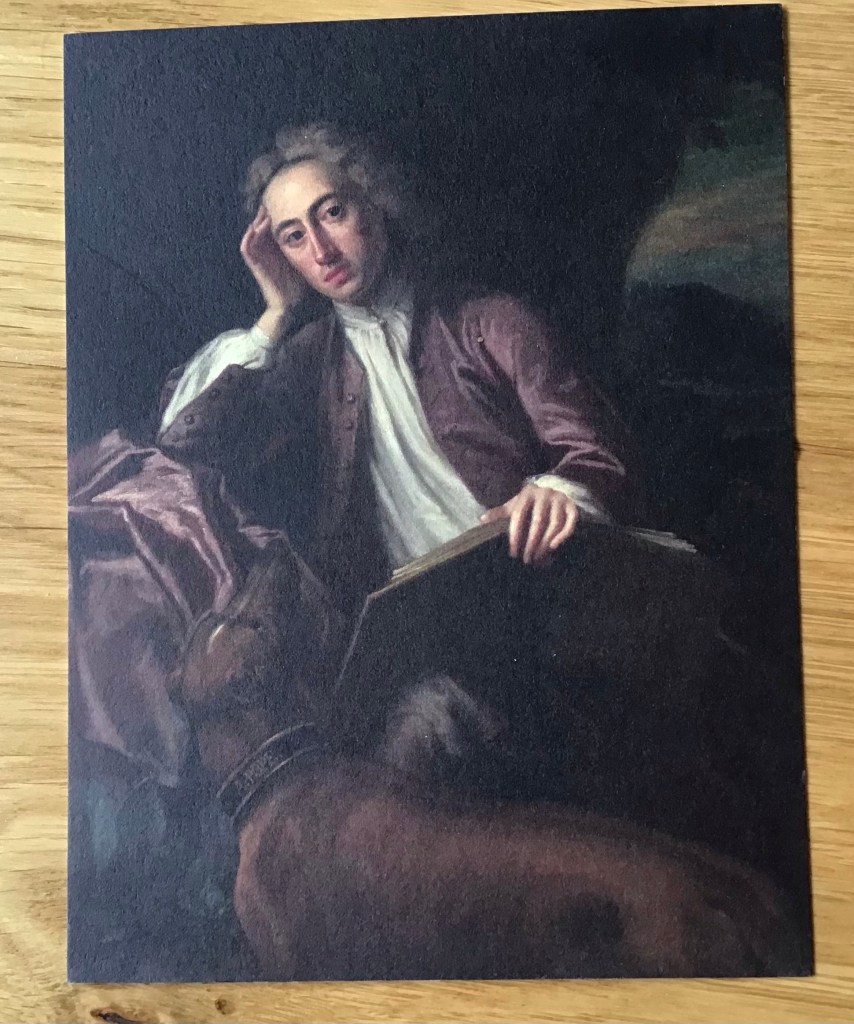
Portraits of Pope, paintings rather than, of course, the fearful caricatures which were made of him, seem carefully posed. Often, too, they suggest in his face the reality of living with pain. Careful poses may also be designed to conceal Pope’s considerable physical deformities. Pope became ill around the age of twelve and though he had periods of less restriction, he was chronically ill for the remainder of his life.

As Pope became ill, the hunt for an explanation began. Pope himself and others blamed incessant study while his older half-sister Magdalen blamed an incident in early childhood in which Pope was trampled by a ‘wild cow’ while at play. The cow ‘struck at him with her horns, tore off his hat, which was tied under his chin, wounded him in the throat, beat him down and trampled all over him.’

In fact, Pope had a tubercular illness causing a kyphoscoliosis – a double curvature of the spine. Sir Joshua Reynolds said he was about four feet, six inches high with a hunched back. The illness was at the time normally transmitted through milk and came to be known as Pott’s Disease after its identification by Dr Percival Pott (1714-88) without appreciating it was tubercular.

Throughout his life Pope suffered acutely with coughs and severe asthma in his later life. He grew increasingly lame and suffered a deterioration in his sight. He suffered headaches, stomach problems, piles, vomiting and urinary problems.

Yet his writings leap from the page with life and joy so much of the time and it’s hard not to see that as wondrous. More of Pope’s own words of his illness next time.
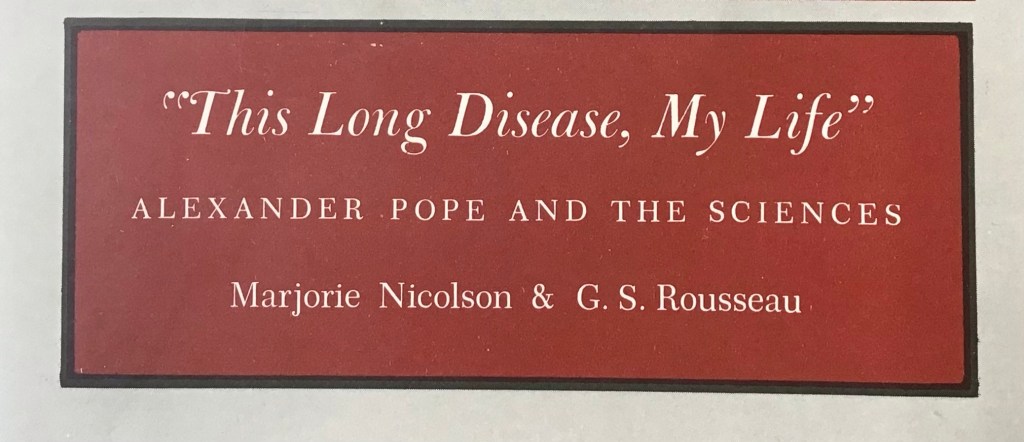
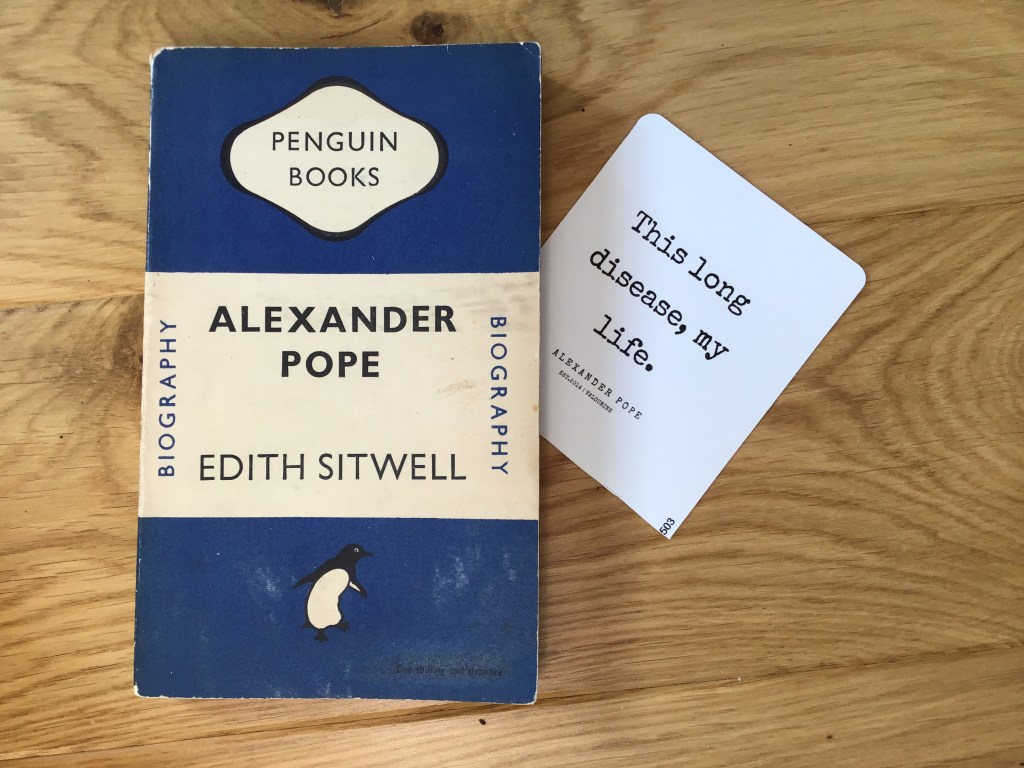
A fascinating, very detailed work.

A Year with Alexander Pope (7) – the long disease of life.

Alexander’s health.

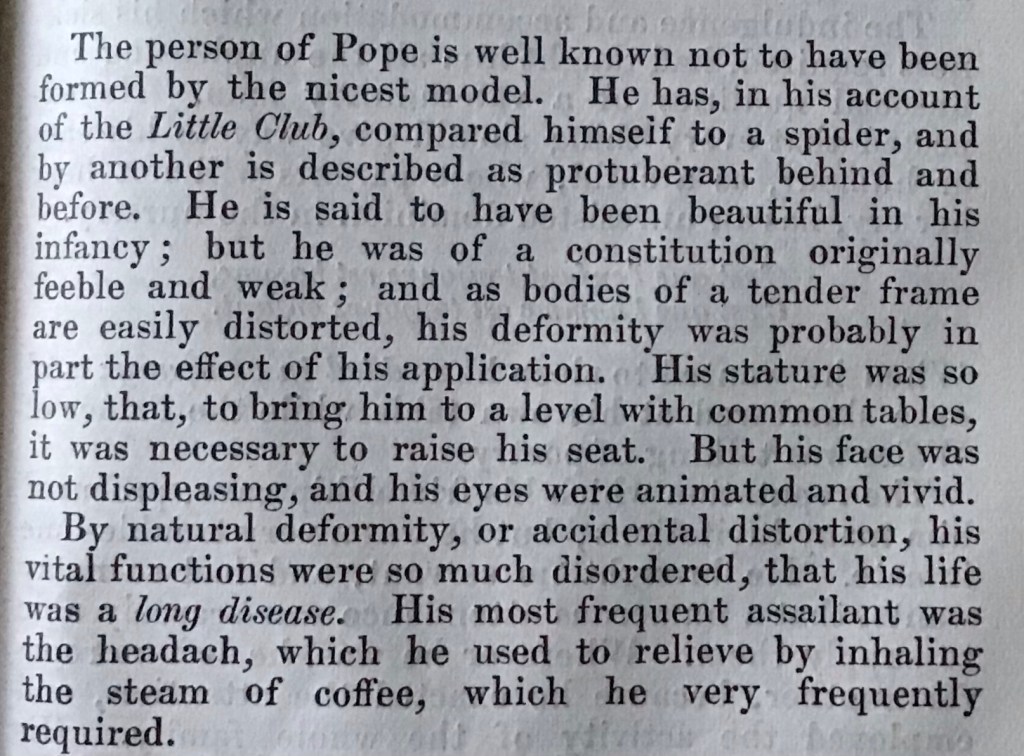
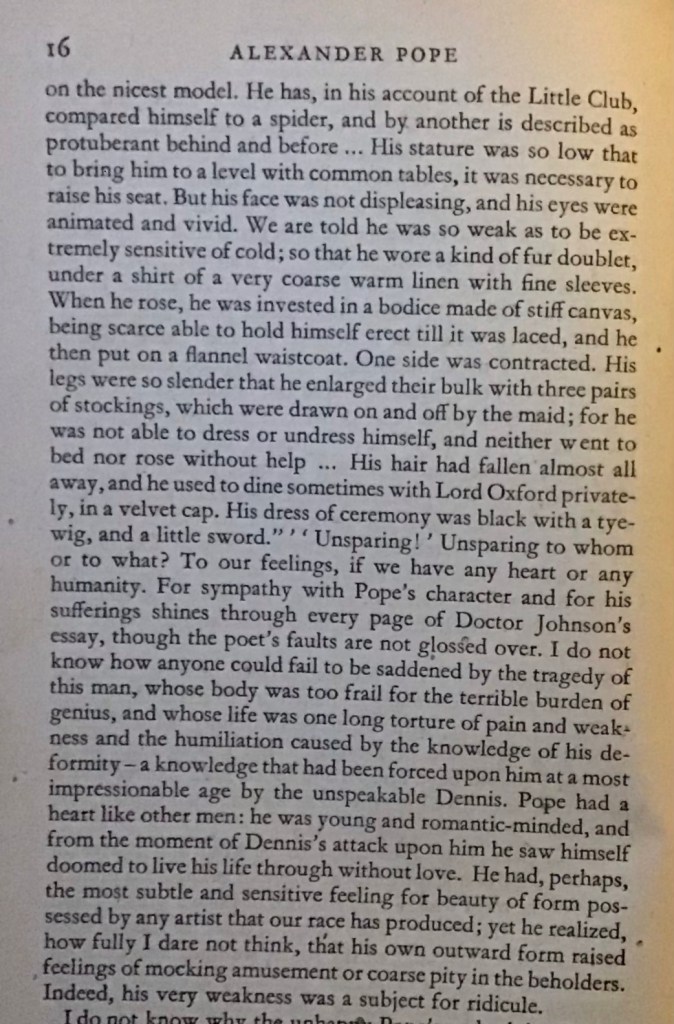
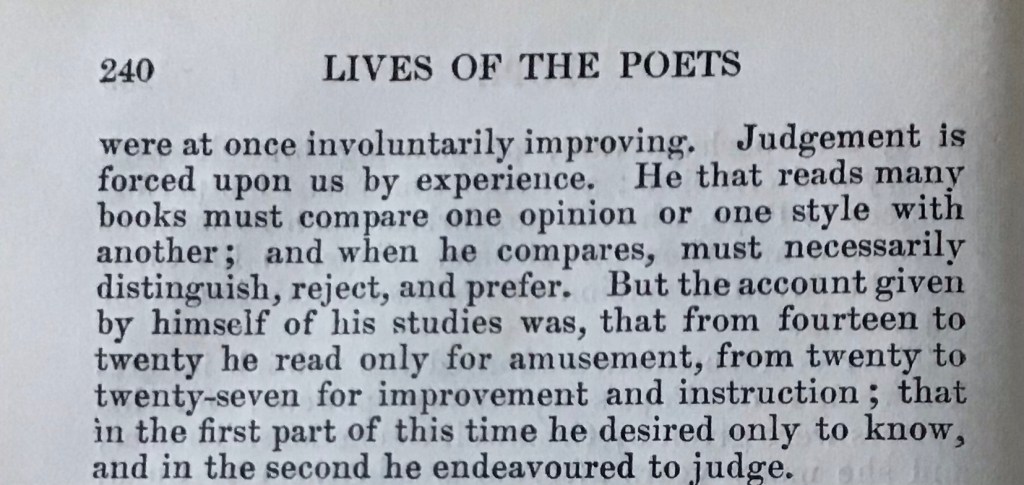
Running like a thread through Pope’s life is the fact that he led a life marred by chronic illness. The impact of pain and sickness throughout his life is, of course, impossible to measure either in terms of sheer living with all its implications for his emotional and social dealings; his vision of the world and his dealing in it but also in his work. Both Johnson and Sitwell in their accounts of Pope’s life saw the importance of physical deformity and endemic illness to the progress of his life.

Johnson’s view

The experience of long-term illness and chronic pain is under told, I think. It is not surprising that when Edith Sitwell came to reflect on Johnson’s biography and her own view of Pope, she chose to stress how our own humanity should inform our opinion of the man and his genius. Her own experience of physical pain and medical interventions must have given her additional insight.

A Year with Alexander Pope (6) – made by early influence.

The view of Johnson.

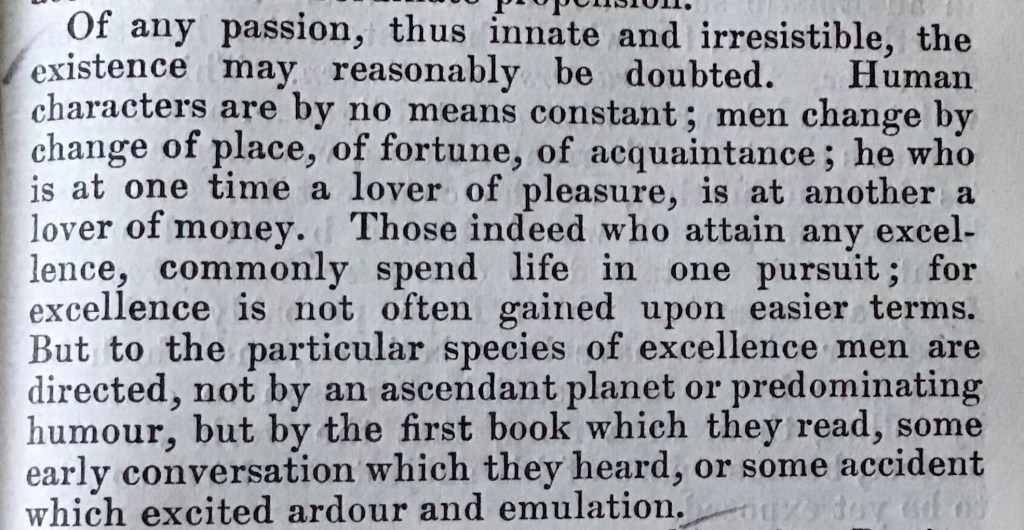
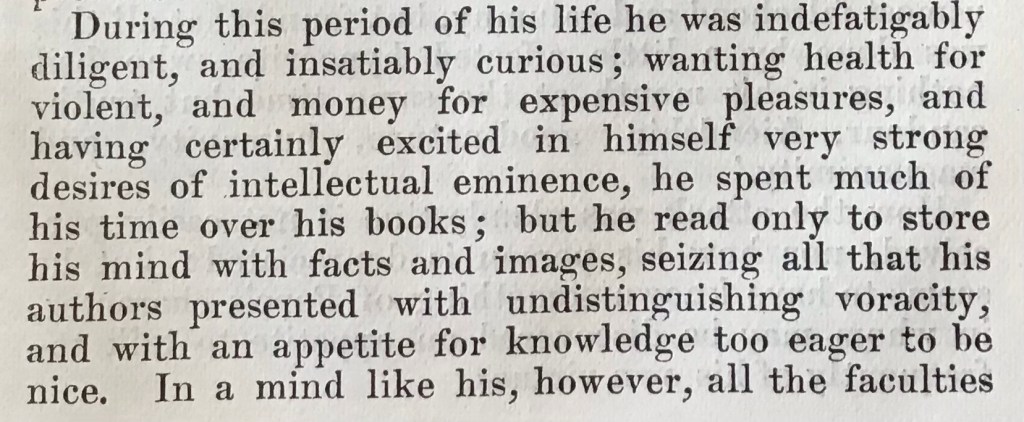
As Johnson reflected on Pope’s life one idea struck him with some force. Writing of one of Pope’s ‘Morals Essays’ (also known as the Epistles to Several Persons) published between 1731-1735, specifically the Epistle to Cobham of 1734, Johnson discussed Pope’s idea of the ‘Ruling Passion.’ Johnson described this as Pope’s ‘favourite theory’ whereby the original direction of desire towards a particular object will operate on the whole of someone’s life ‘either openly, or more secretly’.

Johnson saw in this an indication that early influence, a book, an accident, an early conversation, could indicate the direction of what the excellence of a person’s life might be. But, in general, he disliked Pope’s ruling passion idea with what Johnson saw as its implication of possible moral predestination, ‘an overruling principle which cannot be resisted.”

The Thousand Best Poems In The World (well, 500 at least)

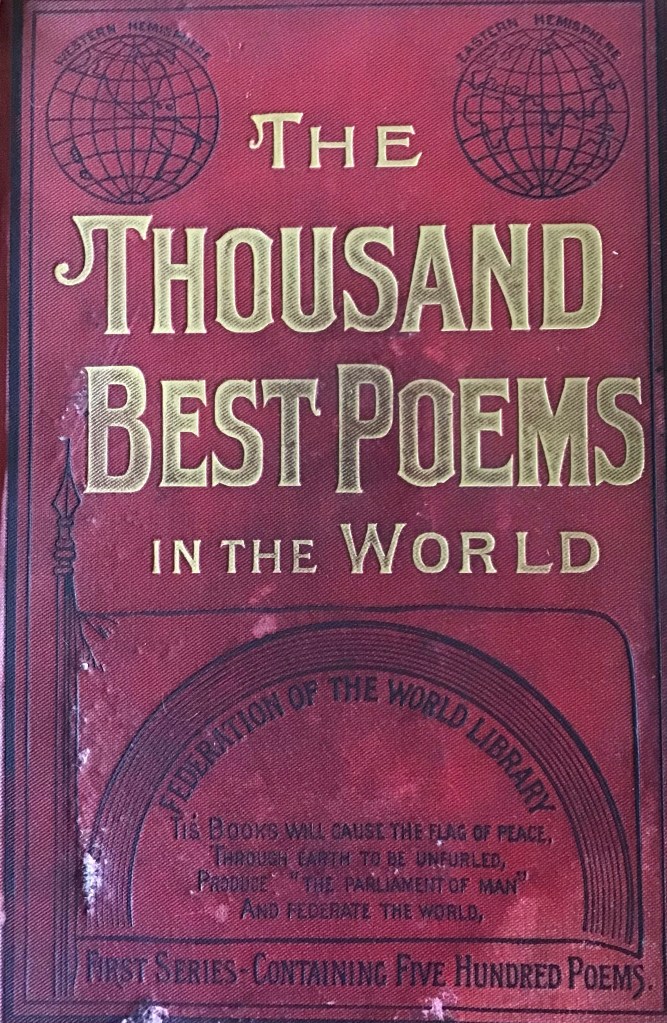
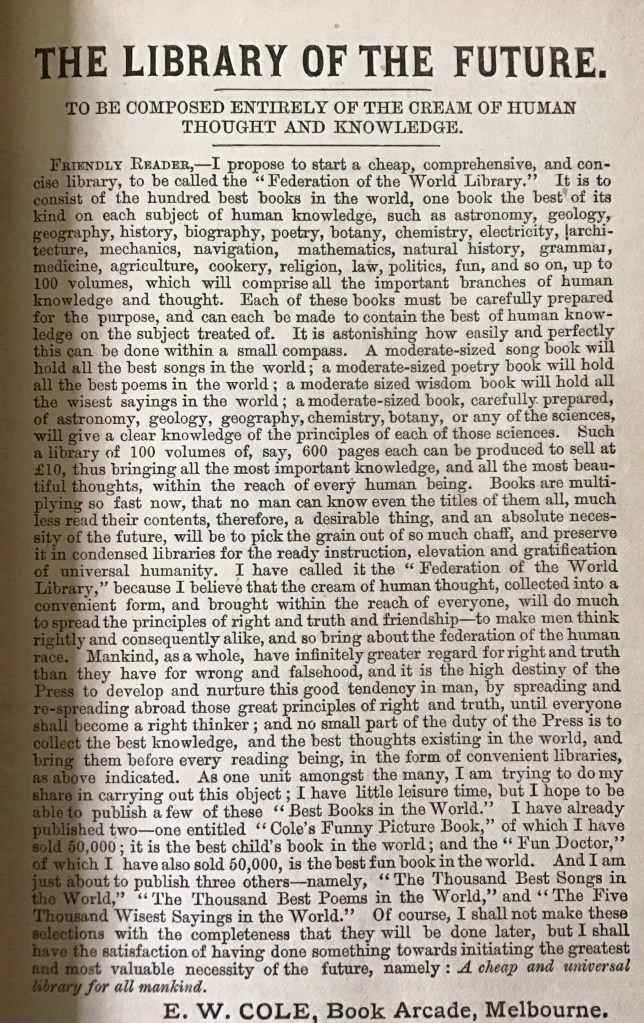
‘The Thousand Greatest Poems in the World’ was a project of Edward William Cole (1832-1918) – bookseller and founder of Cole’s Book Arcade in Melbourne, Australia. ‘The Weekly Telegraph’ in 1893 caught the reputation of the extraordinary bookshop…

“Cole’s Book Arcade in Melbourne is the largest book selling business in the world. Mr. Cole keeps over a million book in stock…..People go in to read and spend hours on comfortable lounges, the greatest number going away without making a single purchase.”

The shop eventually filled an enormous three storey space with new books on the ground floor and used books above. It is no surprise that eventually the business moved into printing and Cole became compiler of a number of very successful titles. The most successful was ‘Cole’s Funny Picture Book,’ ‘Cole’s Fun Doctor’ and ‘Cole’s Treasury of Song.’

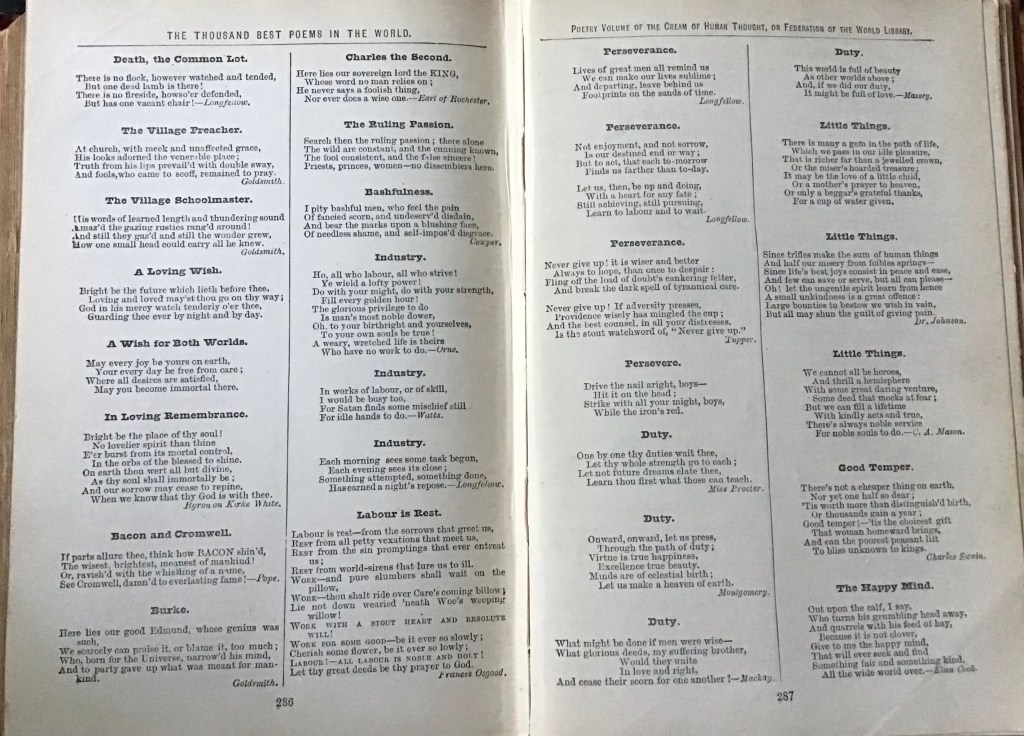
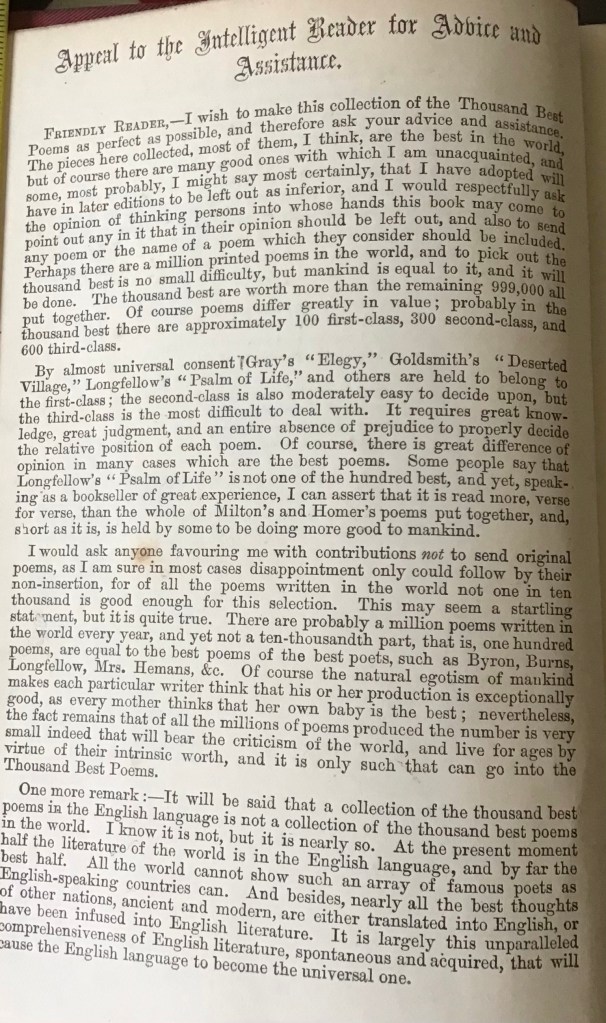
It was only a matter of time before Cole turned to poetry. He planned a two volume work (the above is the first volume). The problem is you have to know what the best thousand poems are and to have access to them..

A laudable but ambitious plan…

Cole acknowledged these very real difficulties in his introductory remarks and therefore admitted freely that it might be fairer to say that what he in fact had was roughly 100 first-class poems, 300 second-class poems and 600 third-class poems.

No unsolicited manuscripts please…

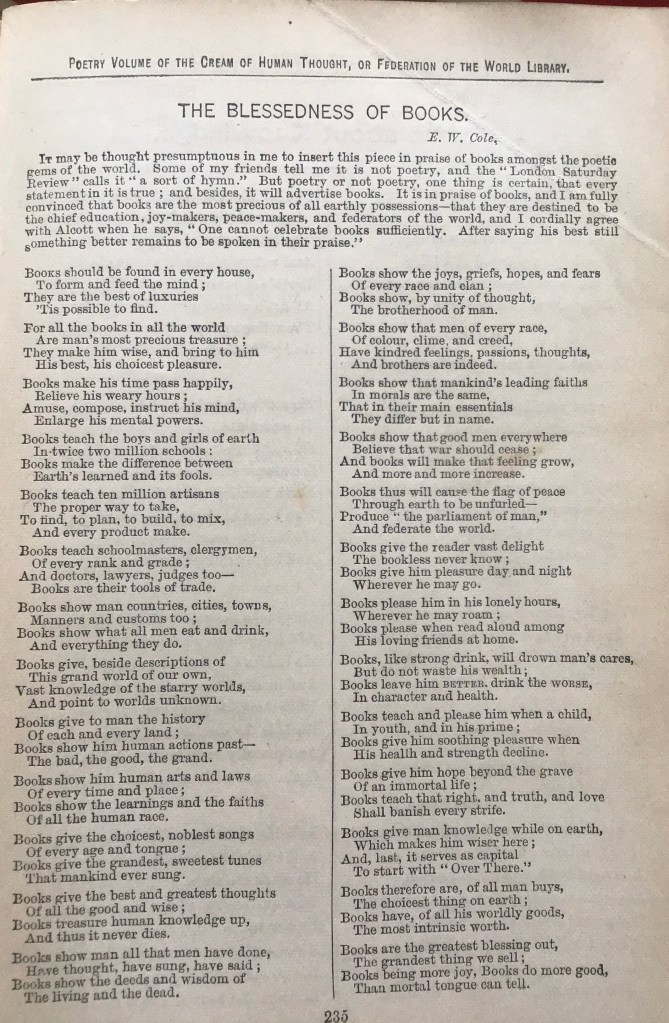
Cole himself yielded to persuasion to include a poem of his own – his own tribute to books.

A man who loved books.

A Year with Alexander Pope (4)

Local colour….

Three months in to reading and thinking about Pope, I’ve been reflecting about the importance of place as I’ve considered the period of his life spent in his family home in Binfield and, importantly the landscapes that surrounded it. The impact of some of the works Pope produced while there – the Ode on Solitude, the Pastorals and a possible first version of Windsor Forest – their early assurance of Pope’s abilities combined with the vital energy of the landscapes reinforce the vision of the boy and young man in the landscape.

This may be why the physical places associated with Pope in this period stayed important. A look through guidebooks and recollections and reminiscences from Berkshire show how much the associations continued to matter. In his book ‘Favorite Haunts and Rural Studies; including Visits to Spots of Interest in the Vicinity of Windsor and Eton’ published in 1847, Edward Jesse captured why…

‘The fact may not have occurred to the notice of many persons, although it is curious and interesting, that from Windsor Castle, the residences of three of our greatest poets may be seen – those of Milton, Pope and Gray’.

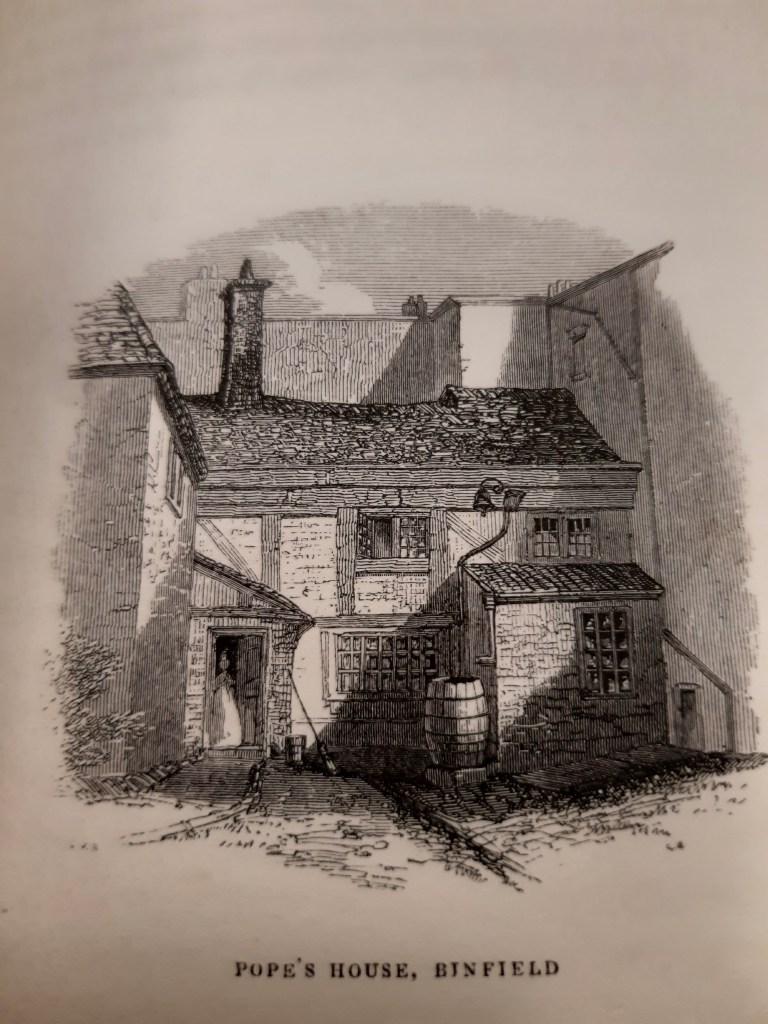
Jesse was disappointed that the much discussed tree with the words ‘Here Pope sung’ was no longer in existence though its former location was pointed out to him. He did, however, reach what remained of Pope’s family home at Binfield and his companion’s drawing was reproduced…

‘I will proceed to describe his house. There can be no doubt but that a great part of the original house has been pulled down, and upon the site of which the present mansion has been erected. Pope’s study, however still remains, and is now the housekeeper’s room, with some of the original offices still attached to it. It is a very small room on the ground floor, lighted by one window and at present rendered rather dark by a large screen of laurels. Such as it is, however, we viewed it with great interest, especially as the poet’s name is still honoured in the recollection of the inhabitants of the place.”

This seemed to be still the case in the 1920s when Allan Fea in his book ‘Where Traditions Linger: Being Rambles Through Remote England’ (1923). “The house, which has had half a dozen names since Pope’s time, is an ordinary looking Georgian erection, but within what is known as ‘Pope’s Study’ has been allowed to remain much in its original state.”

In the fourth edition of ‘The King’s England: Berkshire’ (1949) Arthur Mee captures the place again and also the fact that the Pope of Binfield was a very different figure than our idea of the man.

“The Scots firs a-row are still there, but of the house little but the memory remains. Here it was that the neighbours knew Pope, not as a sallow, bent little man, but as a fresh-complexioned boy with a voice in the choir ‘like a nightingale.’”

Latterly at Binfield, Pope began to suffer with the ill-health that was to dog his life. After his departure from Binfield as a young man his story grow more complex. Once established in the London literary scene, the sense of the man can be elusive.

A Year with Alexander Pope (3)

Spring is here…

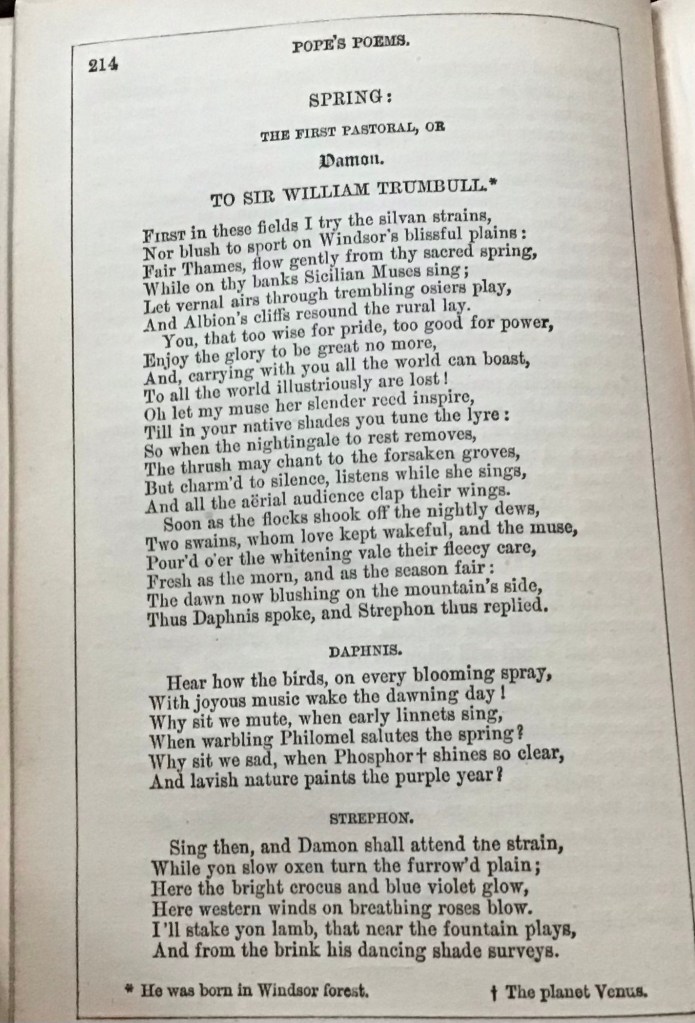
As the weather becomes more spring-like here is an extract from the first of Pope’s four Pastoral poems. The Pastoral poems are early – remember Pope was born in 1688 – and there is an early reference in a letter in 1705 to the poems and Pope himself mentions he was sixteen when he wrote them, placing them possibly as early as 1704. They were published in an anthology of 1709. The poems represent the coming together of a number of elements in the life of the young Pope. Firstly, his wide and unfettered reading leading him into imitative work in a variety of styles. The time spent outdoors in Windsor Forest and the woods around his home and the interest of local gentlemen on what was increasing appearing to be an extraordinary, prodigal talent.

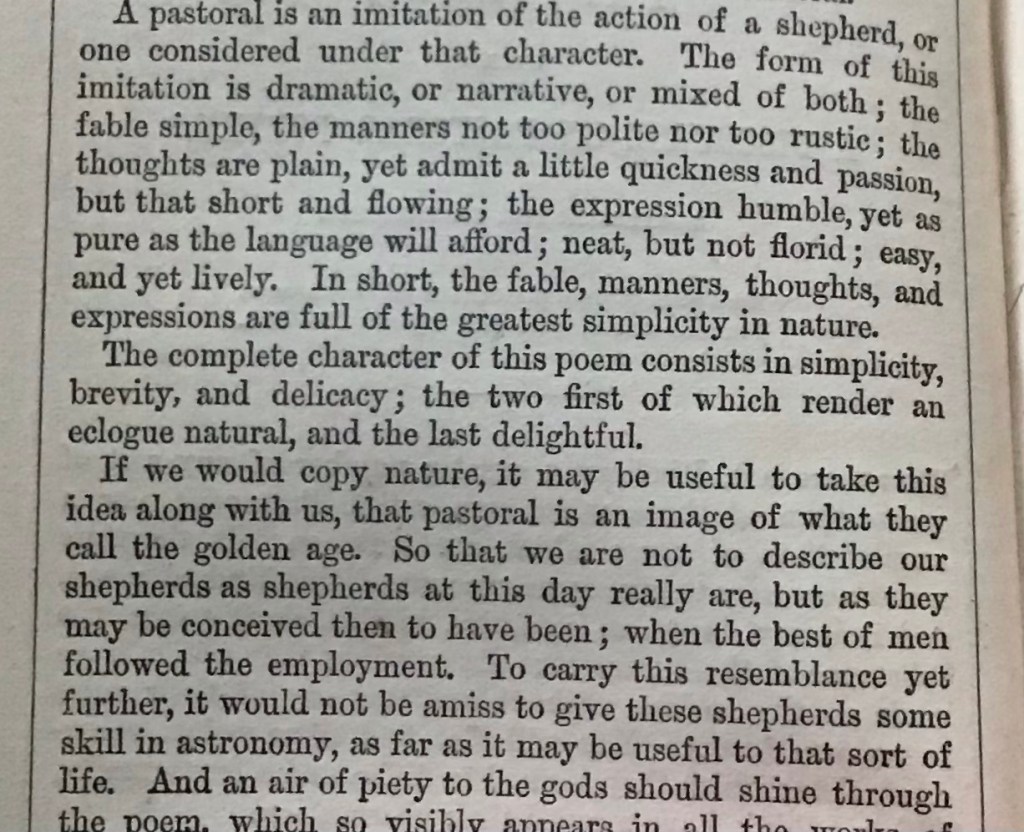
Pope was clear in his preparatory words what the pastoral form represented to him and the tradition in which it placed him.

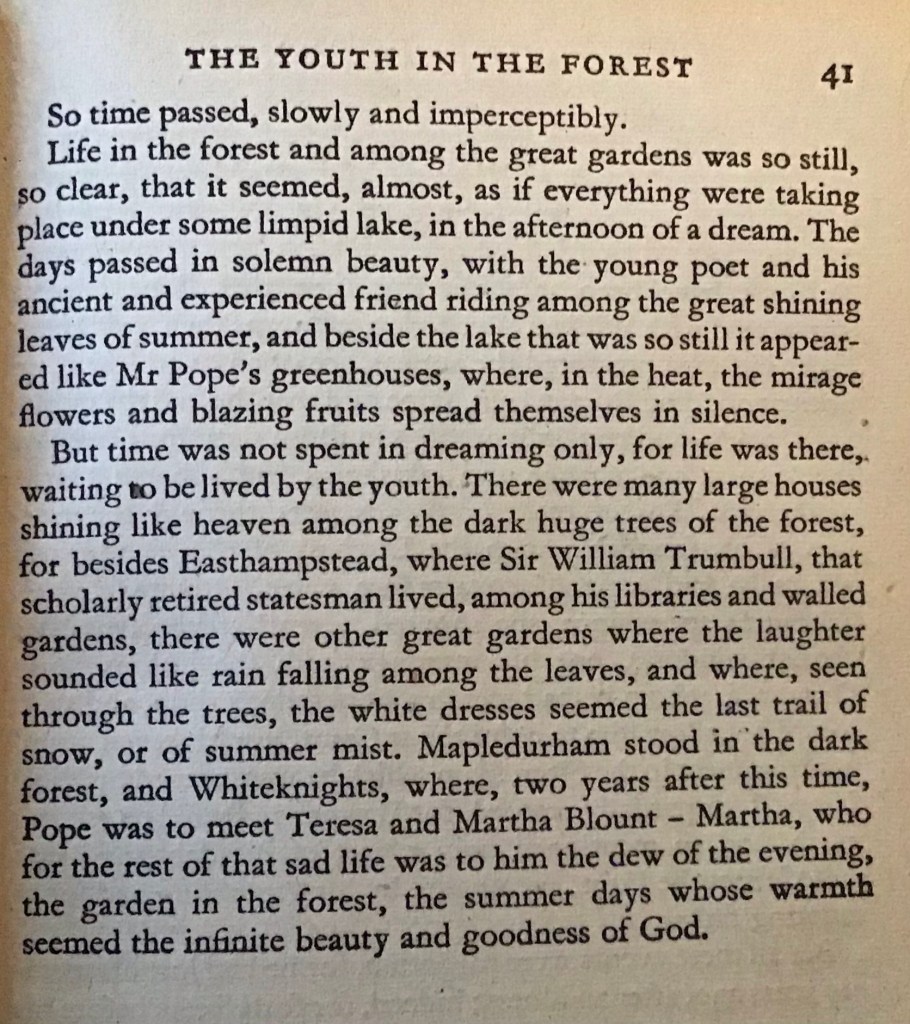
In her 1930 biography of Pope, Edith Sitwell – a writer with whom many elements of Pope’s life must have resonated – captured the feeling of this years of Pope’s life.

The Pastorals, whatever their indebtedness, show already the most extraordinary skill and beauty and perfectly acknowledge the landscape from which they came and a sense of the antique.

A Year with Alexander Pope (2)

The Boy in the Forest

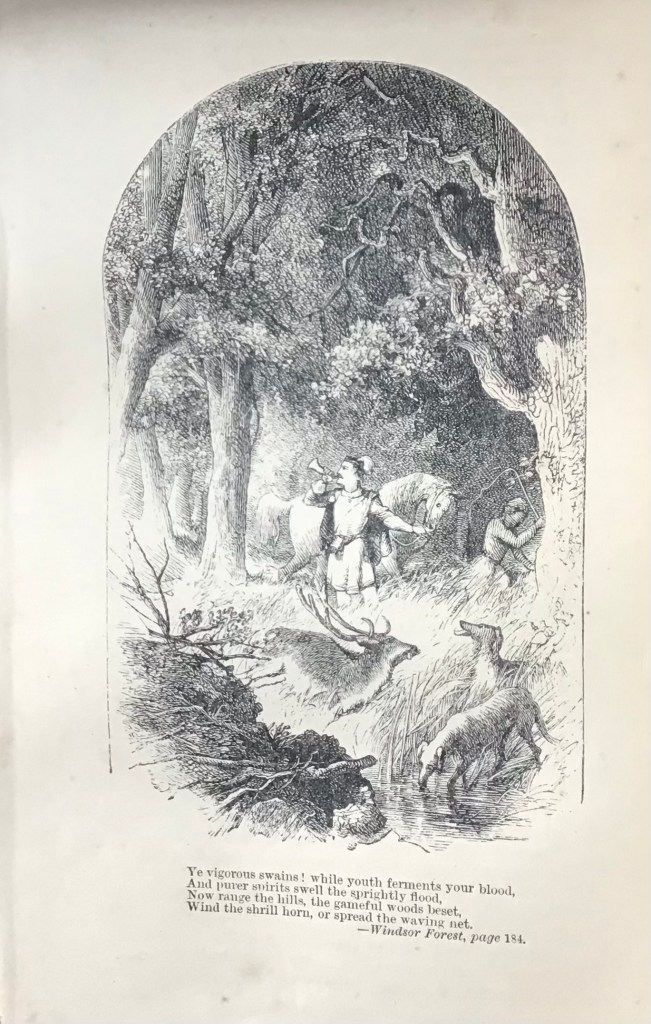
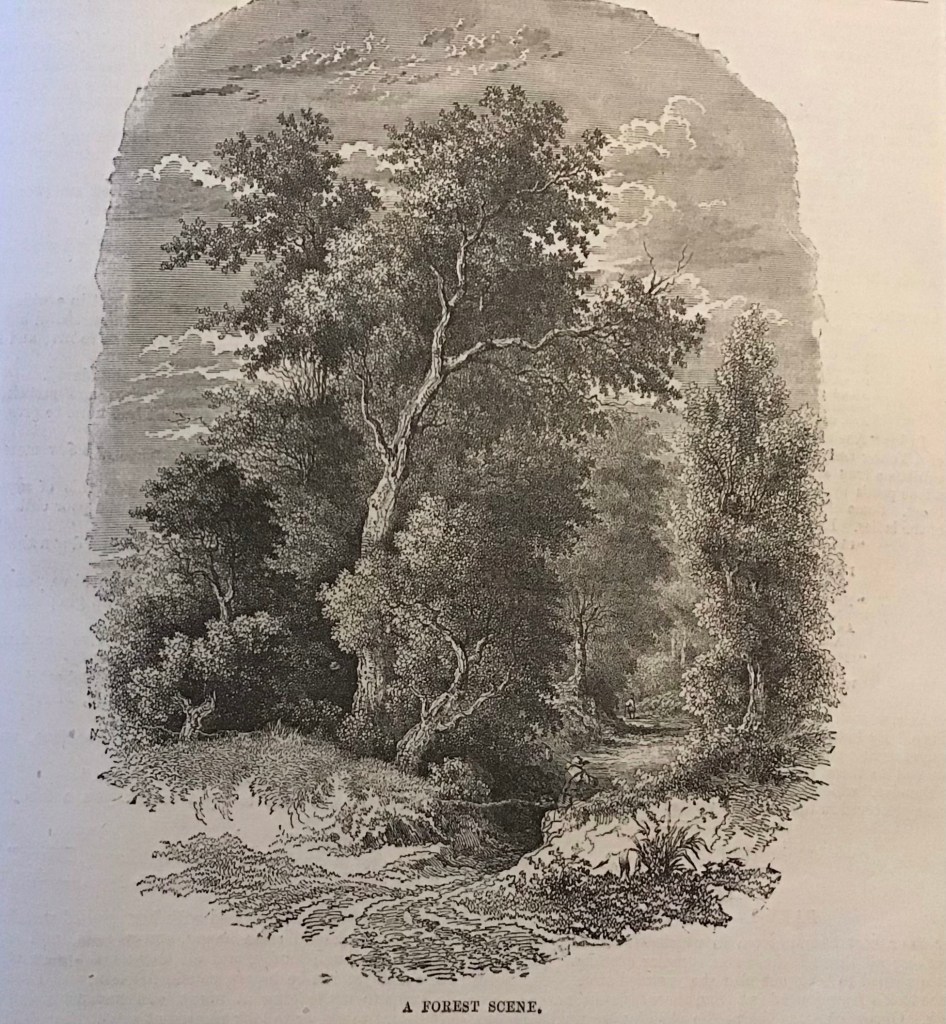
In 1859 when the ‘Ladies’ Treasury’ magazine offered its readers a profile of Alexander Pope it was perhaps unsurprising that they offered this forest scene as illustration. For a mid-nineteenth century female audience the magazine chose to present Pope’s exceptional youthful works – especially the ‘Ode on Solitude’, the Pastorals and ‘Windsor Forest’ – as capturing the essence of his work with less discussion of his later career.

The Catholicism of Pope’s family deprived him of access to the more formal education which might have been expected for him. There were brief episodes of tutoring or more informal schooling but once his family settled away from London to Binfield Heath, he was largely responsible for his own reading and learning and much of his time was spent in the countryside.

By the Rev. Penny in ‘Bygone Berkshire’ by Ditchfield (1896)

This idea of the boy in the landscape is evocative indeed but what was he reading? We have to assume Shakespeare but we know in 1700 Pope read the works of George Herbert and had the first two volumes of ‘Don Quixote’. In 1701 he received a copy of Chaucer as a gift.In 1706 he acquired three volumes of Montaigne’s ‘Essays’ which were to fill his reading imagination for the whole of his life.

A Year with Alexander Pope 1688-1744 (1)

As the year began I decided I was going to make this the year that I read and thought about the works of the poet Alexander Pope. I had only the slightest familiarity with his works and knew even less about his life. Two months in I have swamped myself a little, am a little overwhelmed but deeply, deeply interested in this extraordinary man.

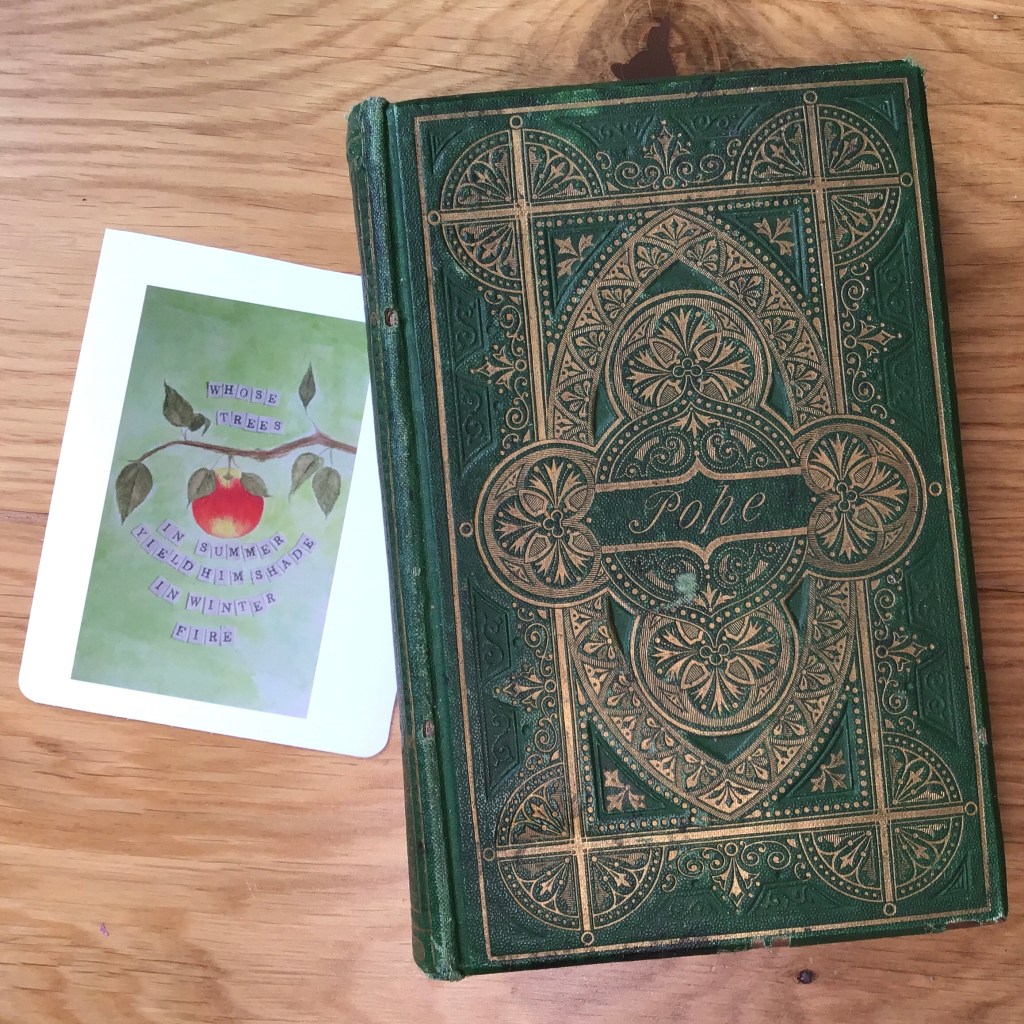
I buy a volume of his major works, an audio recording of a selection of poems and begin. I begin reading but am soon reading them aloud to myself in the evenings to better hear what Pope had written but also to hear myself. I am in later middle age and I already know that the crystal sharpness of my memory is less indeed than it was. Living alone I an aware of a growing quietness, a failure to resonate; people are finding it harder and harder to hear me.

I began at the beginning. A first poem and his early childhood. A month in I know anti-Catholic legislation meant that Pope’s childhood years were spent at Binfield near Reading – very close to where I now live.

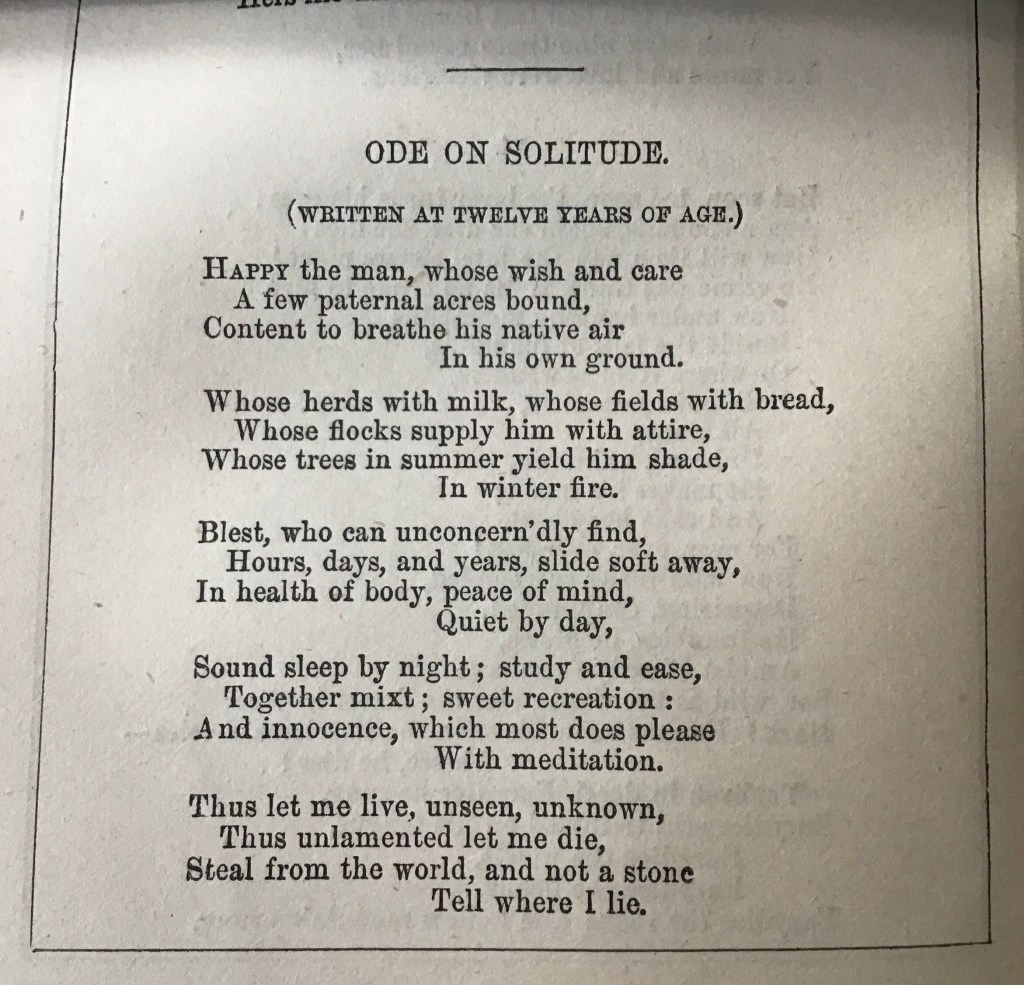
Then I read the ‘Ode on Solitude’.

I was caught by the soft sense of satisfaction, the value of place and solitude. And already the idea of good health, mind and body, as an especial privilege. Of which more later.