Eyeless in Gaza

Sometimes you read something and immediately you know that you have read something important. This happened to me with Huxley’s ‘Eyeless in Gaza’ (1936). I’d chosen it as the second of my reads where the title was a quote from Milton. It’s again a quote from ‘Samson Agonistes’ – a poem which describes the final part of Samson’s life, blinded and a prisoner of the Philistines, ‘eyeless in Gaza at the mill with slaves.’

This post bothers me a little because I would hate to do such an extraordinary book any kind of injustice. Huxley builds in his account of the life his hero Anthony Beavis a vivid and powerful story about the different types of blindness and imprisonment which come from our education, our relationships and the competing philosophical systems which surround us.

The story moves backward and forward through the events of Anthony’s life. In that respect it reminded me a little of L.P. Hartley’s ‘The Go-Between’ perhaps in part because of the lasting impact of a suicide which is a part of both books.

For a book which is full of discussion of competing theories, political, religious and sociological as Beavis refines his ideas and develops his career as a sociologist, it is small, extraordinarily vivid episodes which impress so deeply. I found myself greatly moved by a description of Anthony taking his friend’s fiancée Joan to see a production of ‘Othello’. She has rarely been to the theatre and has only read the play and the description of the building of her emotional and physical responses to the reality of the play before her until she is overwhelmed is truly remarkable.

Anthony realises the pattern made in a life by these single events as he pieces them together in the very final pages of the book. He makes a unifying theory of these events and all he has read and believed as he prepares for a confrontation he knows awaits him.

Vita Sackville-West

I chose my next few reads with no more strategy than to choose some novels by authors who had selected for their titles a quotation from John Milton. Vita Sackville-West’s ‘All Passion Spent.’ The line is from ‘Samson Agonistes’ – ‘And calm of mind, all passion spent.’

I can’t tell you how much I enjoyed this book. It was the first novel by Vits Sackville-West I had read and I found it a book of real quality. I’d only really known about Sackville-West in the contexts of her garden and her relationship with Virginia Woolf.

‘All Passion Spent’ tells the story of Lady Slane, eighty-eight years old and just widowed as the novel opens. She has spent her long life supporting her husband in his diplomatic and political career and caring for her six children. The book narrates Lady Slane’s decision to defy her children and live independently and Sackville-West’s portrayal of her decision, the unlocking for Lady Slane of a period full of a calm regard and reflection for her own life and the several new friends who enter her late life is quite beautifully done.

The portrayal of Lady Slane as an old lady is clever, observant and perceptive especially as I think the author was about forty when she wrote the novel.

I was very moved.

Advice

The Girl’s Own Annual. 1892-3

‘Answers to Correspondents’ captures in its columns the lives of so many young women and at an extraordinary moment. Query after query show young women in the hunt for employment and professions open to them. At the same time questions of etiquette and marriage still loom large in the lives of these young women.

The authors of the answers are fairly stringent though. We would very much like to know the stories that have prompted in particular AMBASSADOR and TROUBLED SOUL to write…

Observe how carefully REX, Canada is steered away from any further study of the personal life of George Eliot.

Gerald Murnane

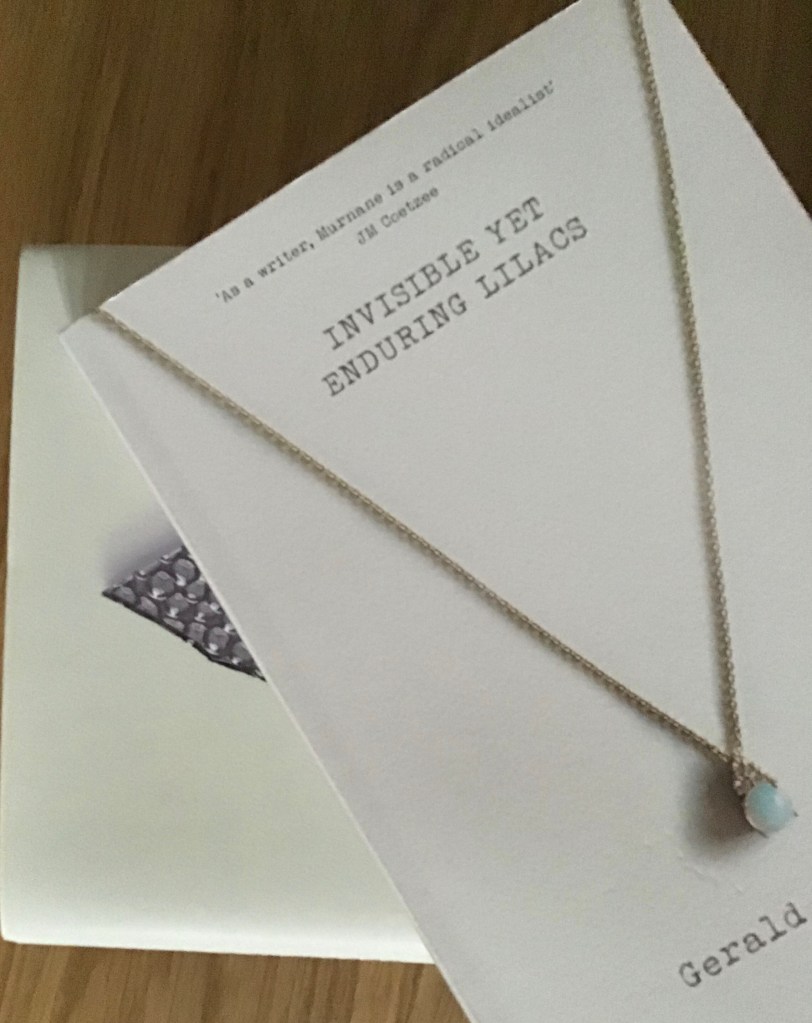
I came late on to Gerald Murnane’s books which I’m greatly sorry for as I think they contain some of the most extraordinary writing I have read for a long time. I only heard of him because I received a copy of a volume of his essays ‘Invisible Yet Enduring Lilies’ as part of a subscription to the terrific ‘And Other Stories’ publishing house.

Murnane’s work seems entirely appropriate to the peculiar circumstances of a locked down world. Murnane has not only never left Australia but has remained firmly rooted in the state of Victoria. Yet in his fiction and non-fiction he unlocks the world in complex meditations drawn from the very deepest and detailed observations.

Extraordinary.

H. Allnutt and his flower garden

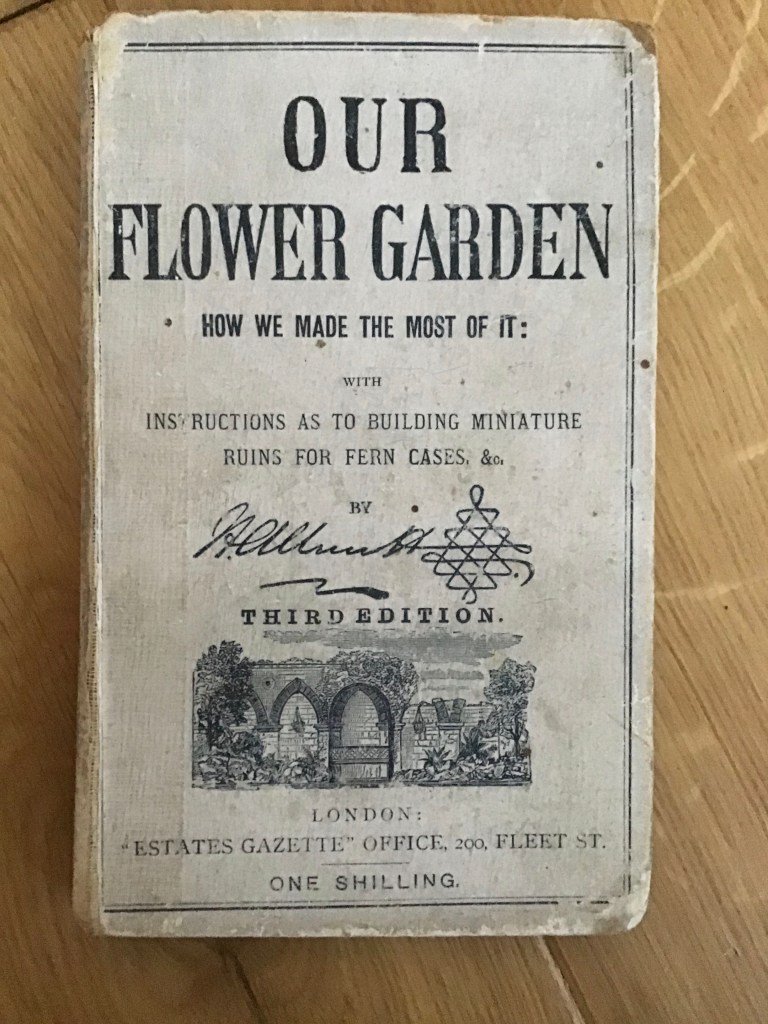
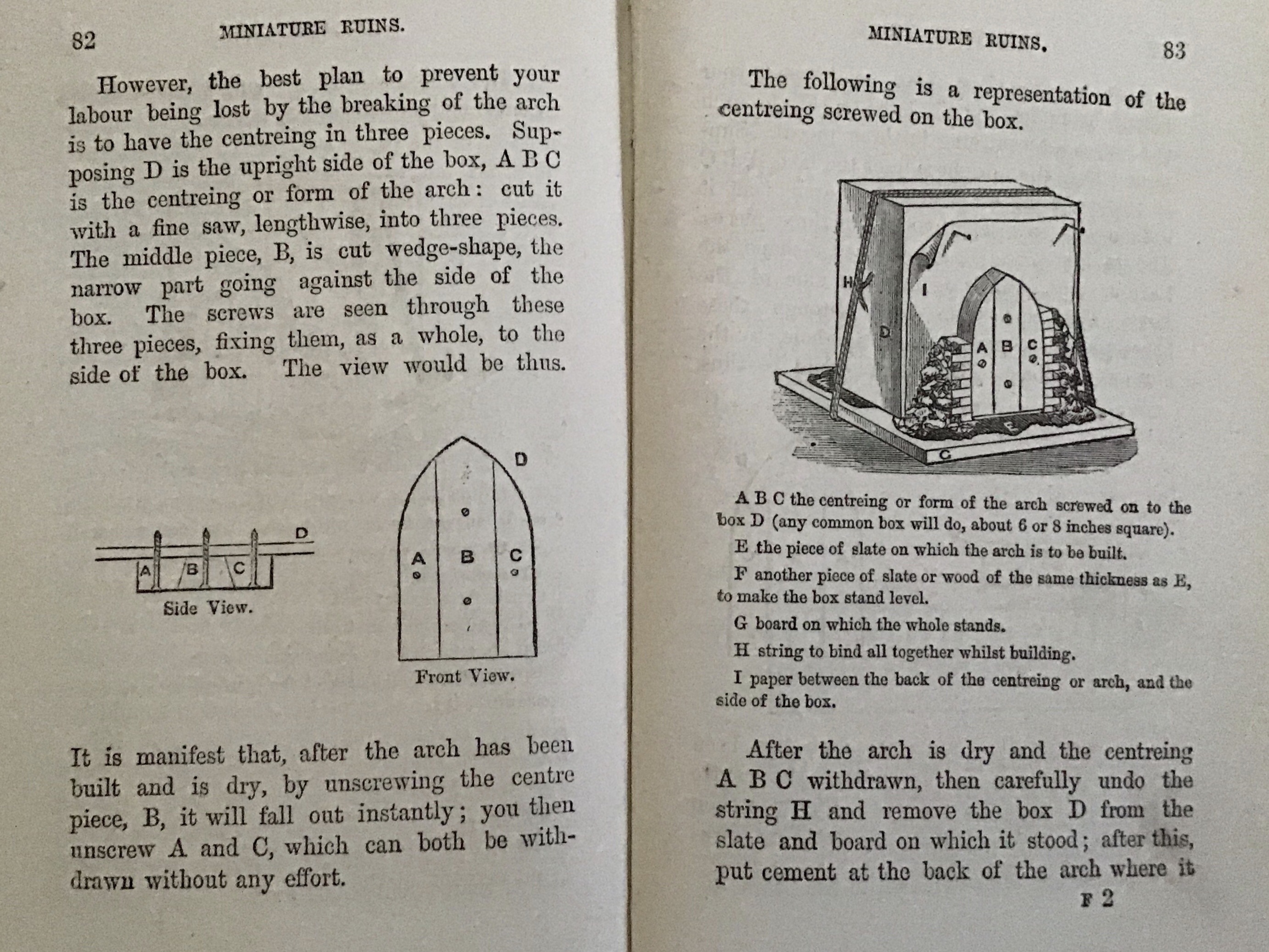
Some books are just a pleasure even before you get to read and admire them. This is certainly true of ‘Our Flower Garden. How We Made the Most of It with Instructions as to Building Miniature Ruins for Fern Cases’ by H. Allnutt. There are some very pleasures in a very modest seeming book. My copy’s not dated but it prints a review for another title from 1877 and the book cost a shilling. Information on H. Allnutt is scant. There’s a paper manufacturer of that name and that might explain the extensive list of Allnutt’s publications. (See below). I love the flourish on Allnutt’s signature and I love that he described the books he produced as ‘cheap and useful.’

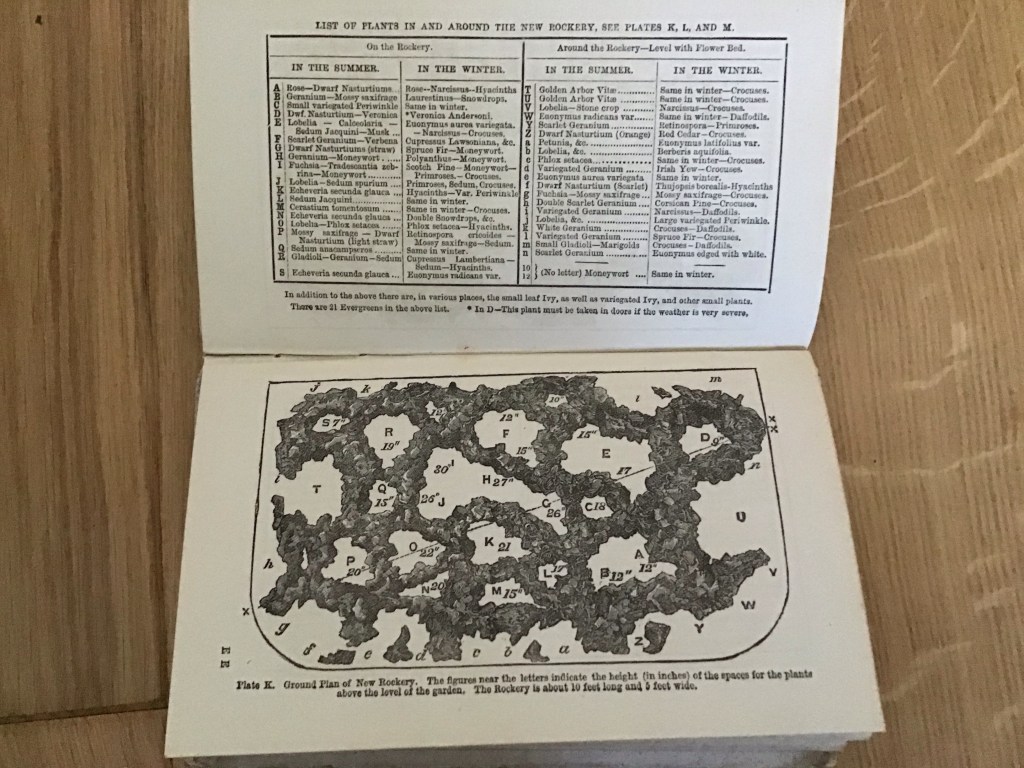
The disarming titles of the chapters ‘Vain attempt to grow Vegetables,’ ‘Unsightly objects to be shut out from view’ draw you in and you know you’re in a different league when you come upon a rockery plan like the one above.

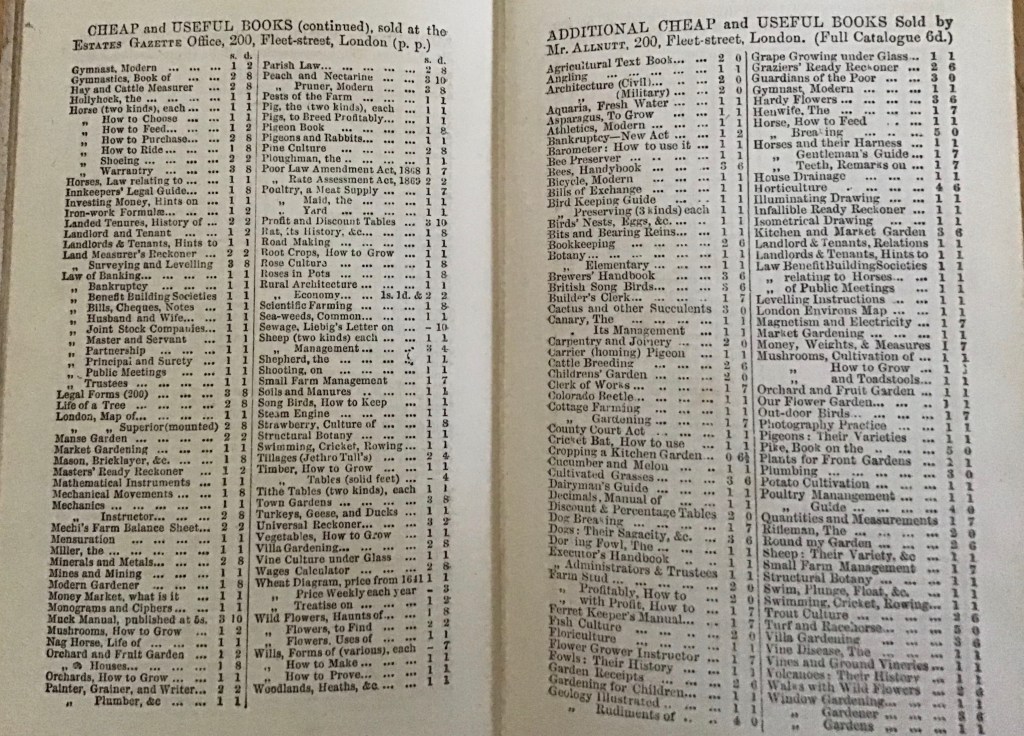
But what really fascinates is the prodigious list of Mr. Allnutt’s other publications on an almighty range of topics.

Everything from Agricultural Chemistry to Composition with Creditors, the Muck Manual, Trout Culture, the Brass Founders’ Manual and the Rat, its History. But the most publicity is dedicated to Allnutt’s ‘The Historical Record of the Franco-German War 1870-1871.” This seems from the publicity to be a work of astonishing detail – the Index of Contents offers such titles as ‘The Balloon Post,’ ‘Parisian Incredulity’ and ‘Visit to the Wounded.’ It’s hard not to imagine that Allnutt must have some particular knowledge.

I see that the ‘Estates Gazette’ still exists – a commercial property publication. I’ll leave you with a picture of Allnutt’s charming design for a miniature ruin to place in a fern case.

Lovely picture books on things to do at home

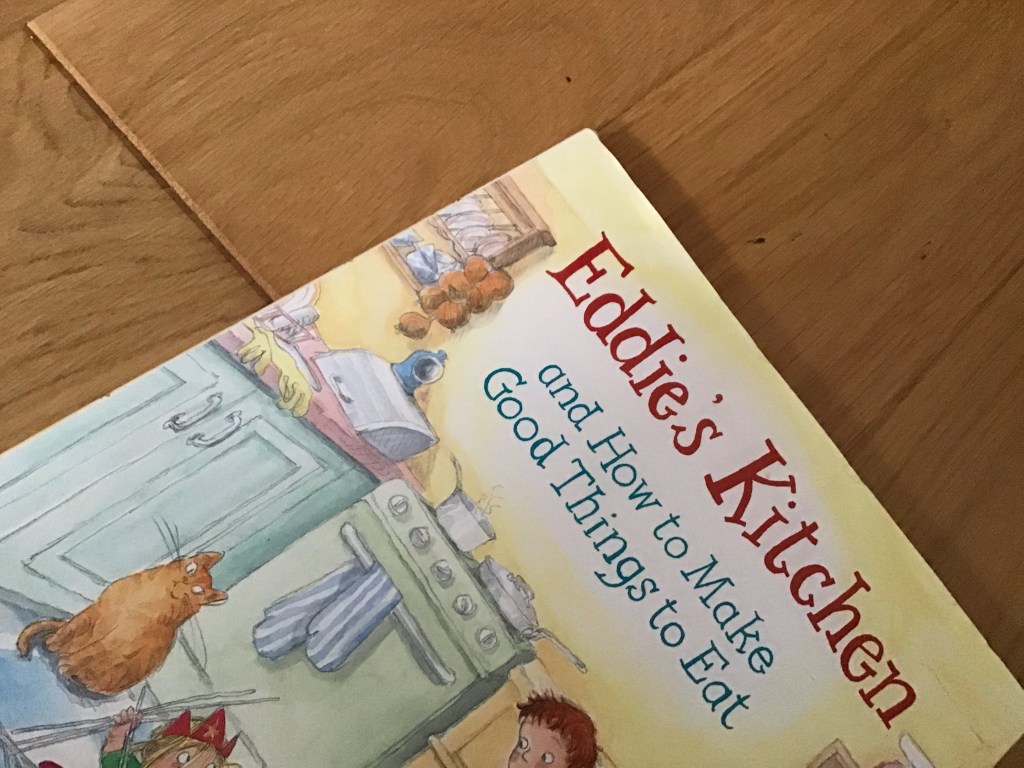
Sarah Garland’s lovely books about Eddie and his family are some of my favourites offering the great combination of narrative and the introduction of genuine skills for children. Three ‘Eddie’s Garden’, ‘Eddie’s Kitchen’ and ‘Eddie’s Toolbox’ seem particularly apposite for now and I’ve nothing but admiration for picture books which give children the sense that skills may be within their grasp. I love reading these to children.

I also like two picture books by Gillian Hibbs on a similar theme – children finding enjoyment and satisfaction in their immediate world – ‘Tilly’s at home Holiday’ and ‘Errol’s Garden.’

Eric Linklater (again)

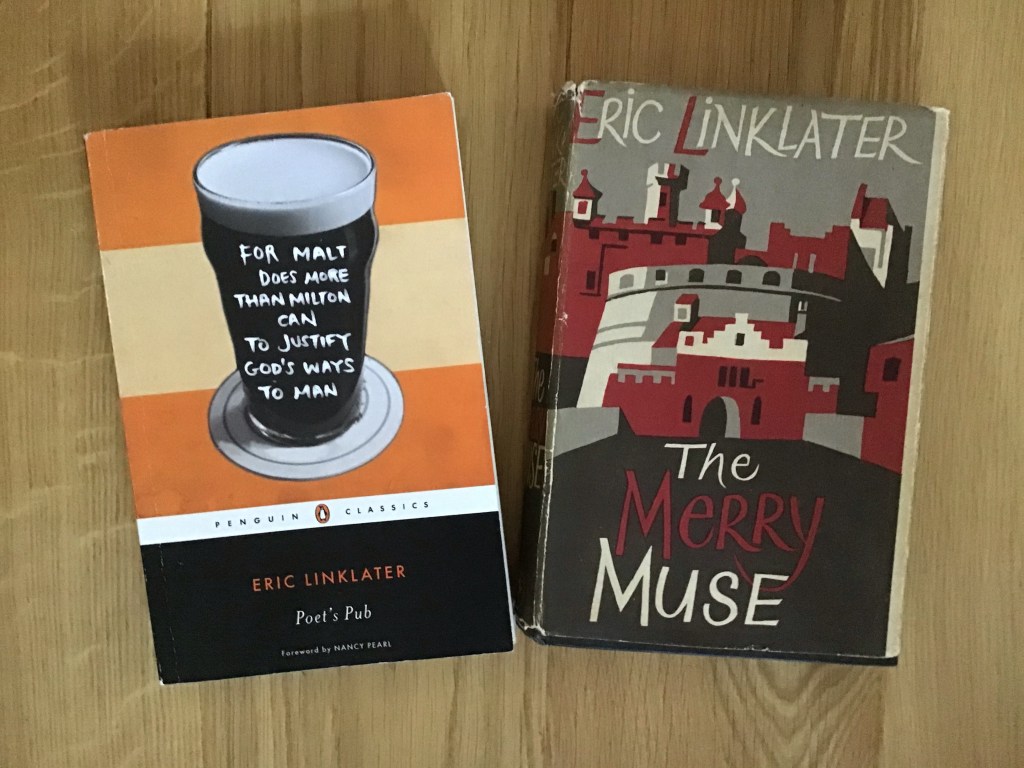
Reading these two back to back has been an interesting comparison. In terms of Linklater’s published works these two fall exactly thirty years apart. “Poet’s Pub” was first published in 1929 while ‘The Merry Muse’ is from the very different world of 1959. Both hugely enjoyable reads though and both marked out by wonderful capturing of character. Both books contain a reasonably large cast of characters and among these casts are a number of characters who play small roles within the novels interacting with the central events and characters on a handful of occasions. Yet every character beautifully captured often in a very few words.

There are similarities between the two books – both involve missing manuscripts. In ‘Poet’s Pub’ the author Saturday Keith’s manuscript for his poem ‘Tellus Will Proceed’ as well as some missing plans and in ‘The Merry Muse’ some previously unknown obscene poems by Robert Burns.

If the later book has a heavier maturity of plot that’s only to be expected. ‘The Merry Muse’ also offers a fine developed portrait of an older man – lawyer Max Arbuthnot. ‘Poet’s Pub’ is wonderfully funny and lighthearted and contains one of my truly favourite characters – the barman Holly with his education obtained from the backs of cigarette cards.

Finally, ‘The Merry Muse’ was the second book I read within a week which quoted the song ‘John Anderson, my Jo’ – the other was ‘Dear Enemy’ by Jean Webster.

The pleasures of jump reading……

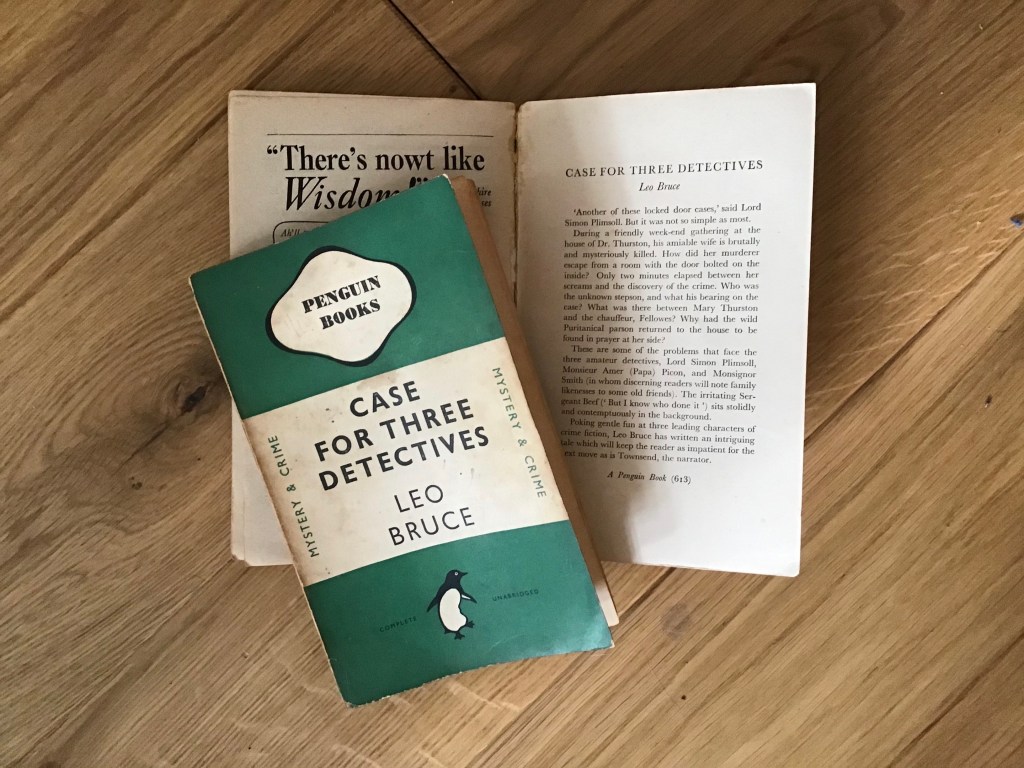
I love it now when my reading jumps one thing to the next which is almost always how it happens now. When I read Bernard Hollowood’s ‘Scowle and Other Papers’ (see earlier post) which I really liked but did basically read because it was yellow, I found an advertisement in the back for a new publication in Penguin Mystery & Crime series called ‘Case for Three Detectives’ by Leo Bruce. I’ve just finished reading this and it proved an enjoyable read.

A ‘locked room’ and three amateur detectives on the scene as well as a bemused local policeman. The three detectives, M. Picon, Lord Simon Plimsoll and Mgr. Smith, based on three very famous other literary detectives offer three very complex solutions but the policeman has the last word…..

1925

I had a request the other day for a suitable book for a 95 year old. I suggested a book either written or published in the year of their birth or a book about or by someone who was born that year. Since that year was 1925 this turned out to be a very rich vein indeed.

1925 saw the arrival of ‘Carry On, Jeeves’ by P.G Wodehouse, ‘Mrs Dalloway’ by Virginia Woolf, ‘The Secret of Chimneys’ by Agatha Christie, ‘The Great Gatsby’ by F. Scott Fitzgerald, ‘Gentlemen Prefer Blondes’ by Anita Loos and ‘The Painted Veil’ by W. Somerset Maugham amongst others.

Some exceptional births too: Gerald Durrell, William Styron, Yukio Mishima, Flannery O’Connor, Elmore Leonard, Gore Vidal….The strangeness and perhaps the interest of this is that it puts together in our minds people we don’t necessarily associate with the same time frames.

Last year as a 90th birthday gift I gave books by authors born in 1929 and this put together Anne Frank and Martin Luther King Jr. which again seemed such a pairing.

Happy Birthday, William Shakespeare

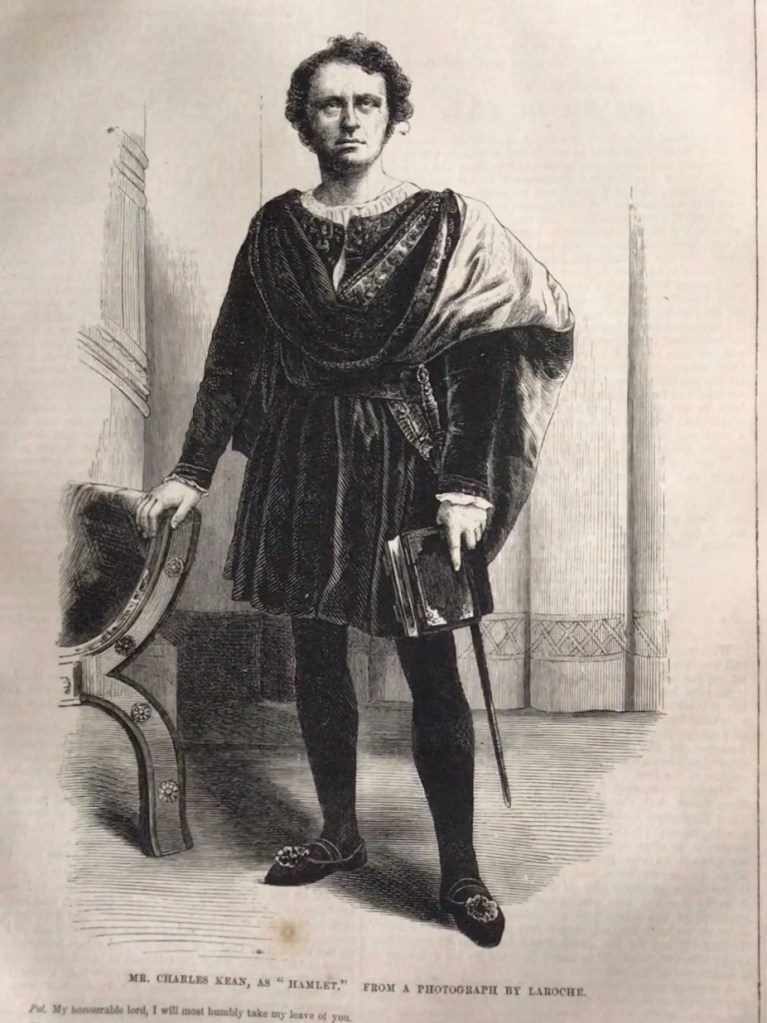
Described at the time as “the great and powerful genius which has restored Shakespeare to his throne in the hearts of the people of England” Charles Kean was the son of the actor Edmund Kean.

The only performance the two played together in London was in 1833 on which occasion Edmund played Othello, Charles Iago and Ellen Tree whose Charles was later to marry played Desdemona. Edmund was taken ill during the performance with what was to be his final performance. He is said to have commented, somewhat ungenerously, after Act I on that evening when he was beginning to become unwell, “Charles is getting on to-night; he’s acting very well; I suppose because he’s acting with me.”

Charles carried on acting well and when he became lessee of The Princess Theatre managed Shakespearean performances known for “brilliance of spectacle and scenery, correctness of costume, and an accuracy in decoration.”

Most notable in his acting career were his performances as Wolsey in ‘Henry VIII’ and his version of Shylock. Looks great as Hamlet too!