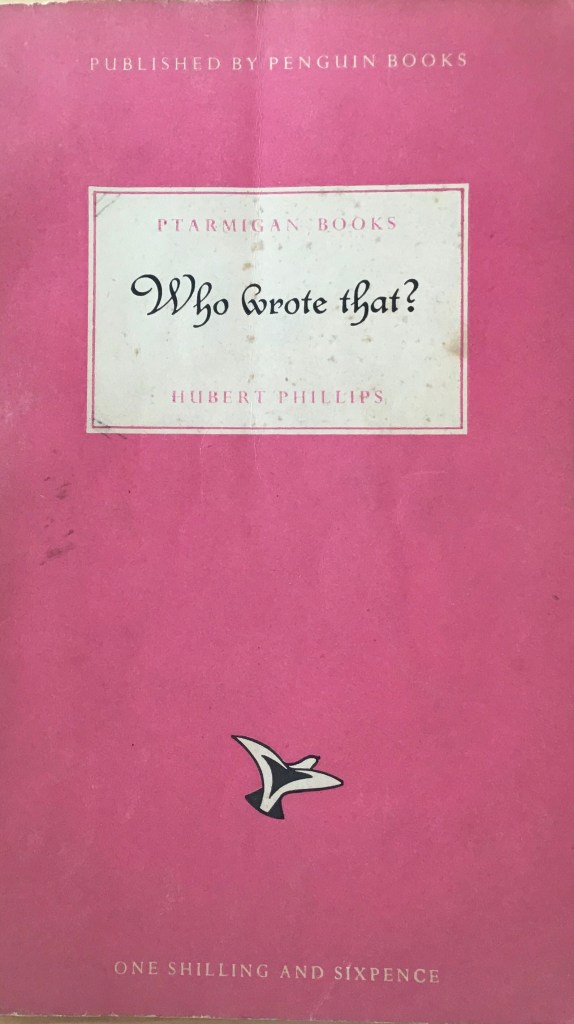
In a time when the ways in which we are able to enjoy ourselves are becoming more and more limited, I’ve been prompted to think about people in the past and the amount of sheer work they put into their leisure pursuits. The place I want to start is Ptarmigan Books. Ptarmigan was a very small imprint of Penguin Books, one of the family of ‘P’ birds in the Penguin family. Ptarmigan was devoted to puzzles and indoor games.
‘Who wrote that?’ was the work of Hubert Phillips (1891-1964) who edited the Ptarmigan Books and who was a man of many talents, economist, journalist, bridge player and authority and crossword compiler and puzzle maker par excellence.
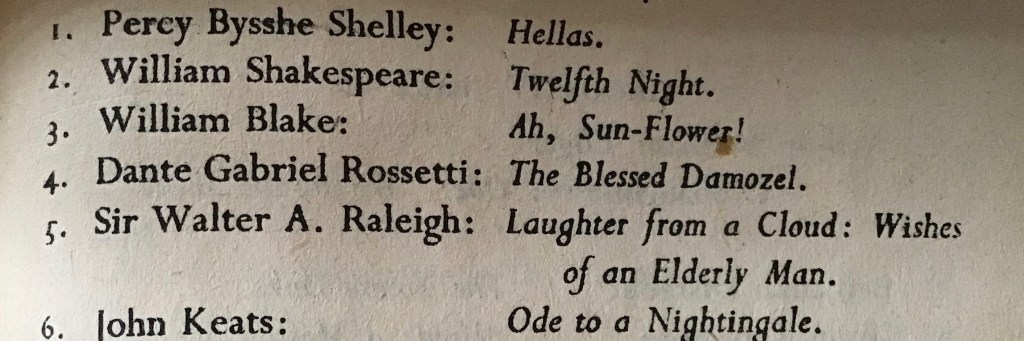
The books is a literary quiz and not for the faint hearted. I’m inserting a small sample (and the answers). It’s a pause for thought too on how broad a reading knowledge Phillips could expect from his readers…
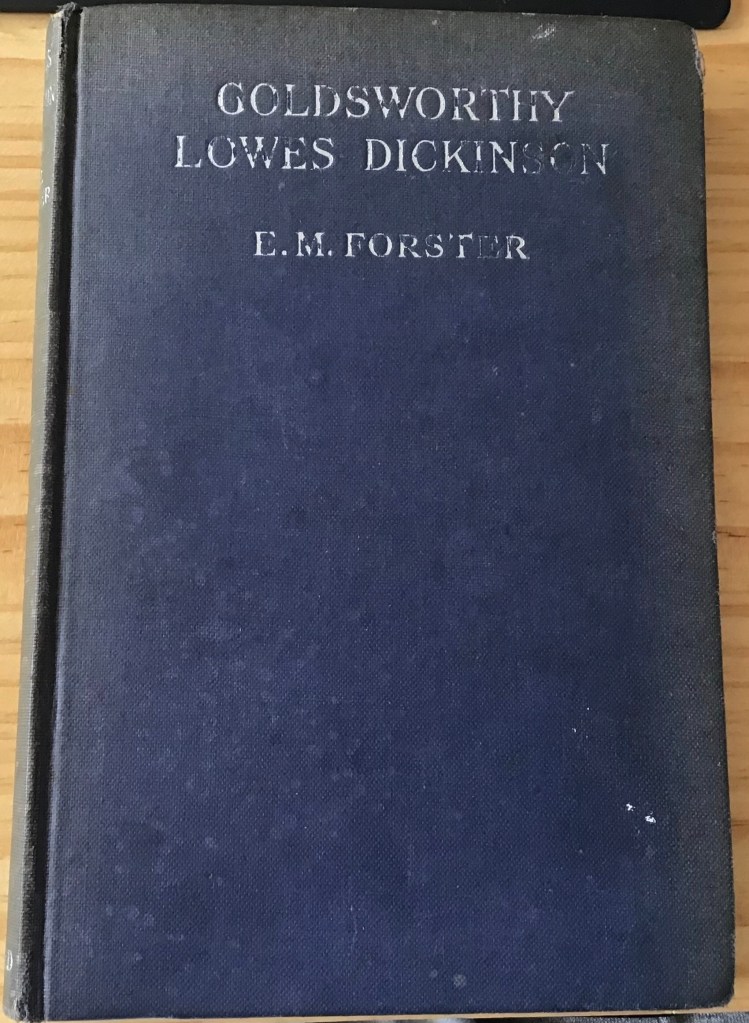
Forster’s book of essays ‘Abinger Harvest’ brought me to this book – Forster’s biography of his friend Goldsworthy Lowes Dickinson. Dickinson (1862-1932) was a Cambridge fellow, political scientist and philosopher. Among his achievements were the ideas he developed in the First World War for a League of Nations which came to be very significant in the postwar period.
I want to write about this book, however, less for its subject matter than for what it tells us about the art of biography. Forster was a close friend of Dickinson and his literary executor but in a book of extraordinary honesty approaches the task of biographer full of reservations about his own shortcomings. Which makes it a fascinating read.
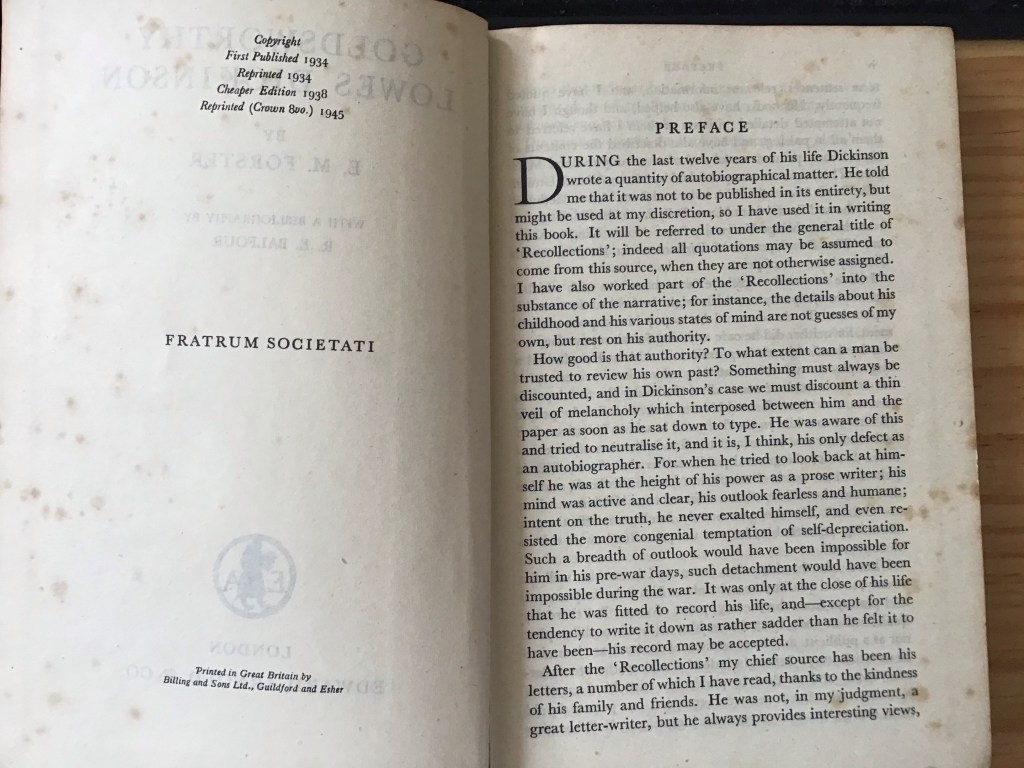
In the preface Forster confronts the challenge his friend presents him with and sets himself a laudable goal, “I should like to make him live for people who never met him in the flesh.” Forster’s book is a book about character and nature. It is an exploration of a sensitive nature and the struggle, one of some length in Dickinson’s case, of finding one’s metier.
It epitomises Forster’s style and attitude that as he explores the three writers that meant so much to Dickinson throughout his life – Shelley, Plato and Goethe – he wonders if the fact that these writers have never meant much to him is a significant barrier to writing the biography at all.
Again, Forster fears he cannot capture the technical nature of Dickinson’s career yet grabs the spirit of it absolutely with a phrase describing Dickinson as having a ‘suicidal sense of fairness.’ Forster fears too he has failed to show the lighter side to Dickinson but reminds us how futile it is to try to capture nonsense.
It’s a wonderful book and Forster chooses to put at the end several of Dickinson’s letters and I greatly loved the two letters written by Dickinson to Virginia Woolf full of the most overwhelming admiration for ‘The Waves’ – the second as he began to read it for the second time.
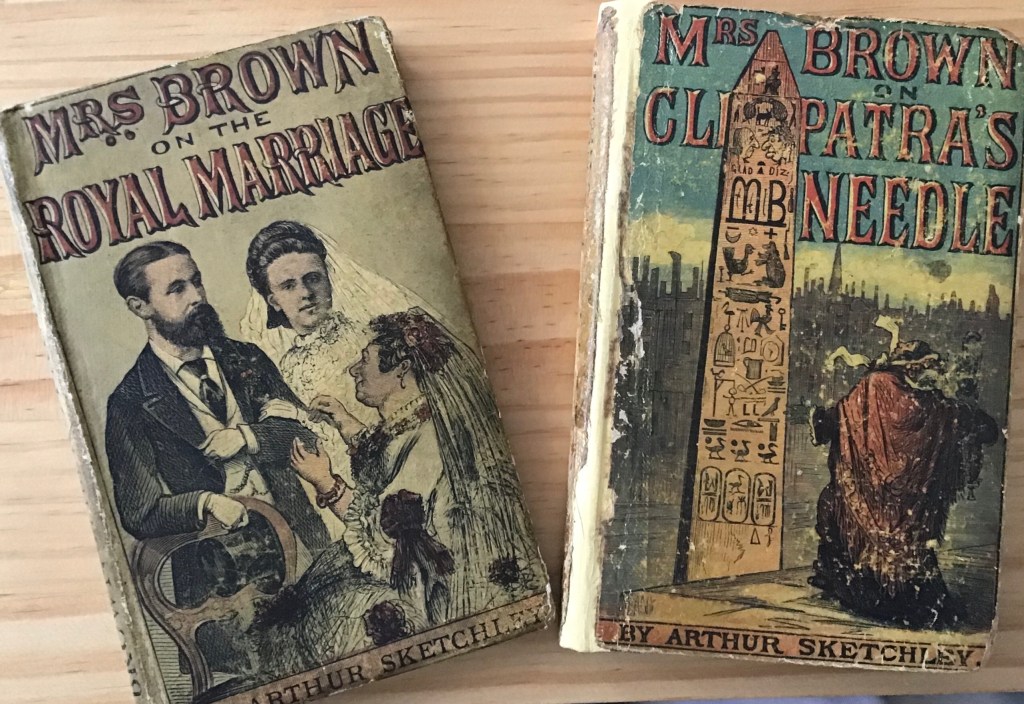
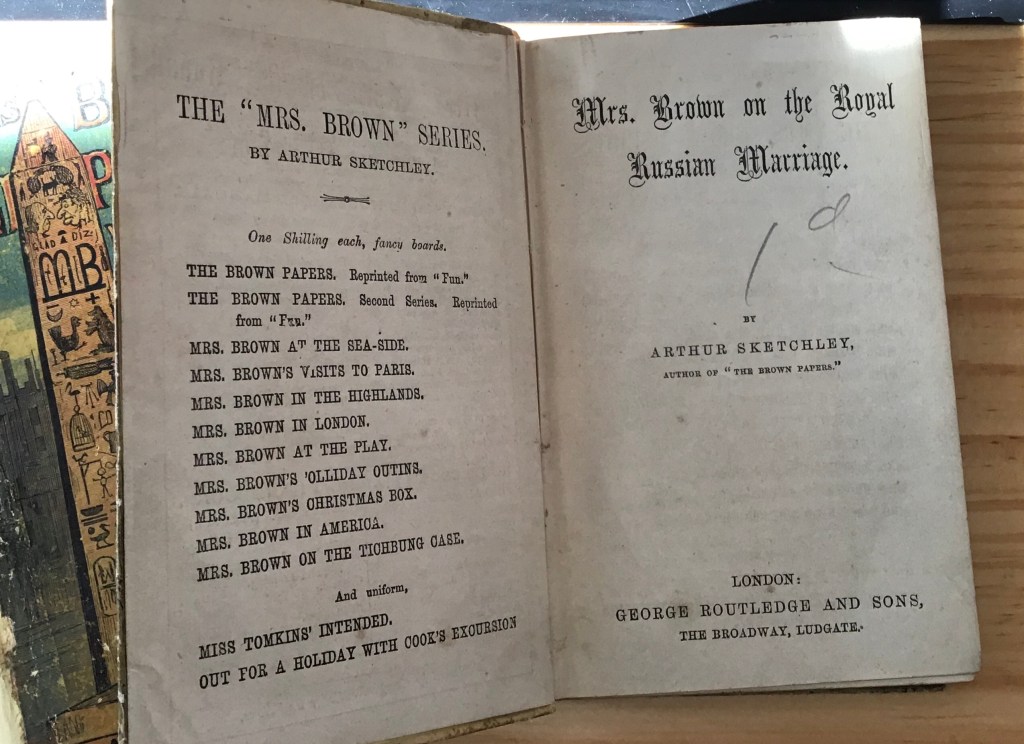
Earlier in the year I posted about the character of Mrs Brown created by the journalist Arthur Sketchley (George Rose 1817-1882) who first appeared in ‘Fun’ magazine. Mrs Brown went on to enjoy a further career in a series of books, produced in small, tough editions with highly coloured boards by Routledge, ‘one shilling each, fancy boards.’
I’m going to talk about two of the titles ‘Mrs Brown on the Royal Marriage’ about the forthcoming marriage of Alfred Ernest Albert, Duke of Edinburgh, the second son of Queen Victoria, to Duchess Marie of Russia in 1874. The second is ‘Mrs Brown on Cleopatra’s Needle’ (1878).
What I find so interesting about these books is how quickly they must have been turned out to allow the author make comment on the great and more minor events of the day. ‘Mrs Brown on Cleopatra’s Needle’ not only narrates a popular view of the extraordinary story of the transportation, near loss at sea and erection of the Needle on the Thames Embankment. Sketchley also takes the opportunity to comment on a range of other contemporary happenings – from the coming of new coffee-houses as rivals to public houses and a savage indictment of the commutation of the death sentences of the four accused in the death of Harriet Staunton in April 1877. The same thing again in ‘Mrs Brown on the Russian Marriage’ – here the Russian marriage allows an opportunity for Mrs Brown to comment admiringly on Florence Nightingale though she’s highly critical of Nightingale’s book with its idea of not disease but dirt.’
The lady got about…
Mrs Brown gave Arthur Sketchley considerable success. This included a series of ‘pictorial entertainments’ at the Egyptian Hall, Piccadilly as reported in 1880, “he has successfully conducted the worthy lady through the United Kingdom, America, Canada and has eventually found his way with her to the Antipodes.”
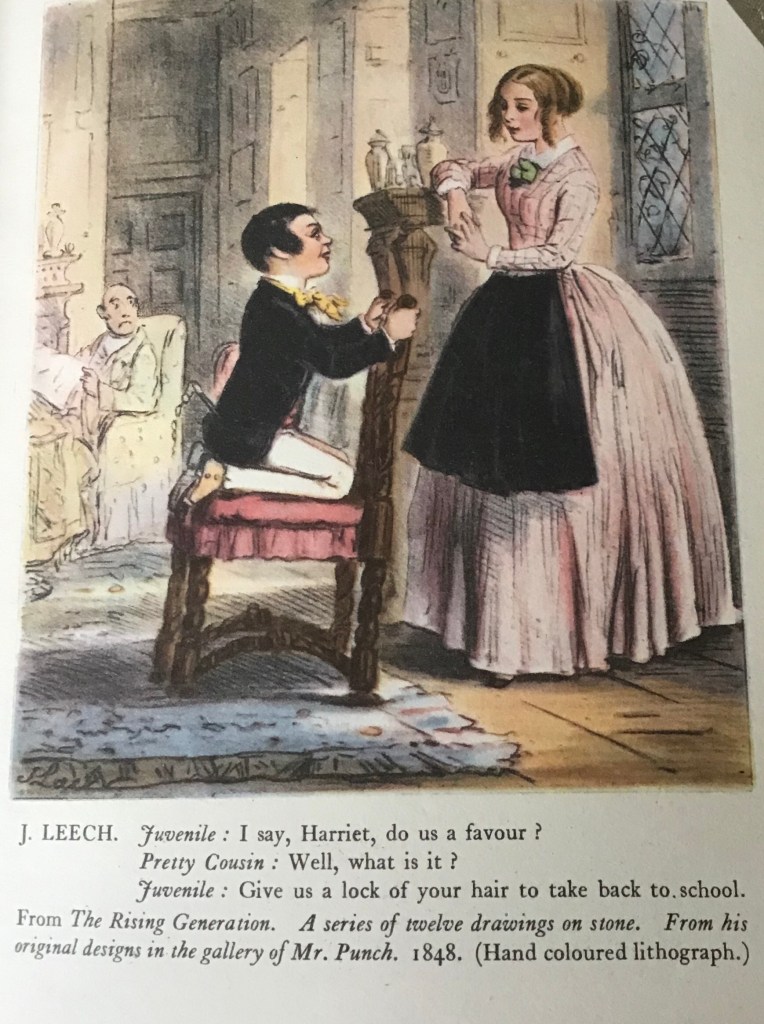
This charming illustration (I particularly like the startled gentleman in the background) is just a reassurance that things don’t change so much.
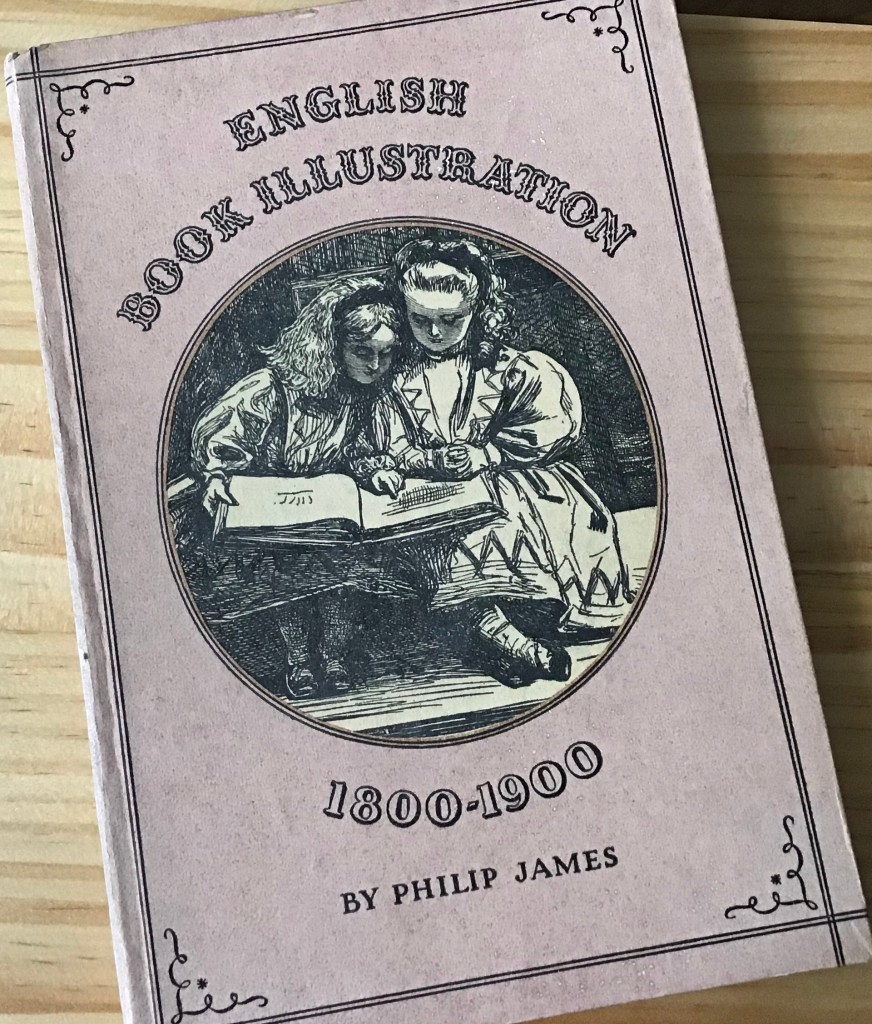
It’s to be found in a book on English book illustration between 1800 and 1900 and what a golden age this was.
By Philip James (1947)
The period begins with Blake, Bewick and Cruikshank and ends with Morris and Beardsley – a period of significant changes in style and taste. Important to remember too, that many of these were illustrations produced for adult literature although this was the period that saw the miraculous illustrations by Caldecott, Greenaway, Crane and Tenniel for children.
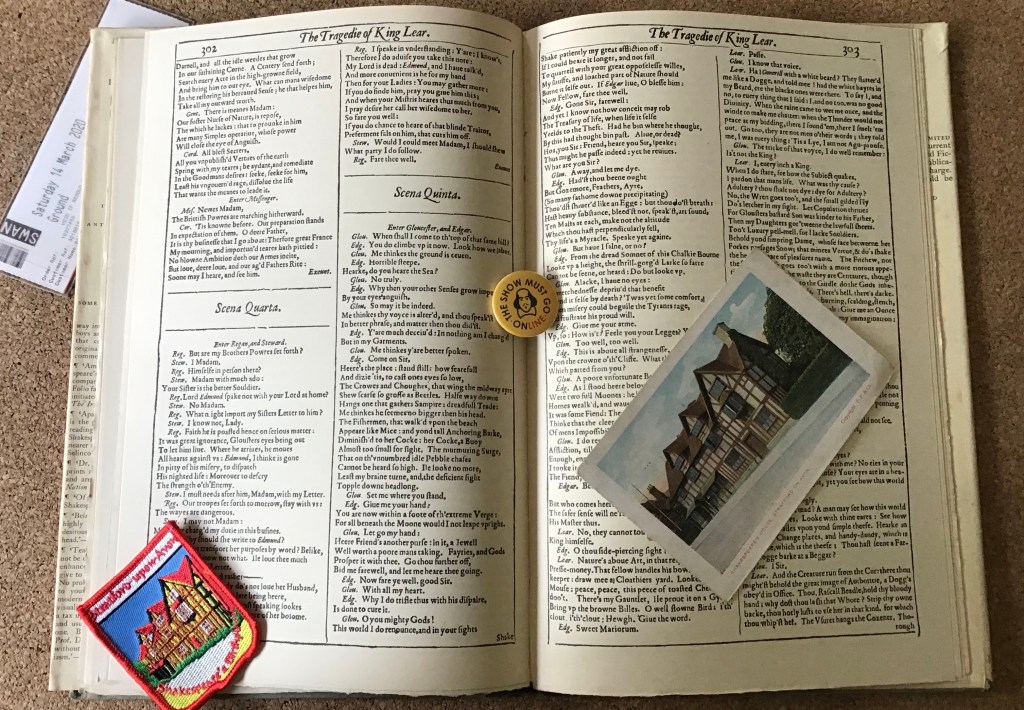
Well, I’d seen quite a lot of Shakespeare in the year before lockdown. I’d been overwhelmed by extraordinary performances – crying at an electrifying ‘Macbeth’ in Reading, moved by a wonderful Isabella in a ‘Measure for Measure’ at the Barbican and astonished by ‘King John’ in Stratford-upon-Avon just as the coronavirus was beginning to close in.
Then came lockdown and a new story. But here’s the wonder – if all continues as is, by the end of the year I will have seen all of Shakespeare’s plays performed in new ways. I read about ‘The Show Must Go Online’ early on in lockdown and it has just been wonderful.
I learned that it’s just as possible to be as moved, delighted and amused by actors in their own homes, in their bedrooms and corridors and stairwells. I also learned how extraordinary it can be to watch people give such resonant performances with the props they made themselves in their own hands and to challenge and redevelop what the idea of an ensemble is. So, thank you.
When we reached June 1st and I went back into work at school full-time I grew fiercely protective of those Wednesday evenings watching ‘The Show Must Go Online’ even resorting to a straight after work nap to make sure I could stay awake.
There was so much other Shakespeare too, to stream and most importantly to donate and pay for. I learned so much, fully explored the Histories, jumped through the love story of Beatrice and Benedick, enjoying the certain happiness of the ending in such uncertain times.
And the good news is that the desire to be back in a theatre hasn’t gone anywhere. In fact, sometimes it’s an almost physical longing but this post is a thank you to Shakespeare and the people who made him live during lockdown.
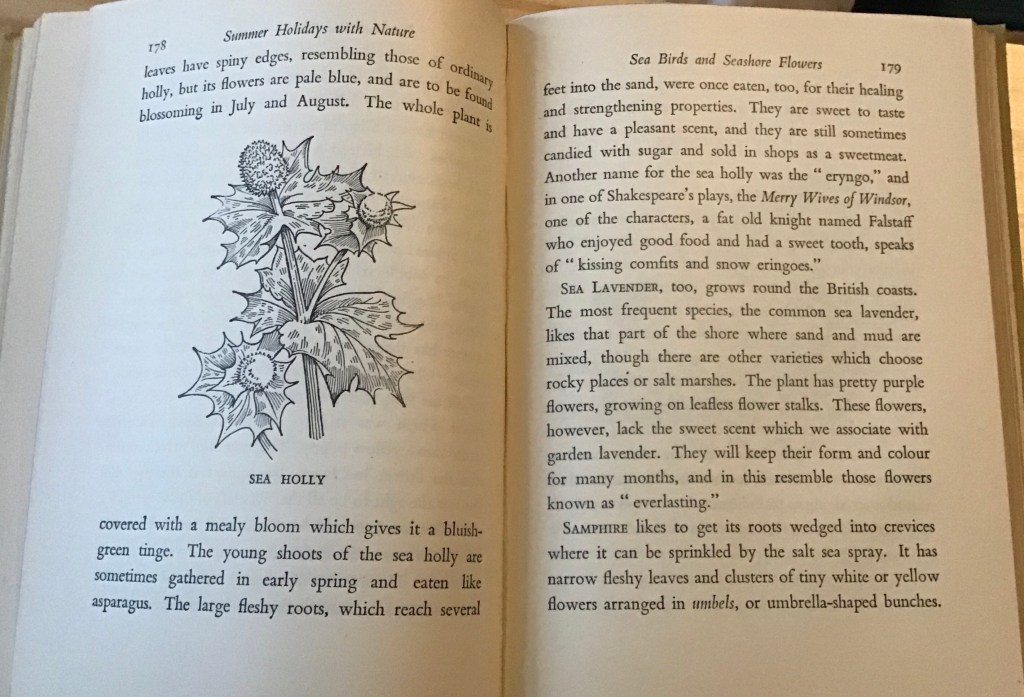
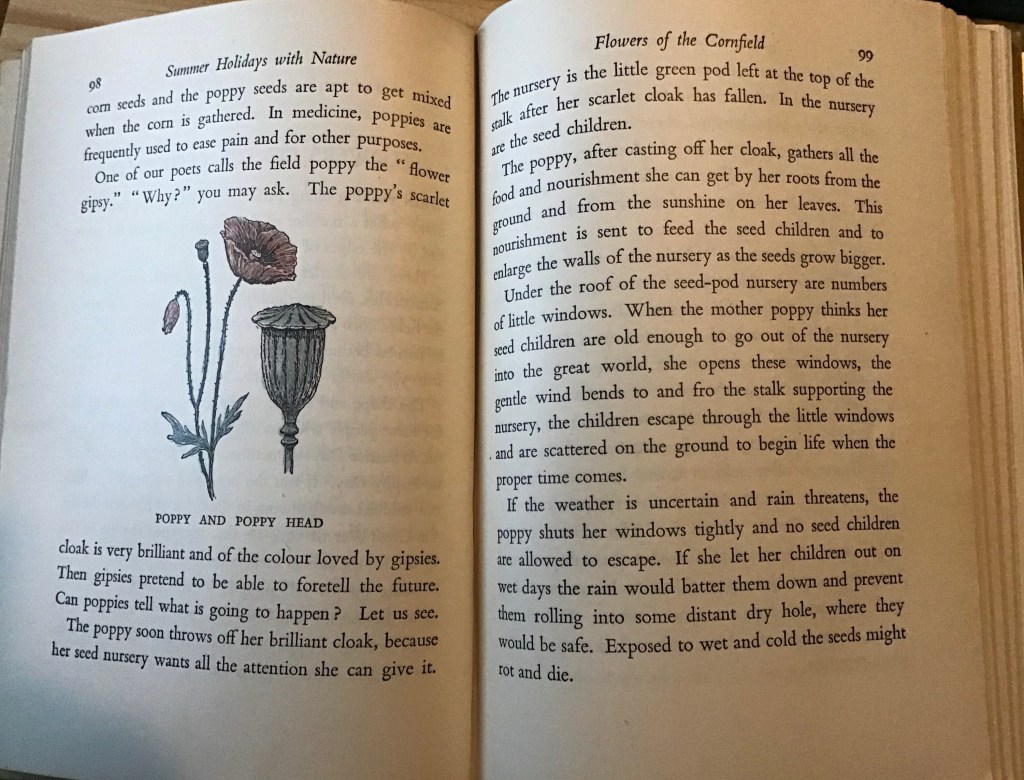
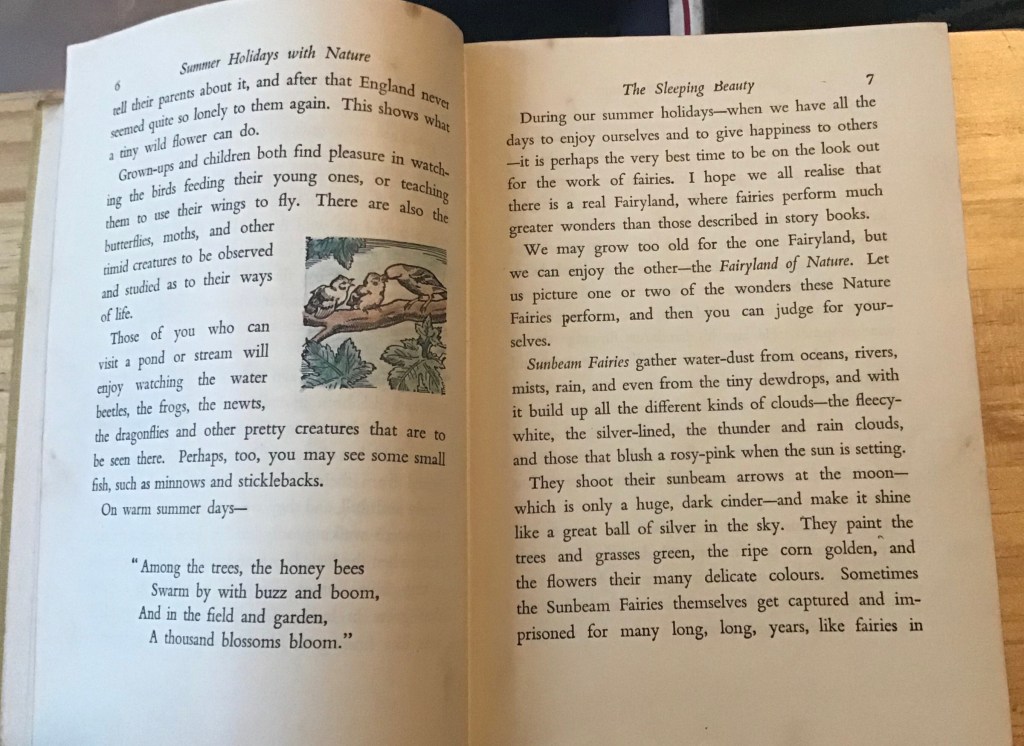
I’ve stayed with ‘Summer Holidays with Nature’ for another post because I so like the clean writing and presentation and the great balance of clarity and detail which is offered to the child reader. There is solid, unpatronising information which I find so satisfying.
And these pages because a child has coloured the poppy so carefully.
‘A Fortnight in September’ by R.C. Sherriff .
I wanted also to mention this novel because it left a strong visual impression on me when I read it. Sherriff is, of course, much better known for ‘Journey’s End’ but this relatively early novel from 1931 captures the experience of a family holiday at the seaside. It captures a very specific holiday experience that of going to the same place every year with the same rituals and how behaviours slip back and alter in that context.
Persephone Books have reissued it in a handsome copy.
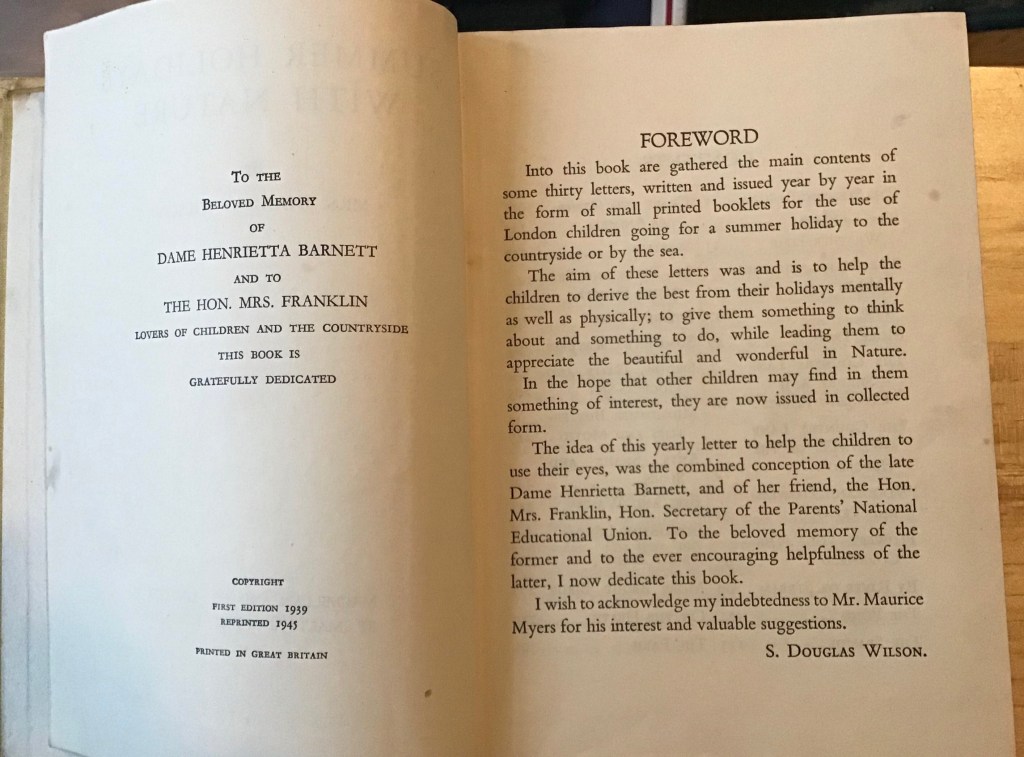
This attractive little nature book for children, a 1945 reprint of a 1939 first edition, turns out to have an interesting background. In a fulsome dedication and introduction we learn that the book is an anthology of small booklets given to children from London going to visit the countryside or the seaside. It’s a worthwhile reminder of how separate and specific the lives of children and their families were for so long.
The accounts of the specialness of other worlds are frankly and charmingly written. A nice thing.
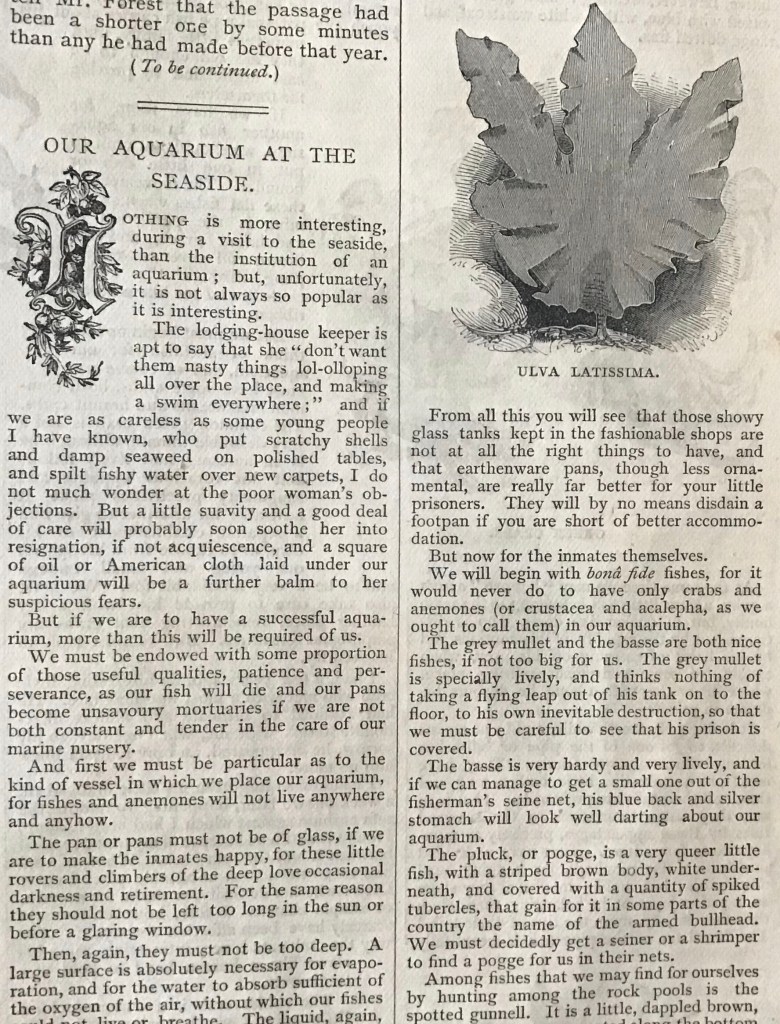
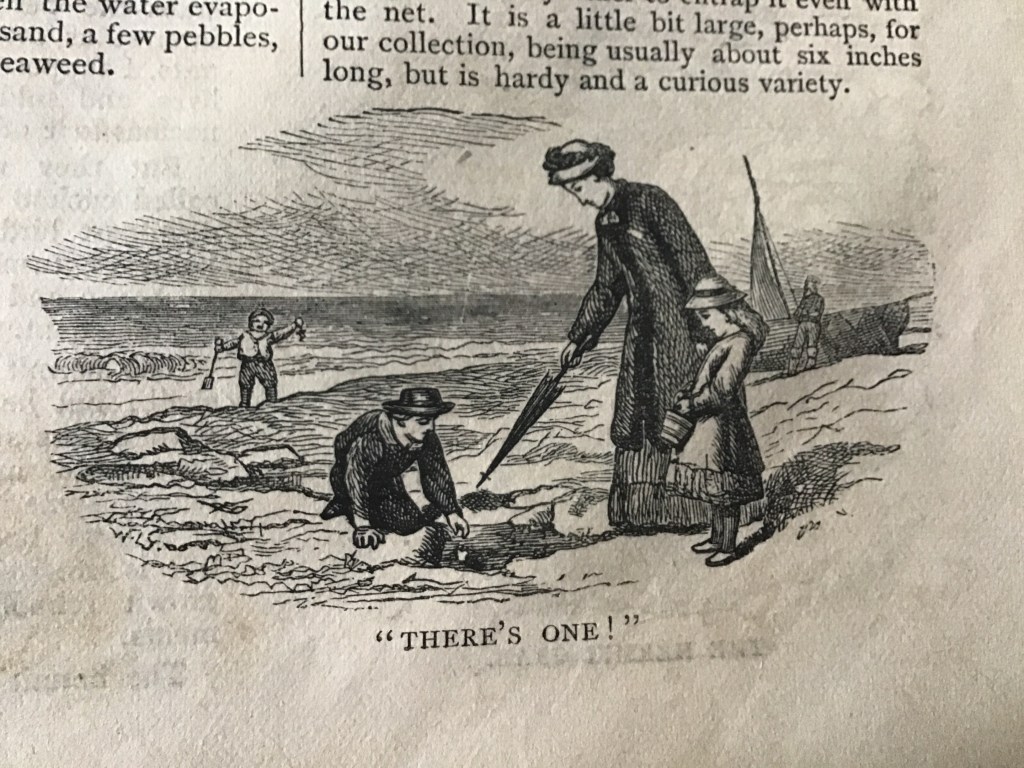
There can’t be many who, spending a holiday at the seaside as a child, didn’t collect something – stones, shells, pieces of glass polished by the sea – but ‘The Girl’s Own Paper’ of August 1880 had something much more serious in mind for its readers…..
The author is quick to acknowledge that the more ambitious aquarium project is not always popular while on holiday especially among lodging-house keepers and is kind to remind their young readers not to put ‘scratchy shells and damp seaweed on polished tables.’
Then there is the question of the right container, no need the author is quick to point out to buy a showy, fashionable glass tank when perfectly good household goods are available. The bedroom jug, worryingly described as ‘if tolerably fresh,’ earthenware pans, foot pans…
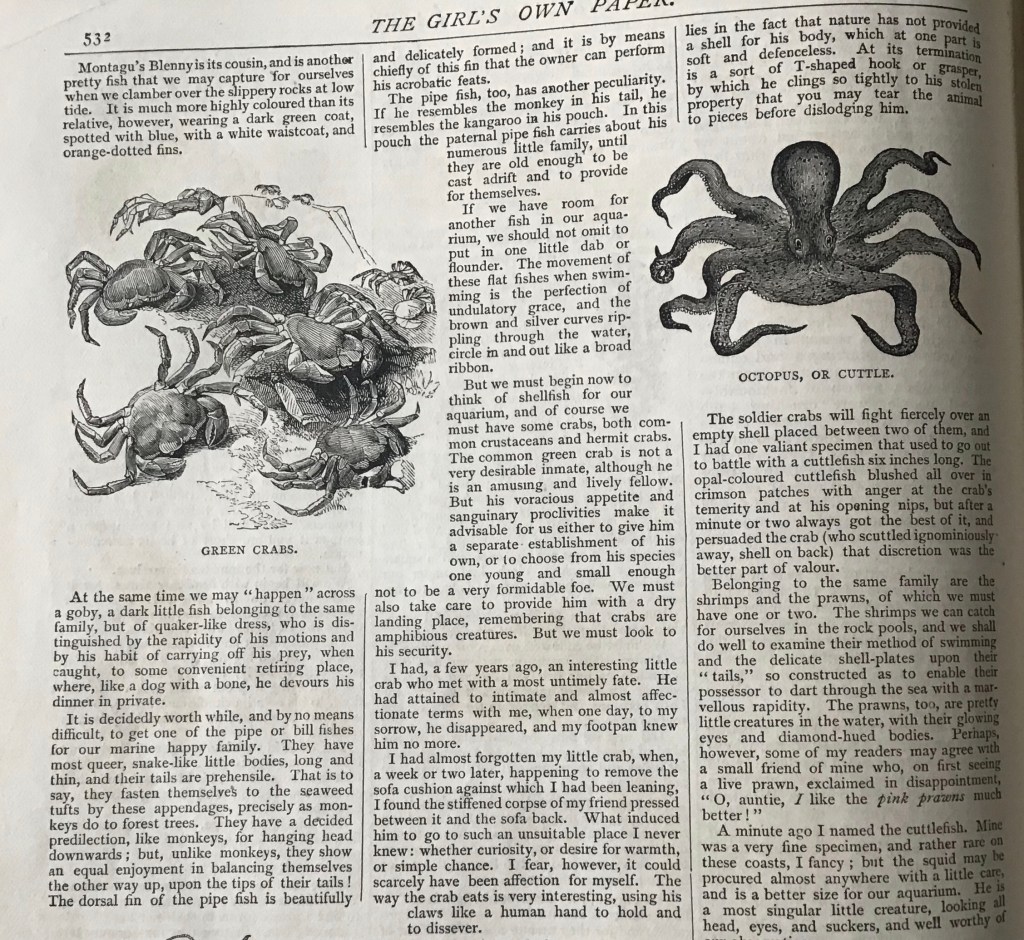
From then on the author proposes some ambitious inhabitants for the aquarium..
The author then narrates a harrowing tale of forgetting about a crab she had kept and then found him several weeks behind a sofa cushion…hazards indeed!
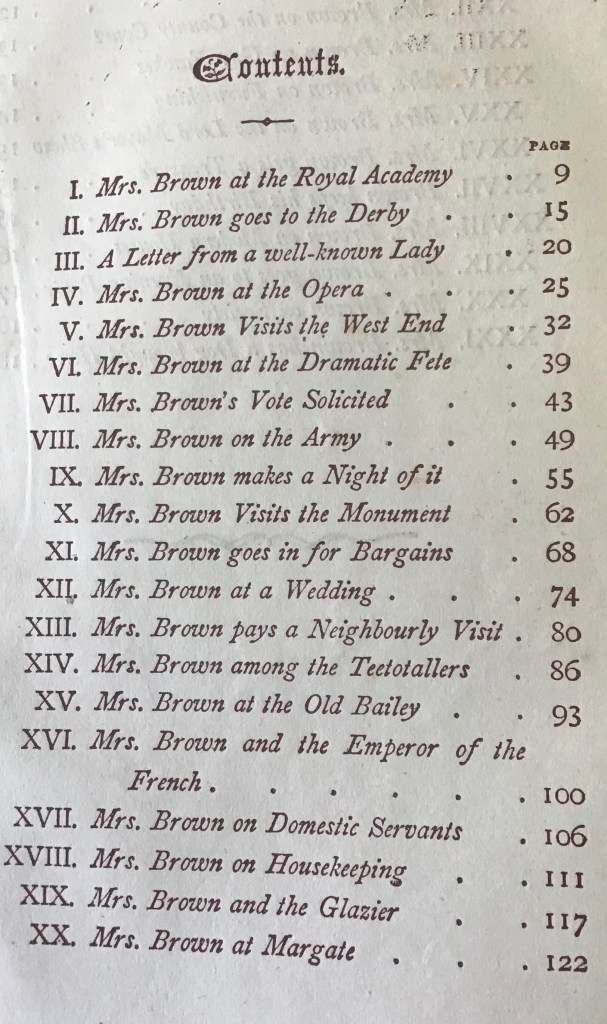
Or Mr. Finchley never got there but Mrs. Brown did…
I’ve been meaning to blog for a while about Mrs. Brown more it must be said for the period insight rather than the literary merit. She was the brainchild of the journalist Arthur Sketchley (George Rose 1817-1882) and appeared first in ‘Fun’ magazine – one of the rivals of ‘Punch’ – and subsequently in a series of successful books.
Sketchley enjoyed huge success with Mrs. Brown, a working-class, vernacular Everyman figure since her first appearance in the magazine in 1865. Sketchley used her as a voice of the people commentator full of ideas on robust justice on current cases and plenty of anti-foreigner sentiment. Today, however, I want to stay in holiday vein so I want to write about Mrs. Brown and her trip to Margate.
It’s a fascinating insight into what a Londoner’s holiday must have been like. Brown and Mrs. Brown travel to Margate by boat from Blackwell Pier with the inevitable seasickness of course. Margate is packed when they arrive but they find a room albeit with a suspect bed. Mrs. Brown is deeply shocked by the indecency of the bathing, visits the caverns and then takes a seat with her friend Mrs. Yardley.
A gentleman with a telescope tries to show them sunspots – tricky for Mrs. Brown to see but Mrs. Yardley, “as has had a boardin’-school edication, she saw it all wonderful.” They go dancing at the Assembly Rooms and Mrs. Brown finishes the evening a tumbler of hot port-wine negus with lemon and nutmeg. As she says “the only pity is it can’t last for ever.”
Or how to fill the long swathes of summer holidays….
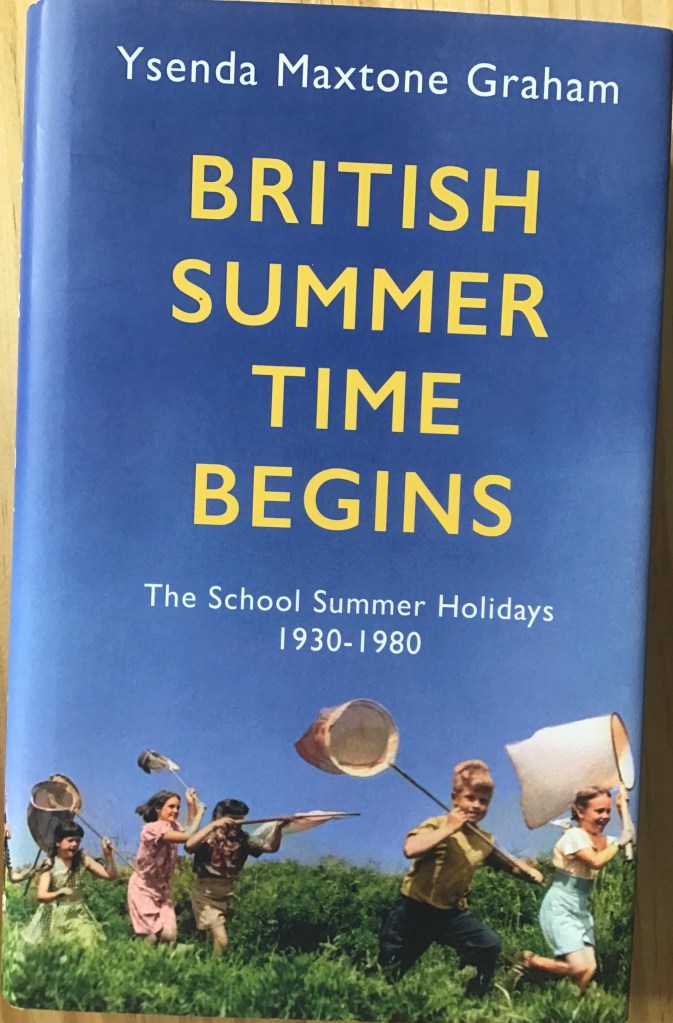
This glorious book made for a fantastic first read of the holidays. I’d previously read and very much enjoyed the author’s book ‘Terms and Conditions’ in a nice edition from Slightly Foxed about life in girls’ boarding schools.
In this latest book the author does something similar with childhood memories of the long summer holidays between 1930 and 1980. It made me immediately nostalgic for the interminable and absurdly complex games inside or out that children devised to fill their days. Detailed record-keeping essential.
In addition it covers every conceivable type of holiday from day trips, camping, boarding houses to the exotic overseas..and has a significant point to make about the increasing absence of childhood from the outdoor world.




 The Solitary Reader