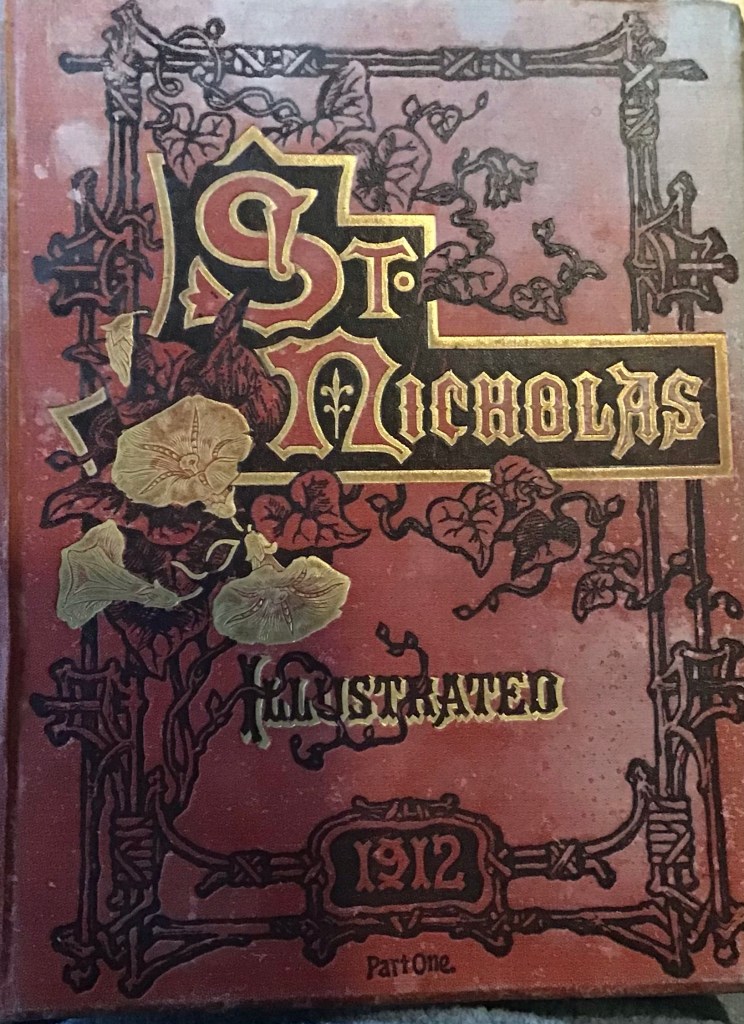
St. Nicholas (to start the festive season)

To begin thinking about Christmas, a children’s magazine that couldn’t be more appropriately named. ‘St. Nicholas’ was an American magazine for children published between 1873 and 1940. It has the feel of a high quality production – the paper is glossy and the printing is very handsome. It was a real mix of content, puzzles, art reproductions, fiction for both older and younger children, poetry, competitions, non-fiction and some quite tricky puzzles of which more another time.

Some of America’s finest writers contributed to magazine – Louisa May Alcott and Mark Twain among them. The competitions for young writers, photographers and artists had a central role in the magazine’s success.
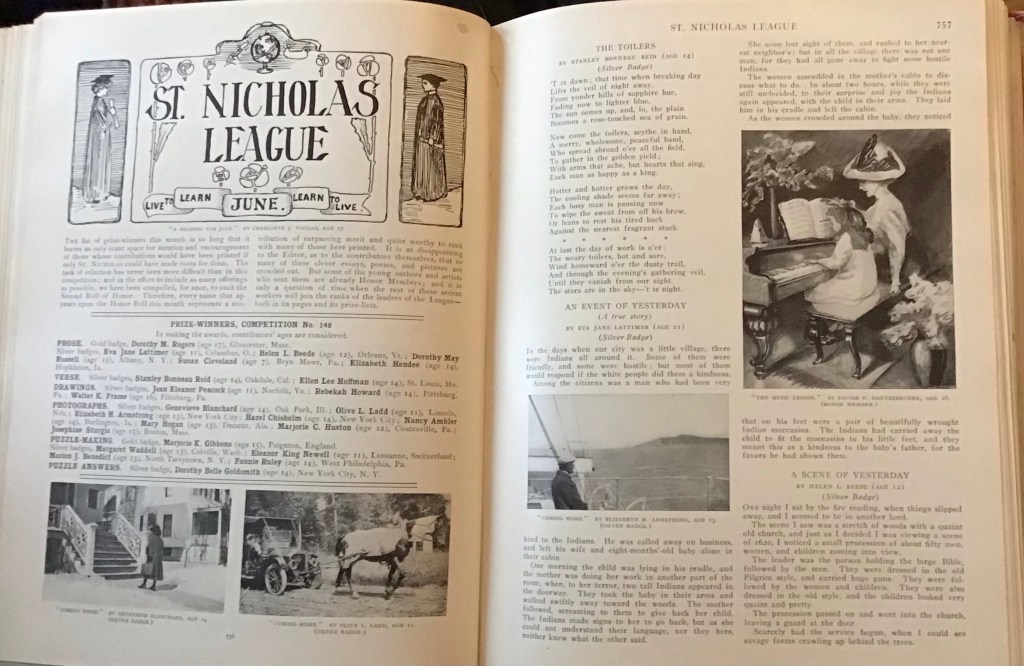
In an article in ‘American Heritage’ magazine in 1985 ‘The Magazine That Taught Millay, Fitzgerald and Faulkner How To Write’ Paul Rosta pointed out that Edna St. Vincent Millay was a multiple winner for verse, F. Scott Fitzgerald won for photography, William Faulkner, Ring Lardner and even Vita Sackville-West appeared among the winners.

An extraordinary story.
Doing good

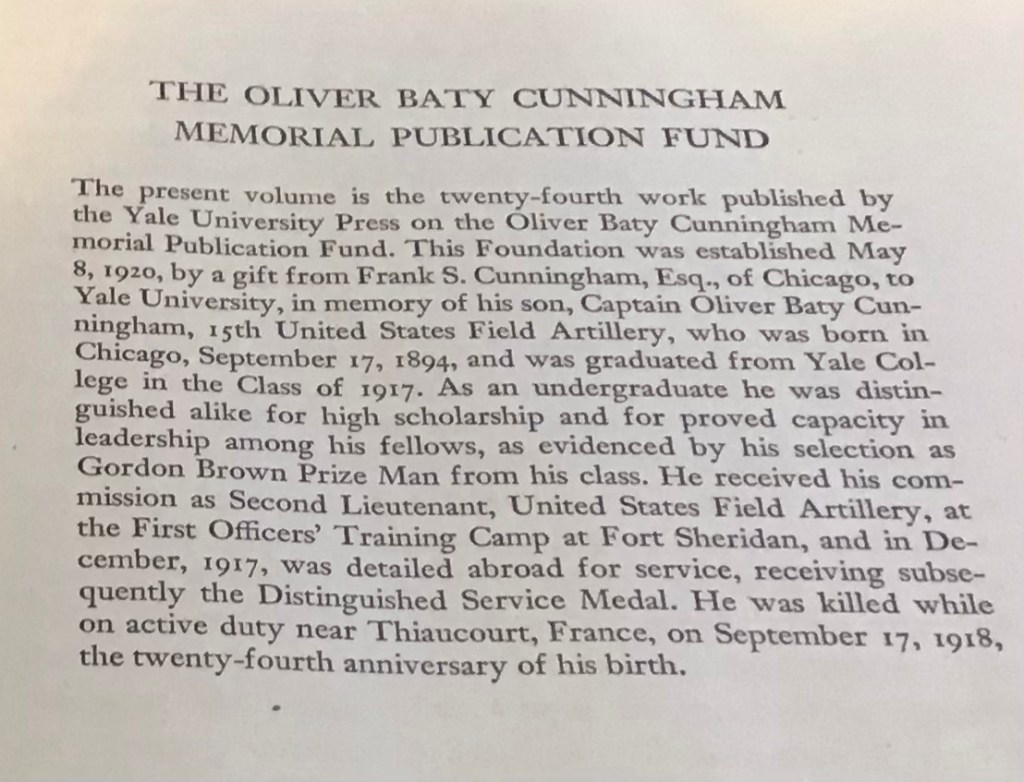
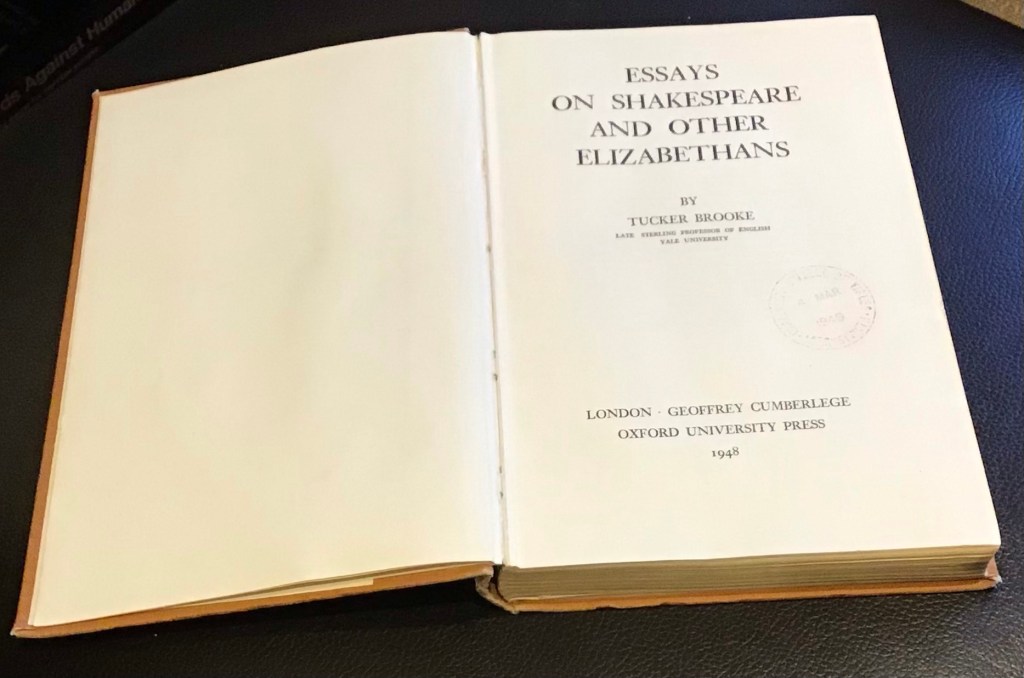
I recently bought a copy of ‘Essays on Shakespeare and other Elizabethans’ by Tucker Brooke (1948 Yale University Press) and got immediately distracted by a different story. The publication of the book had been supported by the Oliver Baty Cunningham Memorial Publication Fund. – the 24th book to be published with its support.

I was greatly moved by the story the dedication panel told. It led me to reflect on how good can be done and can continue to be done. It also led me onto a second book – Bartlett’s ‘Mr William Shakespeare’ – which details the early editions of Shakespeare’s works.

This turns out to be another book where the publication had also been supported by the Baty Cunningham Memorial Fund but much closer in time to the death of Oliver Baty Cunningham in 1923.

After the First World War Oliver Baty Cunningham’s mother visited Thiaucourt where she donated money for the reconstruction of the town. Subsequently the church bells in Thiaucourt were replaced in his memory.

Much Ado About Nothing

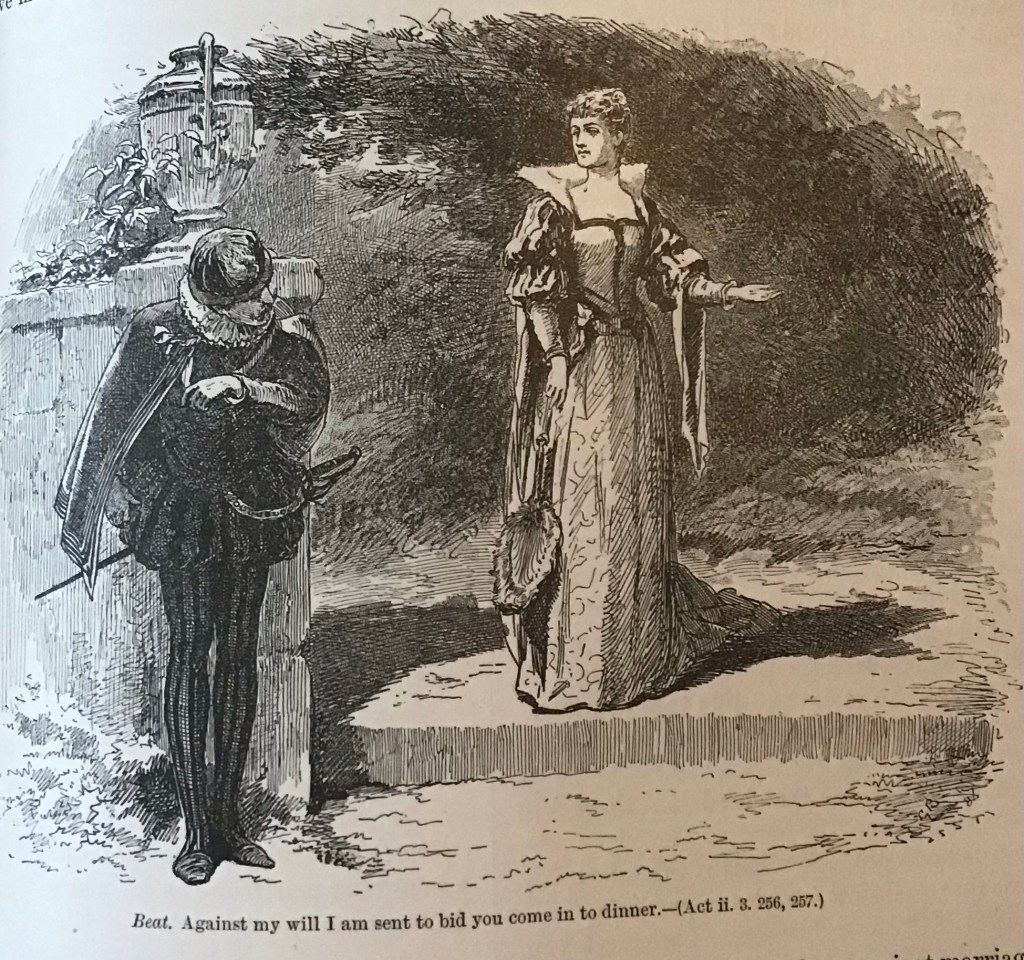
A little bit longer with Irving’s edition of Shakespeare’s plays. The performance history for ‘Much Ado About Nothing’ lays great stress on the play’s long-standing popularity and how much of the play’s importance lies in the relationship between Beatrice and Benedick. Benedick was an especial favourite role of the great eighteenth century actor David Garrick, playing it, the Irving edition tells us, over seventy times.

The Jubilee referred to here was Garrick’s celebration held in Stratford-upon-Avon in 1769, an event of mixed success not least because of appallingly wet weather but one which was to be of decisive importance in establishing Shakespeare as a national figure and Stratford-upon-Avon as a tourist hotspot for Shakespeare’s admirers.

It was as Benedick that Garrick chose to appear at his Jubilee and another fascinating insight offered us here is that he was the first Benedick to perform in front of footlights.

Wonderful stuff.

Twelfth Night

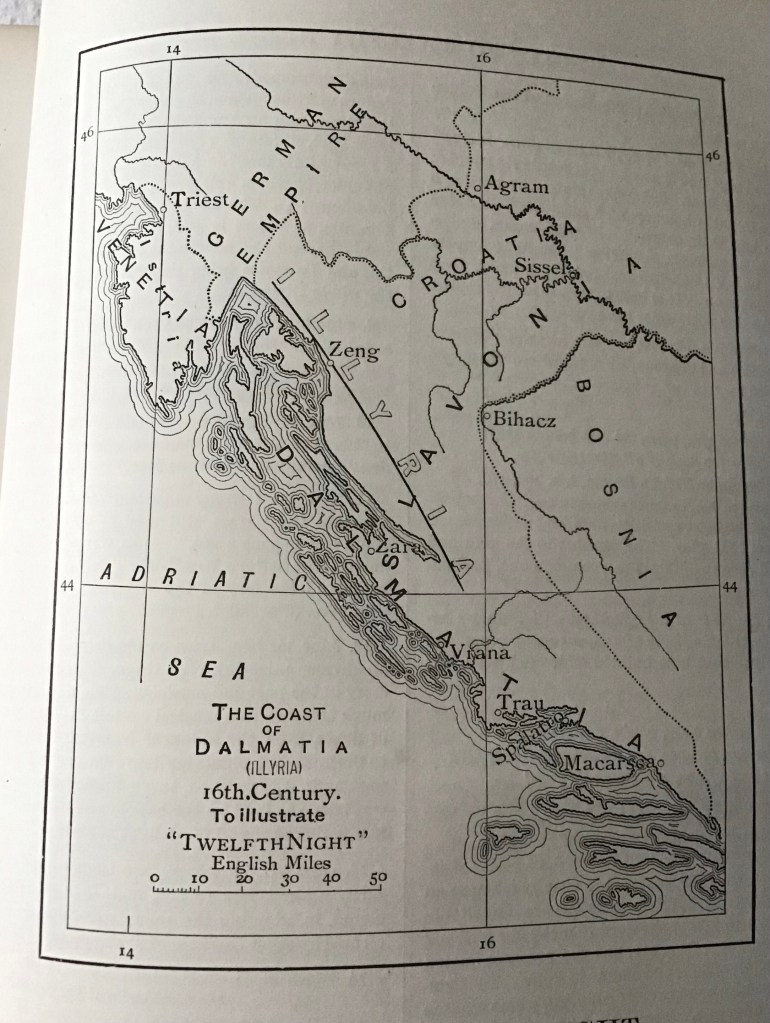
A plan for Malvolio…

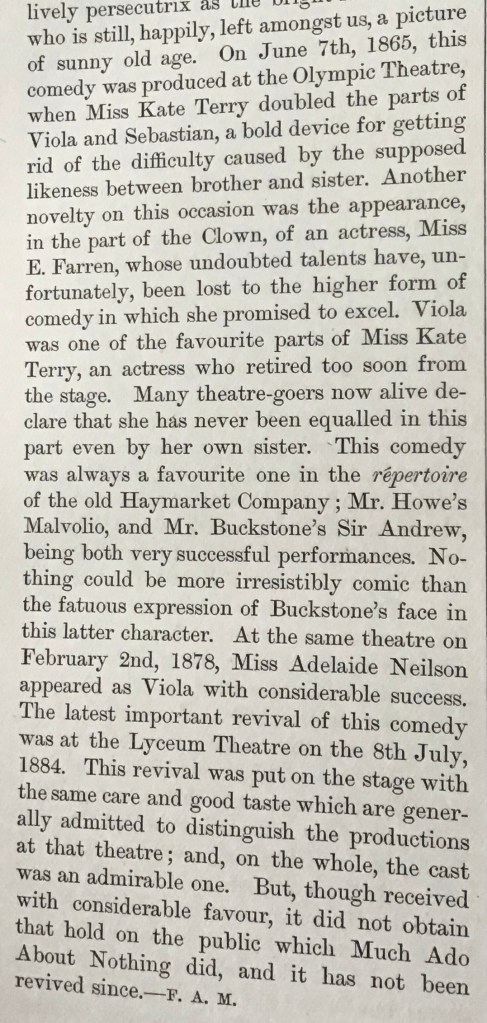
The Irving edition of Shakespeare’s plays is full of a sense of the plays in performance. Performance histories, wonderful footnotes, play specific vocabulary lists all fascinate and clarify. A little extract from the performance history of ‘Twelfth Night’ is full of interest.

Two points of especial interest here both about this Olympic Theatre production of ‘Twelfth Night’ of 1865. Clearly, the idea of one actor, Miss Kate Terry, doubling as both twins, Viola and Sebastian, is sufficiently unusual for it be described here as ‘a bold device.’ Another point of interest here is the mention of Ellen ‘Nellie’ Farren as the Clown in the same production. Farren (1848-1904) was an extraordinary figure of the London stage at the time. A child star, Farren was to become most celebrated for her roles as ‘principal boy’ in the burlesques at the Gaiety Theatre. The period at the Olympic Theatre preceded the Gaiety and Farren’s move to the Olympic in 1868 and that might explain the comment about her abandonment of the higher form of comedy.

‘This is Illyria, lady.’

G

Sir Henry Irving and Shakespeare.

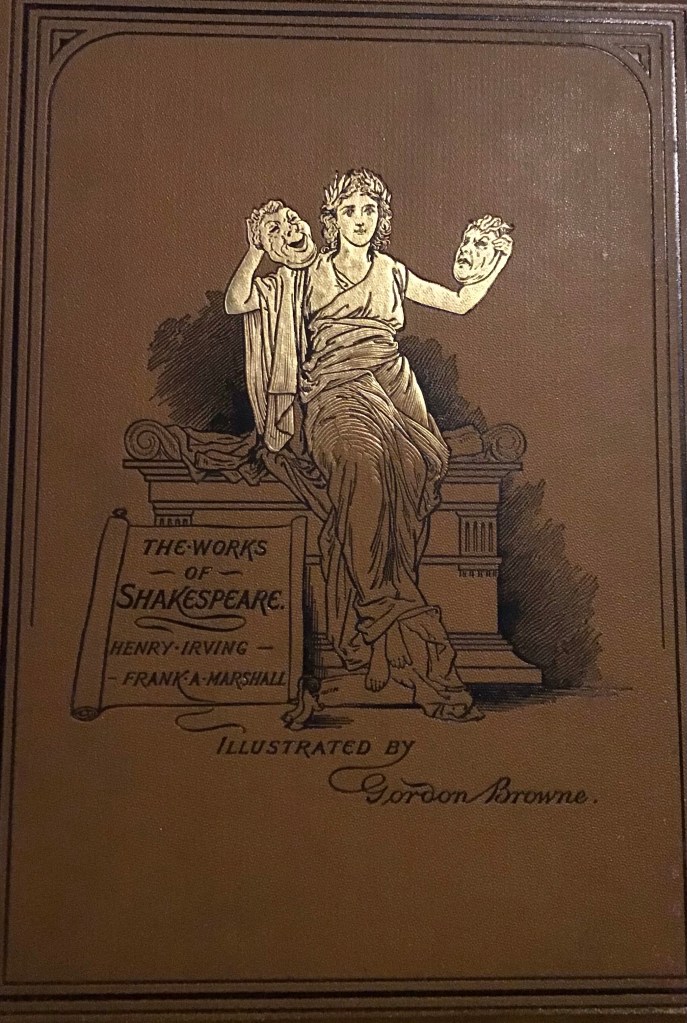
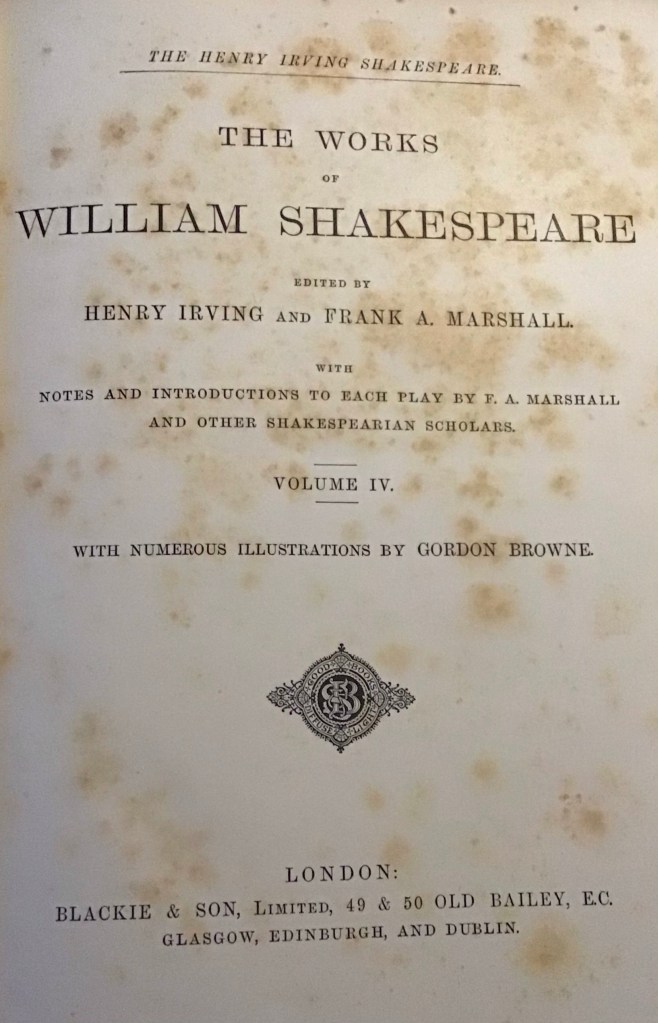
This is the front cover of Volume IV of the Shakespeare edition produced by the the Victorian actor-manager Sir Henry Irving at the height of his fame. Irving edited the volumes with Frank. A. Marshall and they are wonderfully illustrated by Gordon Browne.

A succession of influential Shakespeare performances – ‘Hamlet’ in 1870, ‘Macbeth’ in 1875, ‘Othello’ in 1876 and ‘Richard III’ in 1877 – had established Irving as a major Shakespearean actor. In 1878 Irving entered into partnership with Ellen Terry at the Lyceum and began a highly significant period for English theatre. Irving’s performance as Shylock in ‘The Merchant of Venice’ in 1879 began a sea-change in ways of understanding representation of the character.

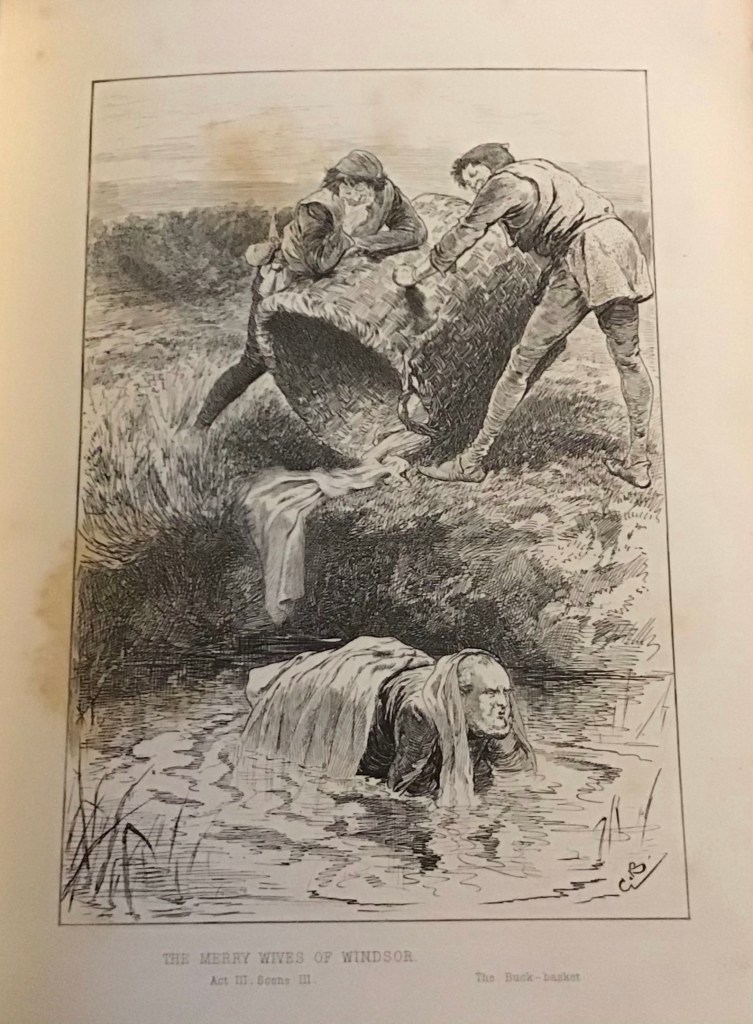
More on Irving’s edition of the plays next post but for now one of Browne’s wonderful illustrations.

Falstaff pitched out of the laundry basket from ‘The Merry Wives of Windsor.’

A handsome book (and two Prime Ministers)

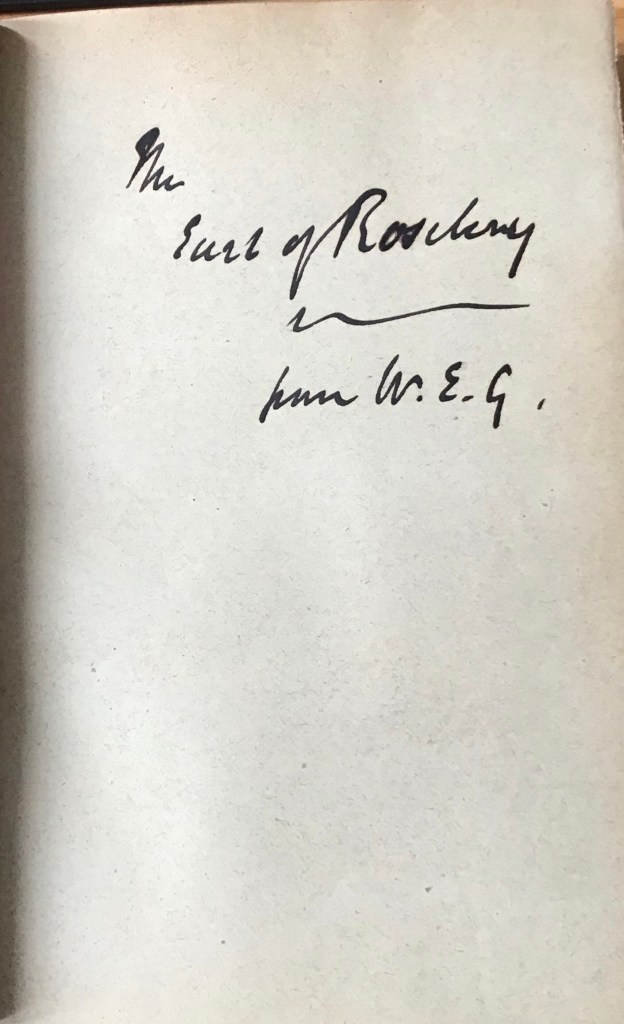
A post now about a book with several points of interest. Gladstone’s book ‘Special Aspects of the Irish Question’ was published in 1892, the year that Gladstone returned to office for his fourth term as Prime Minister. This copy is exceptionally beautifully bound, I haven’t seen another with this fine binding. The reason soon becomes clear. This copy was a gift from the Prime Minister to the man who would come to power after him, Lord Rosebery.

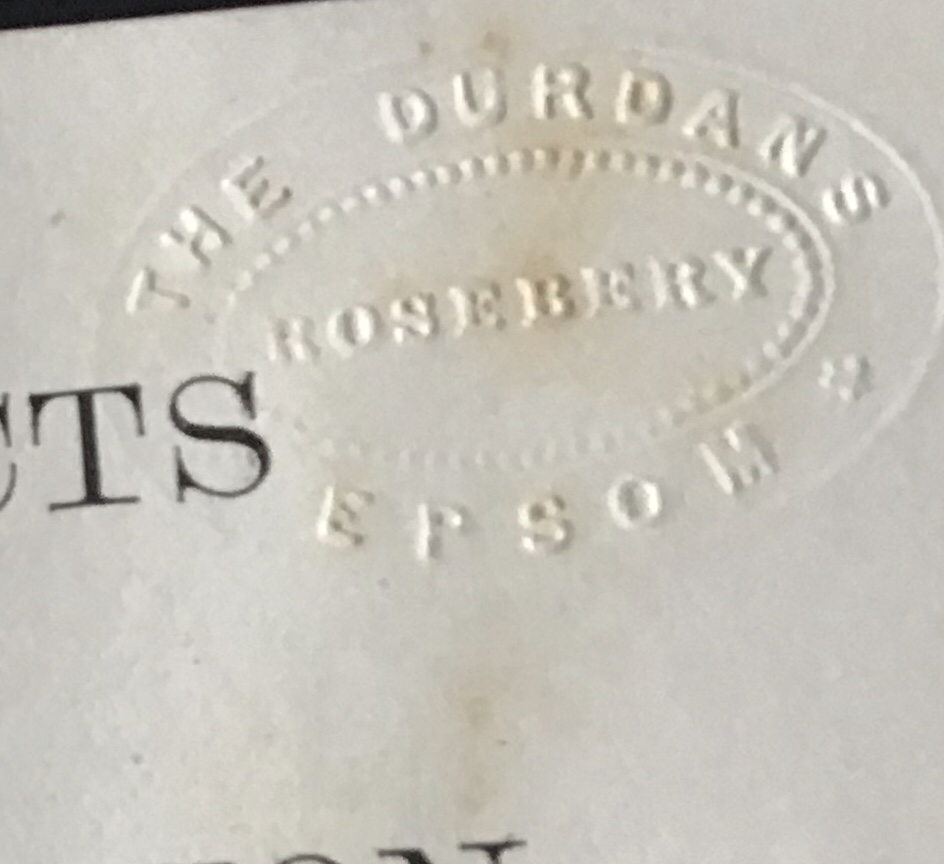
It has beautiful marbled papers, a bookplate with the garter symbol and it must have been valued by Rosebery because it has the embossed mark of Rosebery’s home in Epsom, The Durdans.

A fine gift.

The pleasures of essays and Margate again.

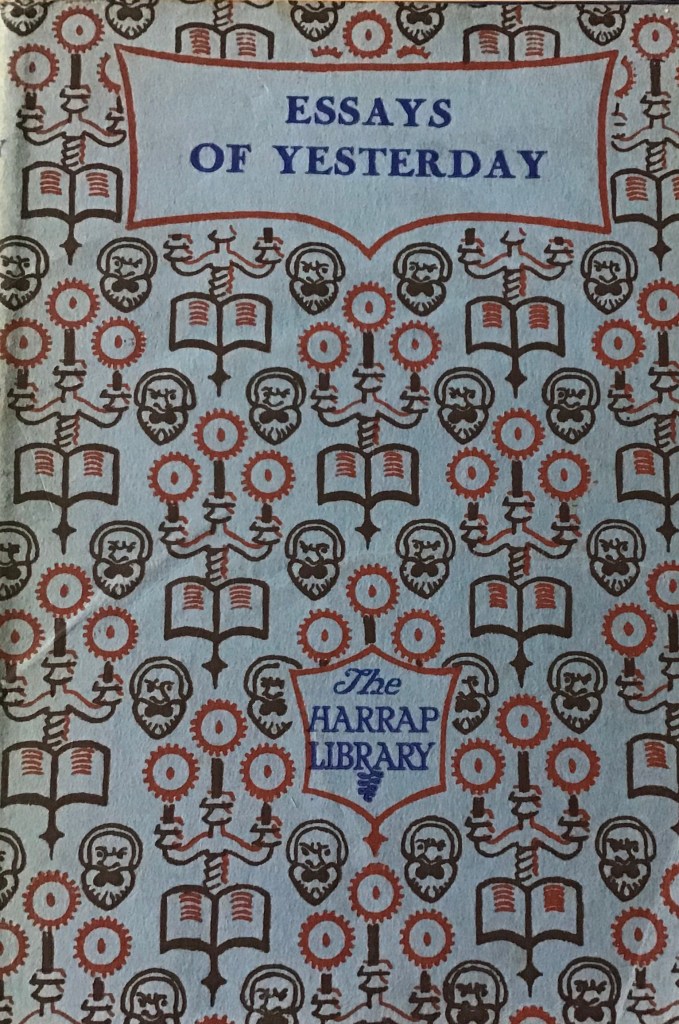
I’m increasingly turning to essays with the greatest pleasure for their extraordinary and specific ability to capture a moment, an idea, an experience so completely. That’s what made me pull this off the shelf to read this week. Published in 1927 it was given to my father in 1944 as a Sunday School prize while he was evacuated. I wonder where it had sat in the years between.

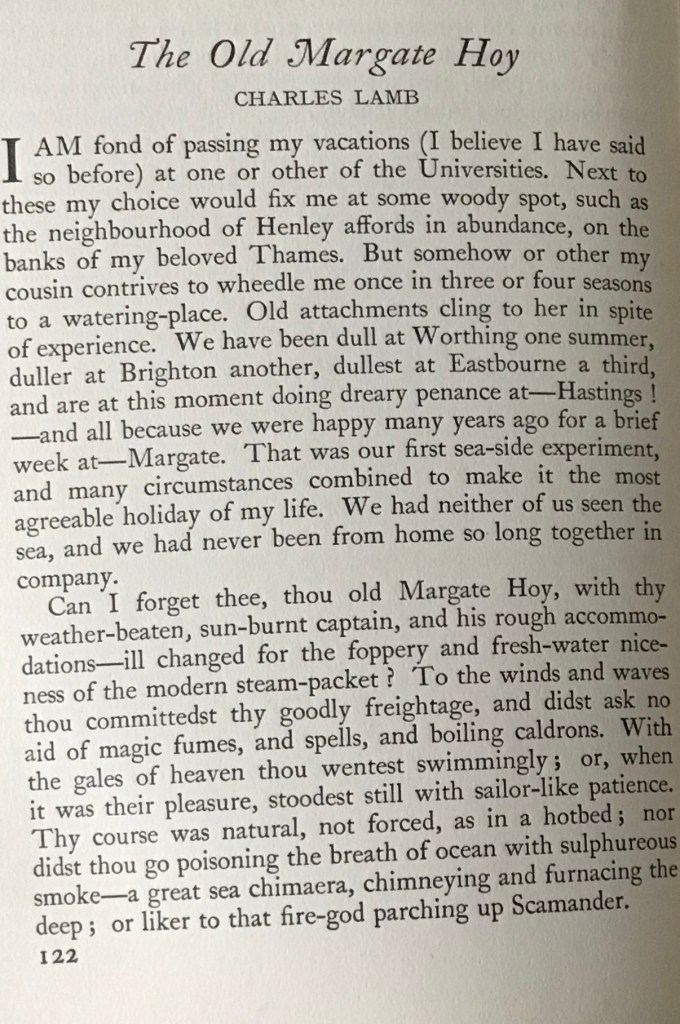
A bold, full of expectation choice to give to a teenager. The greatest of essay writers are represented here from Montaigne, Bacon and Browne through Addison and Steele to Lamb, Thackeray and Stevenson. In my earlier posts holidays to Margate, actual and aborted, have featured several times. So I was drawn to the essay by Charles Lamb ‘The Old Margate Hoy’.

Charles Lamb, whose essays I very much admire, included this piece in his ‘Last Essays of Elia’ published in 1833. The essay is a memory of a holiday excursion taken with a cousin when Lamb was fifteen, placing the events around 1790. Single masted ships called ‘hoys’, originally carried cargo between London and Margate but increasingly carried passengers and it was by far and away the cheapest way for visitors to reach Margate. Presumably that made it the choice for the teenage Lamb and his cousin.

Lamb’s voyage is packed with encounters which fill his imagination but arrival brings a disappointment. It allows a Lamb a digression on the dissatisfaction people often feel when seeing the sea for the first time. This digression shows how far we can sometimes find ourselves from the imaginative world of people in the past. The trip to Margate was the first time Lamb had seen the sea but his reading life up to that point had been full of the seas and oceans of the world.

Lamb’s head is full of whirlpools, sunken ships, sea monsters and coral. So he finds the sea almost imprisoning. When he sees the sea ‘I want to be on it, over it, across it….My thoughts are abroad’. The danger of reading as preparation and replacement I suppose.

The challenge of enjoying yourself (4).

Or everything in one place…

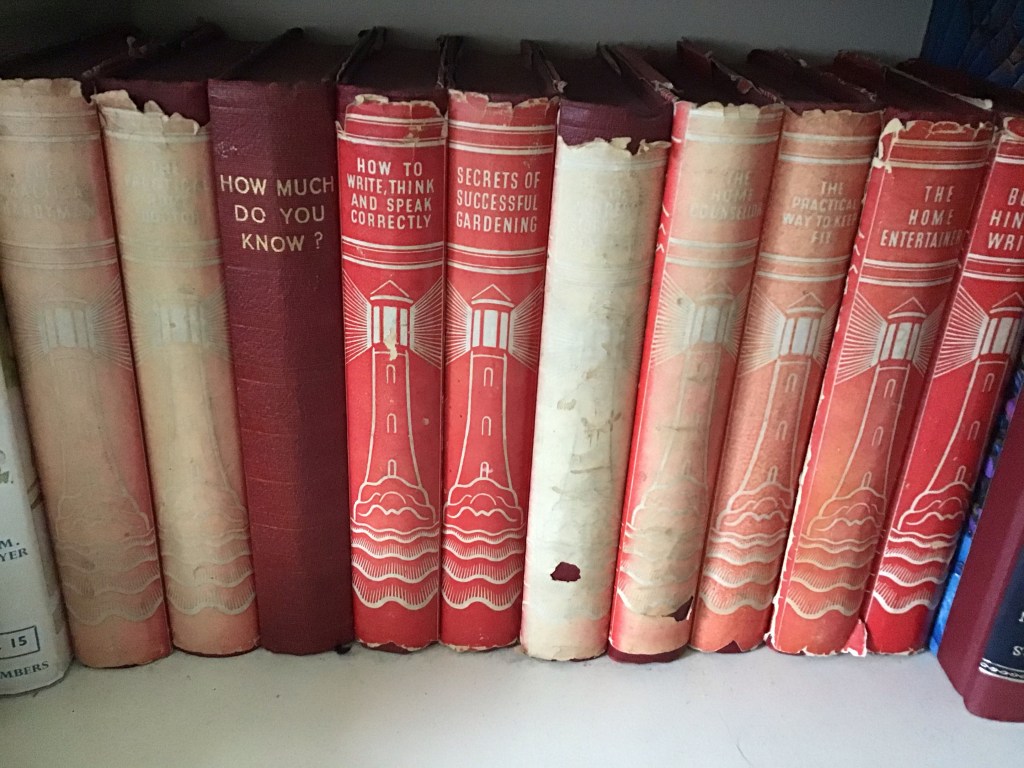
In the 1930s and 1940s this set of books would have graced the bookshelves of many households. The books were published by Odhams Press, a London publisher which had begun life as a Victorian printing company and included among its publications the magazines ‘Ideal Home’ and ‘Horse and Hound’. The books in this series too faded to read on my shelf are ‘The Practical Handyman’, ‘The Practical Home Doctor’, ‘The Home Counsellor’, ‘The Wonderful Story of the Human Body’ and ‘The Practical Way to Keep Fit’.

It seems likely they date from the 1930s despite being undated – one refers to Mr Hitler who has recently come to power in Germany. My favourite title, for sure, is ‘How to write, think and speak correctly’ which seems to cover everything. The title I want to write about today is ‘The Home Entertainer’ by Sid G. Hedges. Sidney George Hedges was a prolific writer of works on sports and games of all types especially swimming.

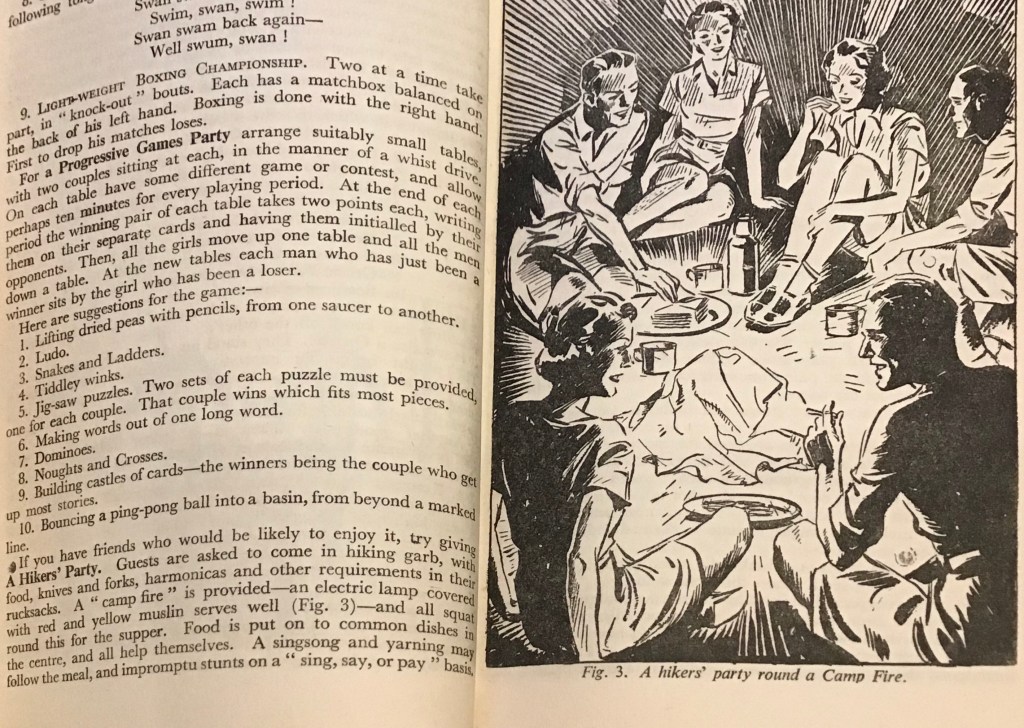
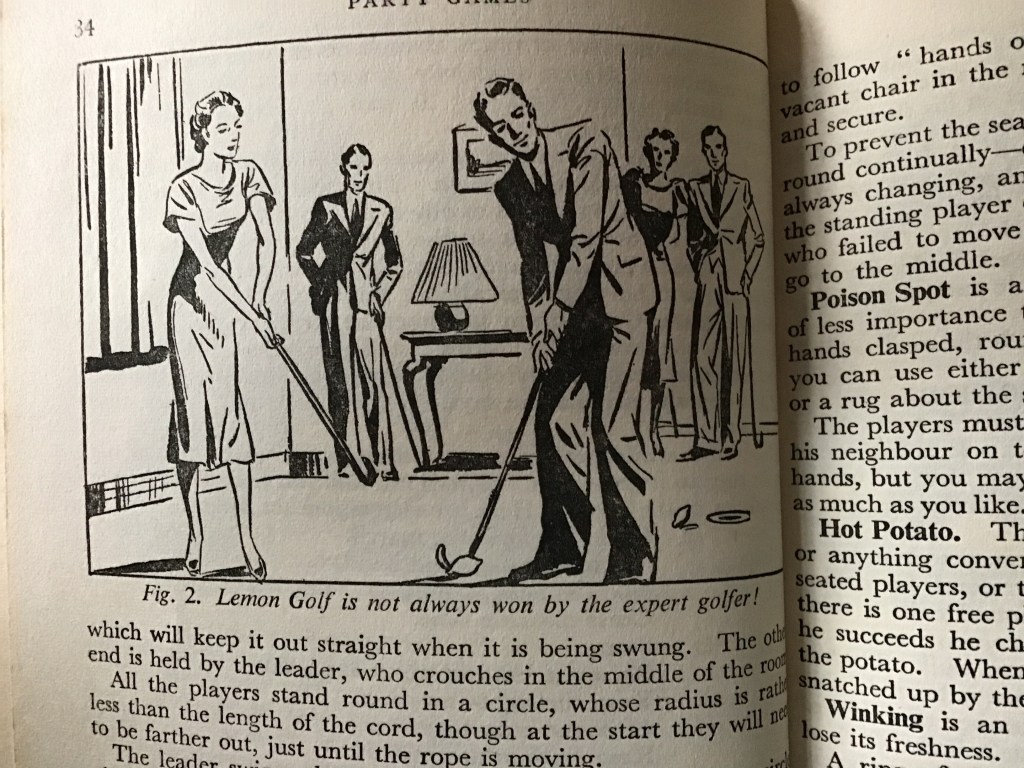
‘The Home Entertainer’ is a wonderful book and captures a period of party-giving and home entertainment covering everything from community songs complete with music, the rules for every type of game, catering and ideas for themed parties like the wonderful Hikers’ Party shown above.

An understatement surely….

The challenge of enjoying yourself (3).

Back to Penguin, yellow this time…

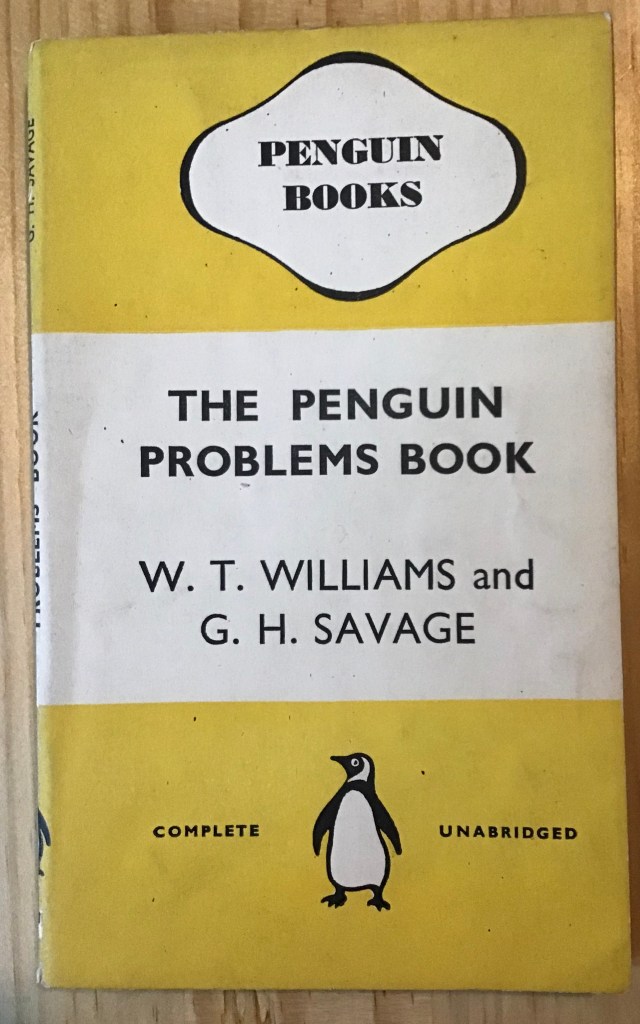
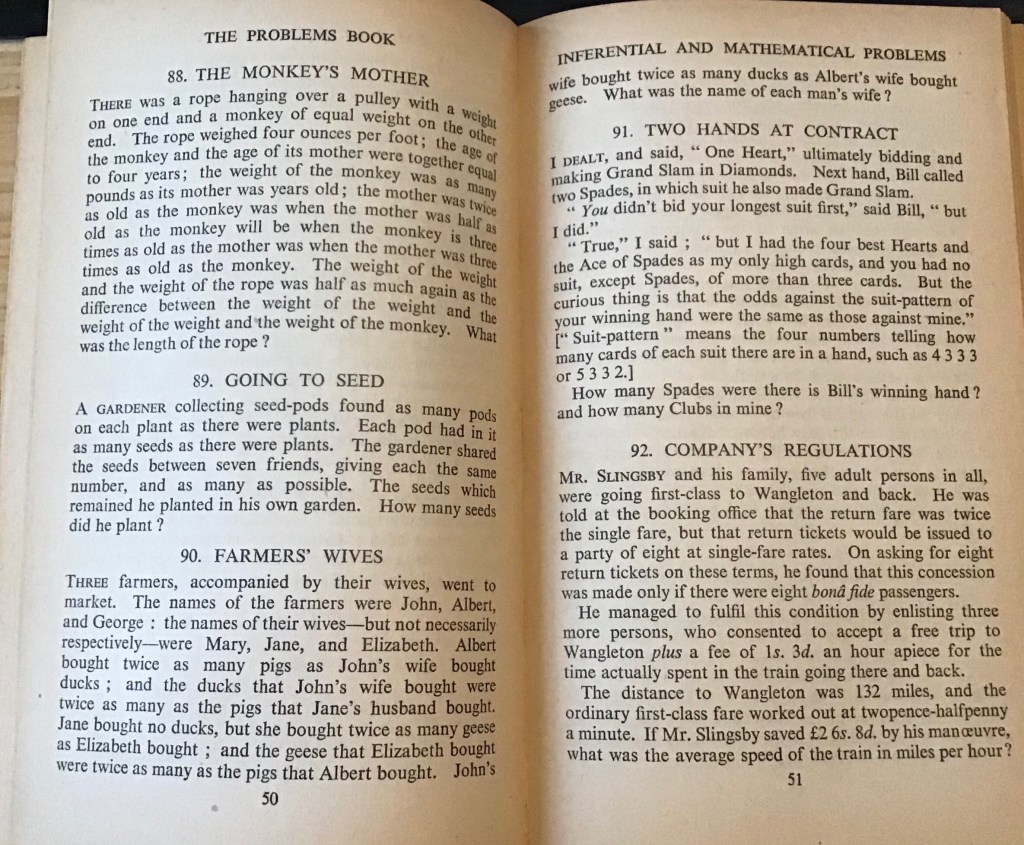
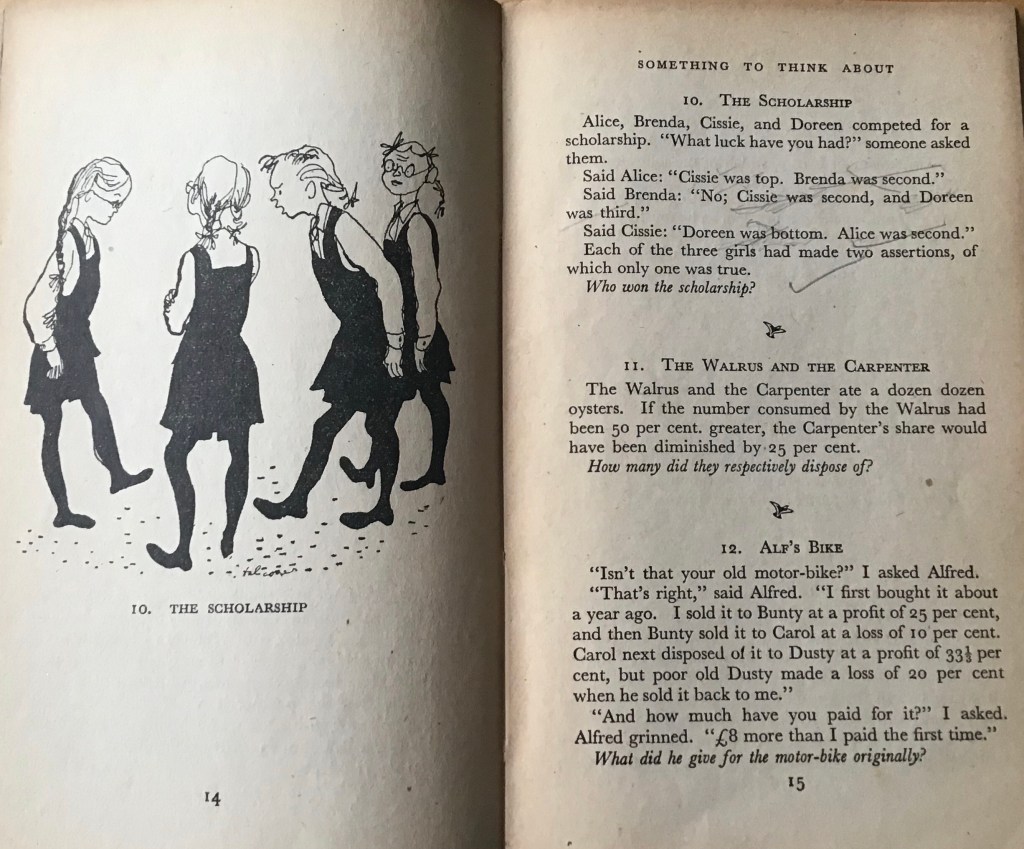
If ever a book demonstrated the sheer effort required for leisure, The Penguin Problems Book is such a one. Word problems, letter problems mathematical problems and the alarmingly named inferential problems offer a proper challenge to the reader.

As the authors say, ‘All the World loves a problem’….

Good Luck.

I would have like one of these to help though..