Life lessons from toy makingHonestly it seems amazing…
As soon as I started reading this book I was captivated by this more than a century ago work and the power and resources it put into the hands of these young girls to become makers but also in seeing this extended view of how such activities might play a wider role in the adults to come.
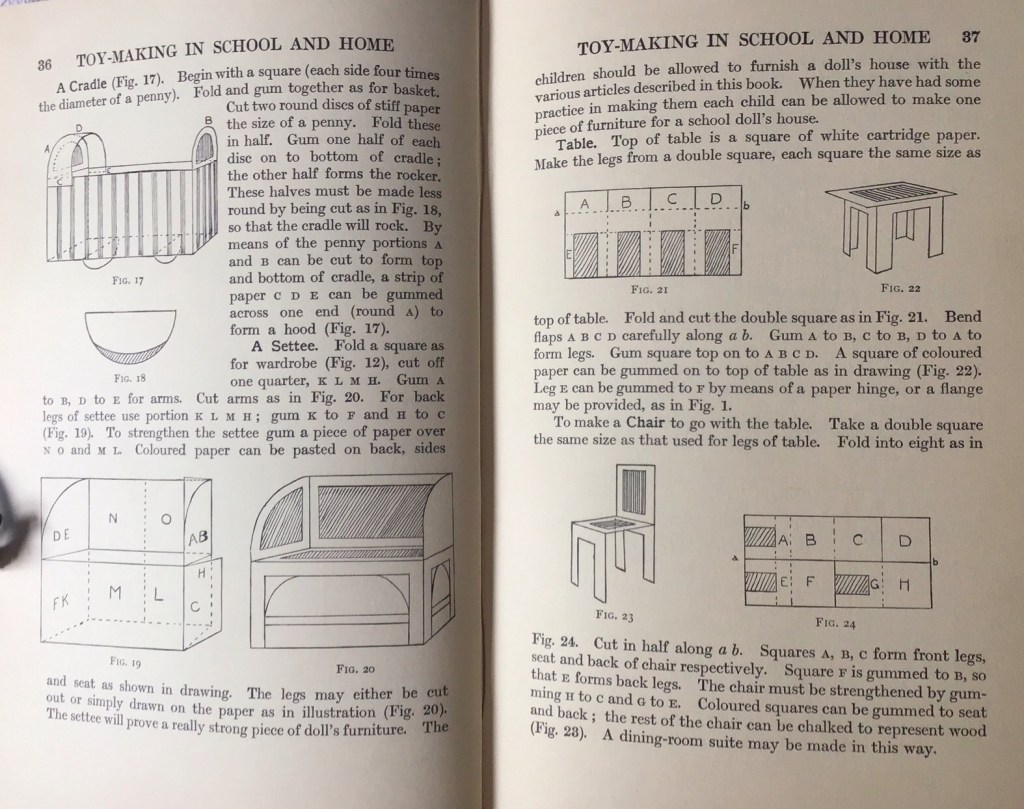
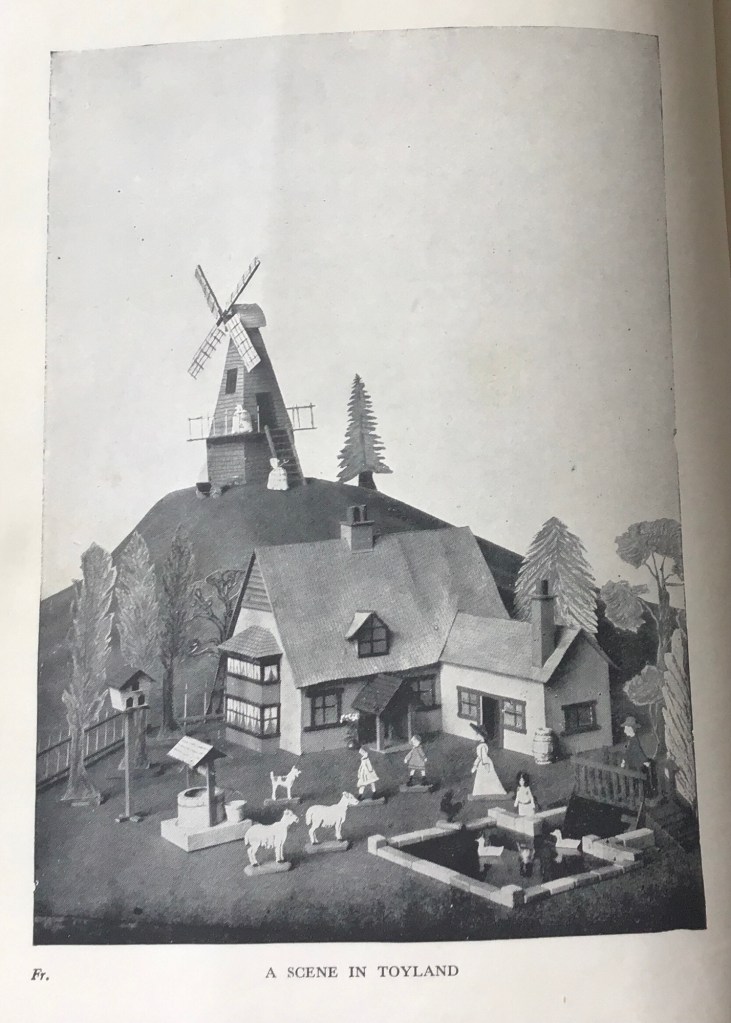
So where do we start? The Polkinghornes proffer a structured course and to begin at the beginning for a younger child a square piece of paper is all that’s needed and then the possibilities are endless.
We’re only on page 35 and we’re already on sedan chair…‘A dining suite may be made in this way.’
Sometimes a book which you expect to be one thing turns out to another. Such a book for me has been this one ‘Toy-Making In School & Home’ by R.K. & M.I.R. Polkinghorne from The County Secondary School Streatham. This copy is from 1939 but it’s an older book than that, first published in 1916 and the book’s timings give it extra poignancy.
I hope it was fun
I’m intending to write several posts about this book because it has several stories to tell. But to begin at the beginning.
Advanced techniques
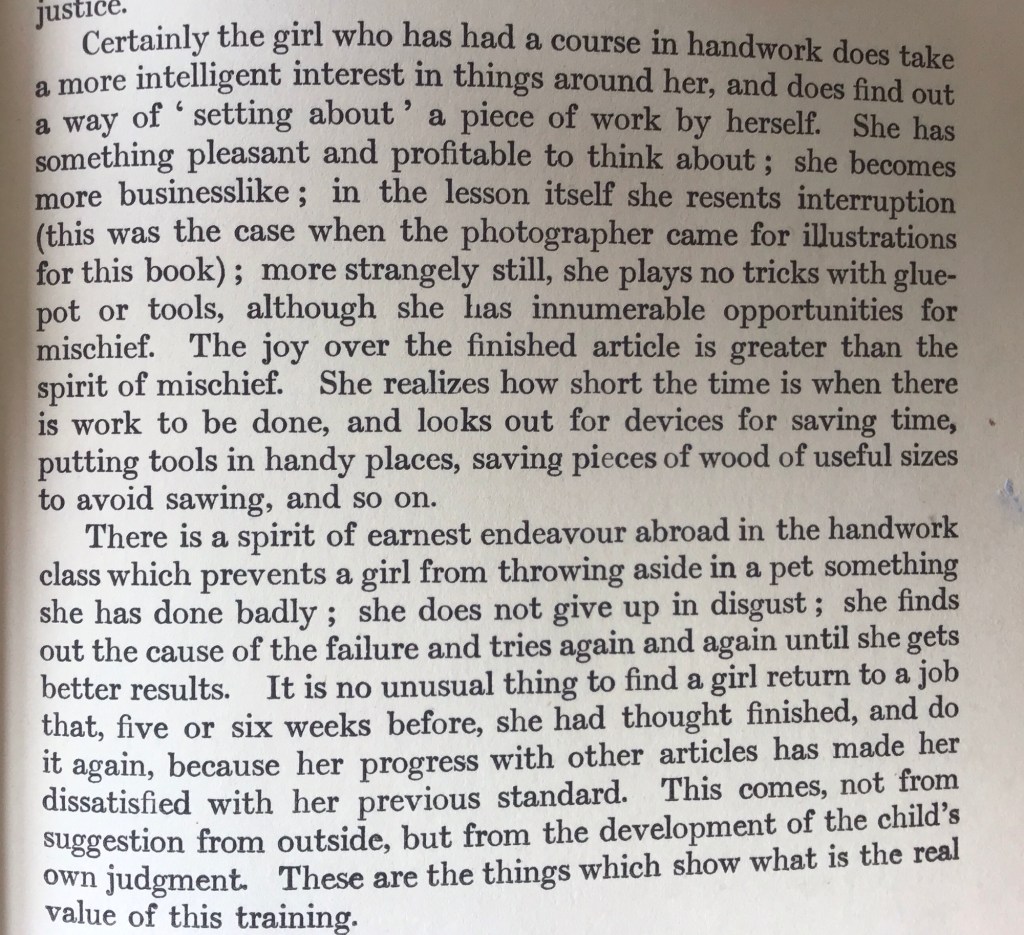
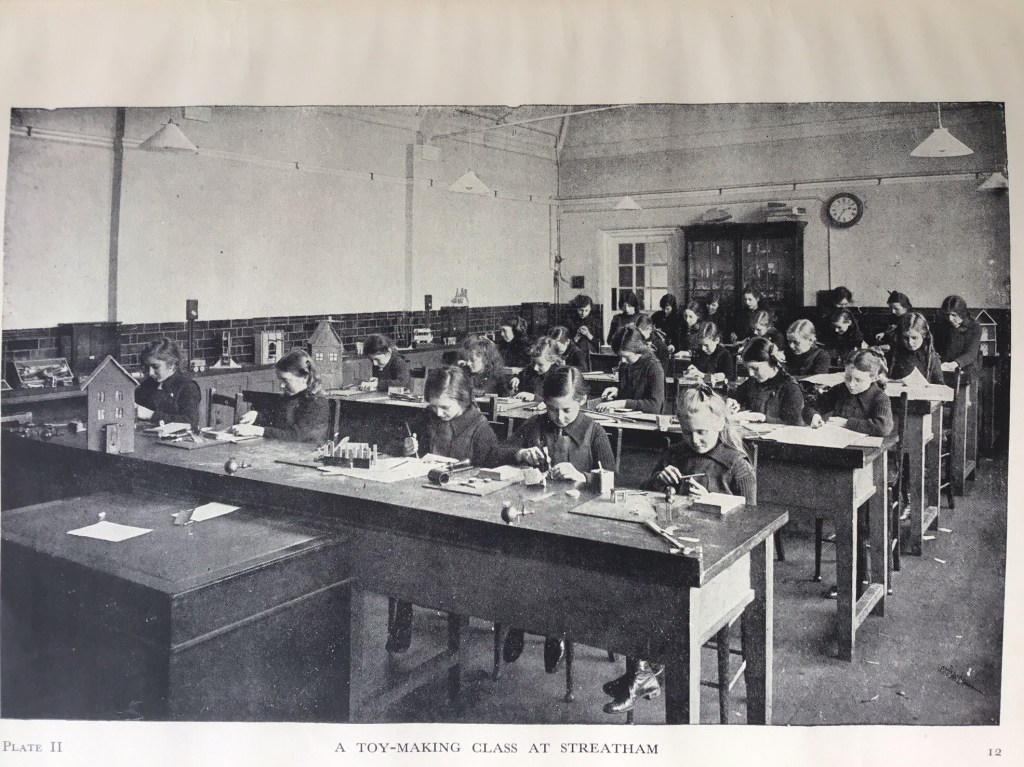
The Contents page begins with smallest toys that can be made from one square of paper through matchboxes, cardboard and cork to wooden mechanical toys using a range of woodworking techniques. What makes this particularly interesting is that The County Secondary School in Streatham (founded on 1906, relocated in 1913) was for girls and the book offers a fascinating insight into the educational philosophy underpinning it.
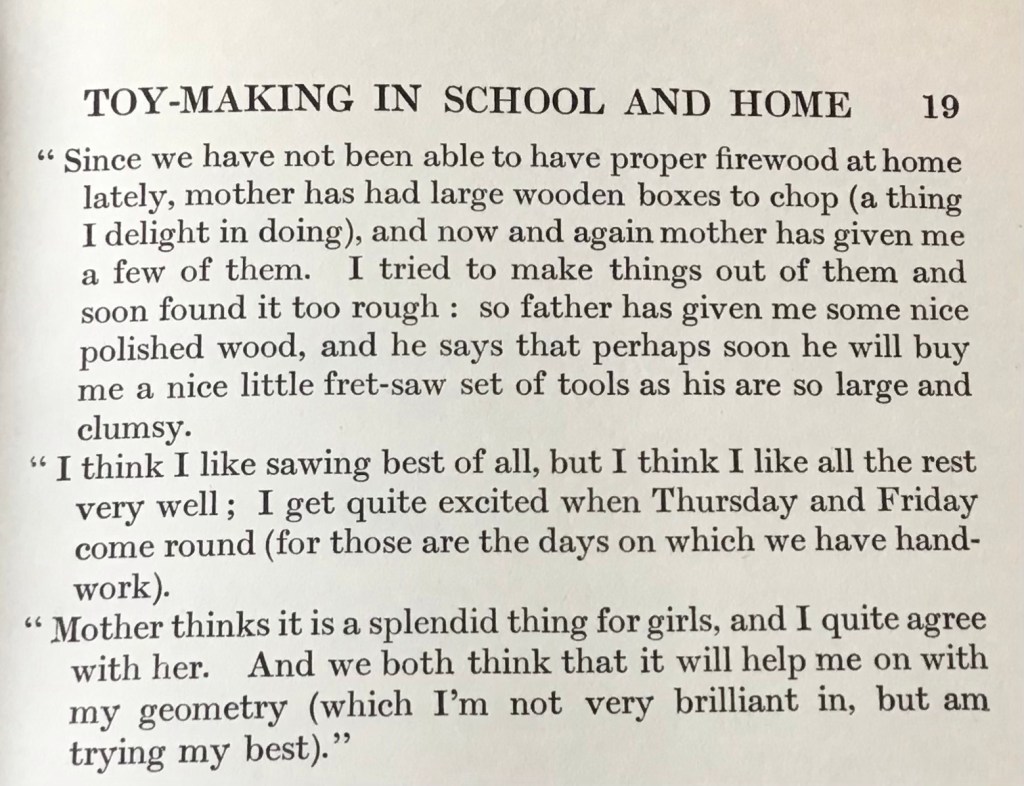
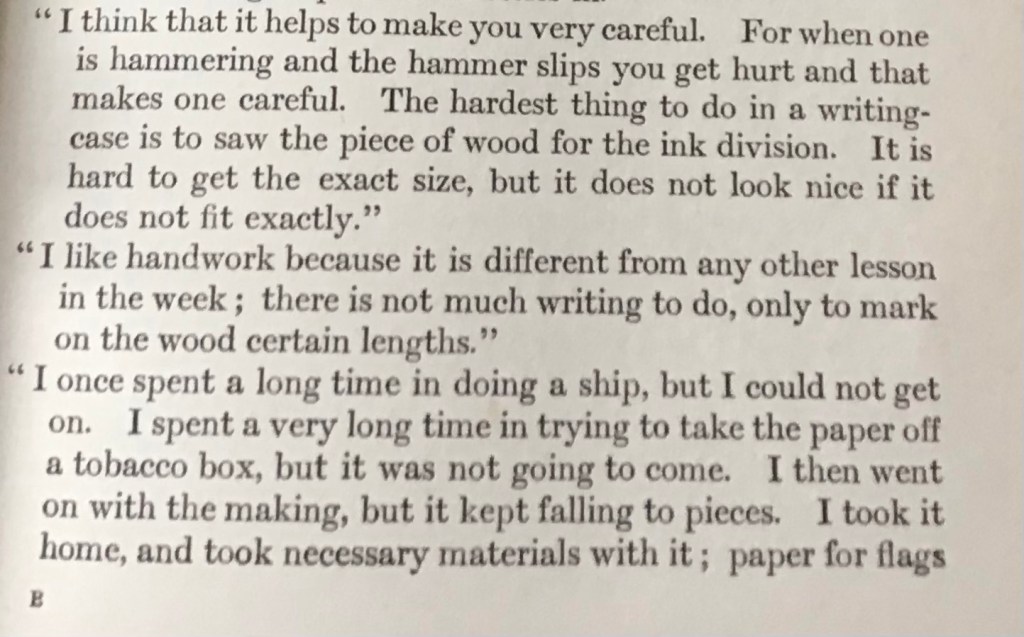
What do girls get out of this type of work? What do they think about it? The book opens with an attempt to capture the girls views….
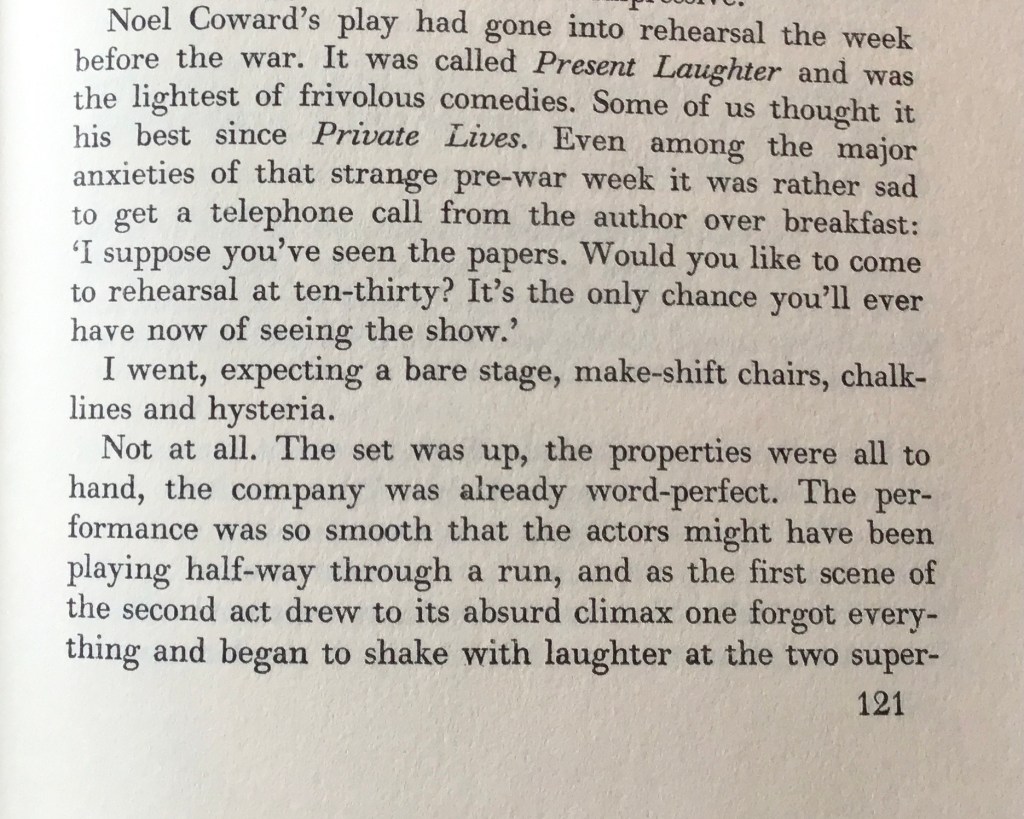
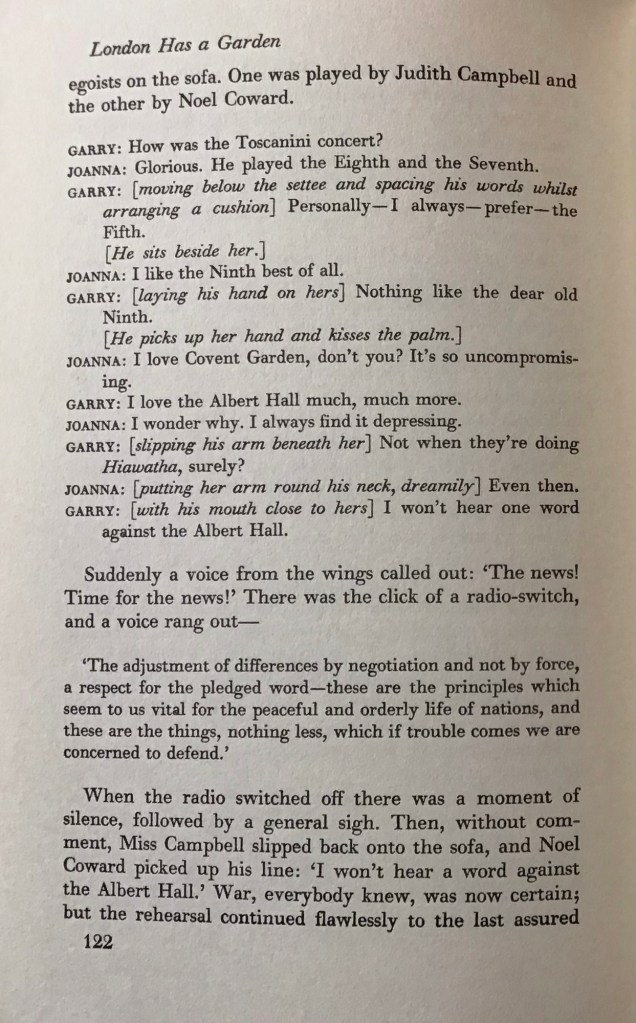
Perhaps we nowhere capture better what the world of the theatre encapsulated for Dane, its bravado, its real courage and its determination to perform than this remarkable anecdote from 1939 Coward’s assertion that it would not now be performed was true in the short term. The theatres did indeed close and it was not until 1942 that the play was first performed and under very different circumstances. The wartime situation meant Coward felt it should reach out into the provinces first rather than opening immediately in London. Thus it was that the play opened in Blackpool in September 1942 and it was only 25 weeks later that the play ran for six weeks in London.
Dane’s lifelong passion for and involvement with the theatre places her constantly near the action. Here is Ellen Terry (1847-1928) captured throughout her life.
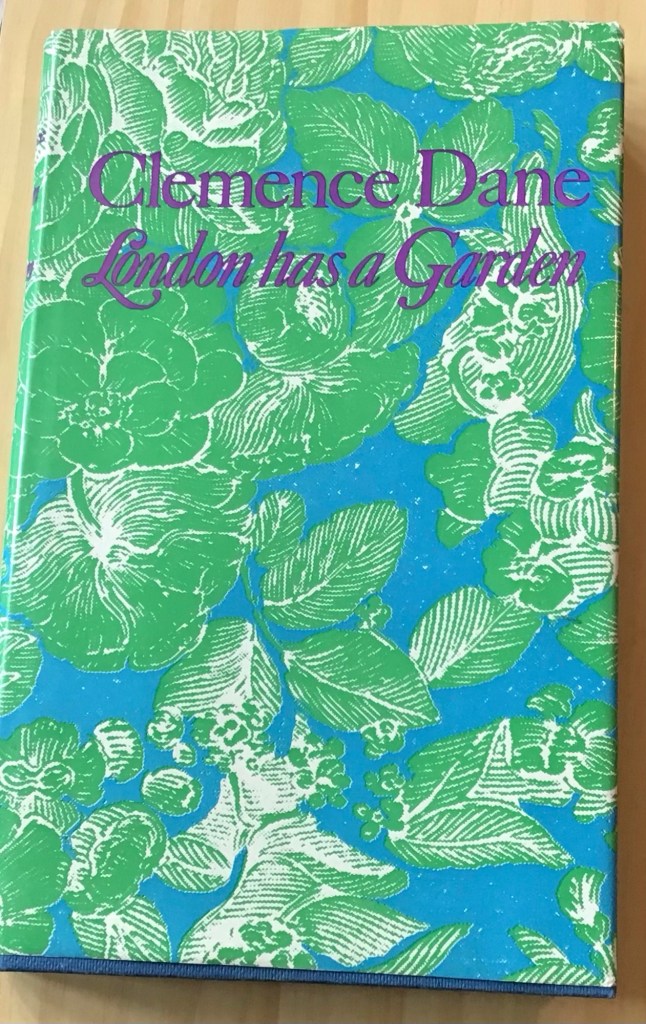
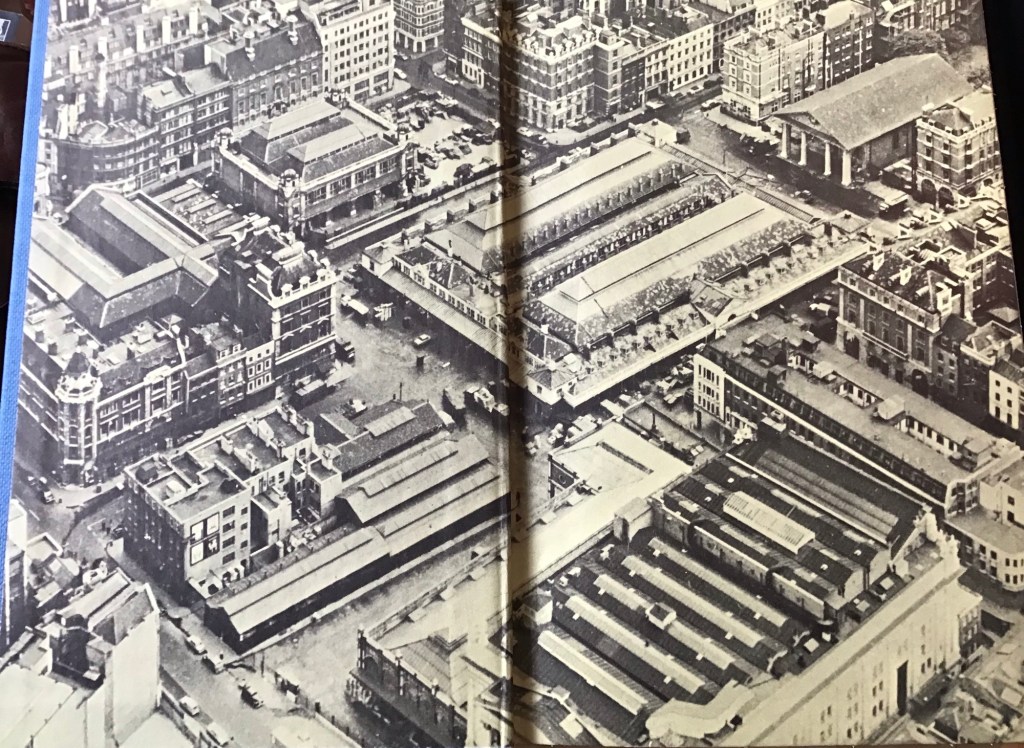
This book, a late offering from Dane’s career dating from the year before her death in 1965, narrates through history, literature, geography and personal story the history of Covent Garden. Many of Dane’s interests flow into this story – London, literature, the theatre, Shakespeare. Covent Garden was also for many years her home and this colours and personalises this lovely book. This copy is the 1974 reprint and has a short introductory paragraph by Noel Coward who spoke of Dane’s “great knowledge and deep love of every stone and street of the Garden.”
Coward also remarked on the topicality of the reprint at a time when there was discussion and concern about the preservation of Covent Garden and its buildings. In fact, protection for the buildings was established in 1973.
The strength of the book draws from Dane’s life intertwined with theatrical performance in all its forms, including as a passionate audience member. Anecdotes from theatrical history and Dane’s own experience fill this book.
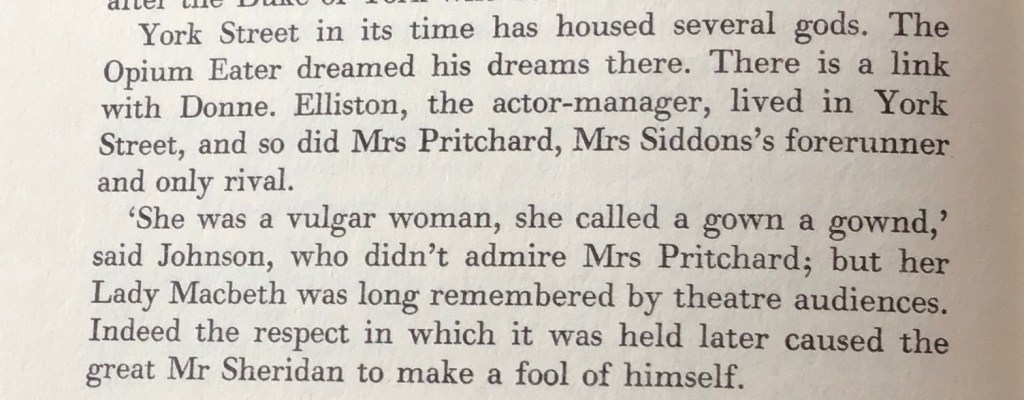
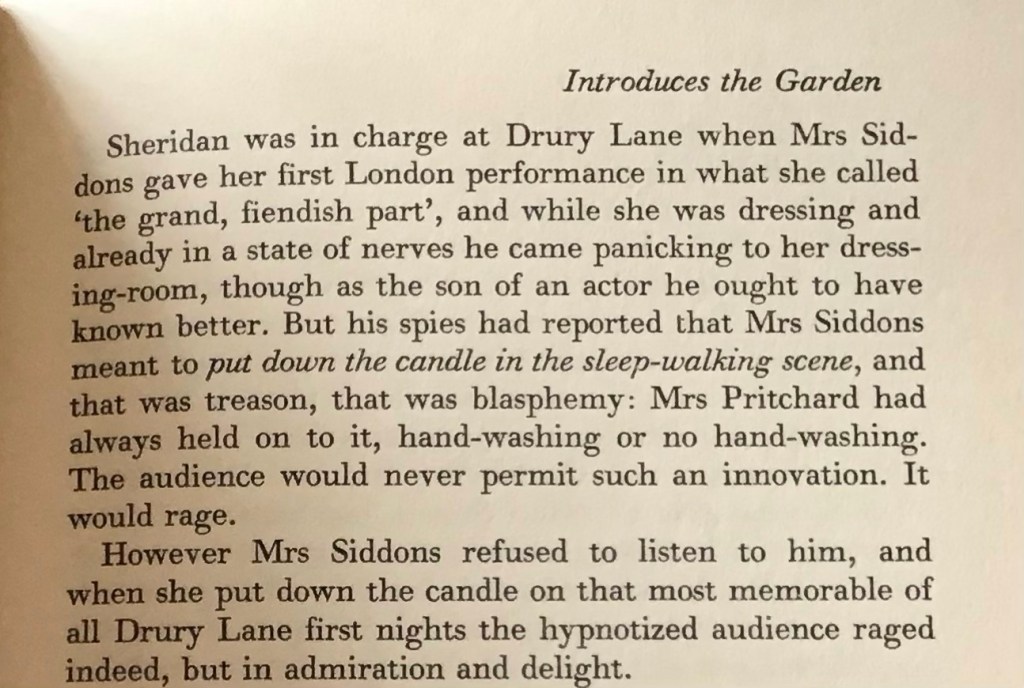
Some of these stories are tiny but brilliant insights into theatre and how it changes and evolves. I love this story of the actor Hannah Pritchard (1711-1768) and Sarah Siddons (1755-1831) and their respective performances as Lady Macbeth.
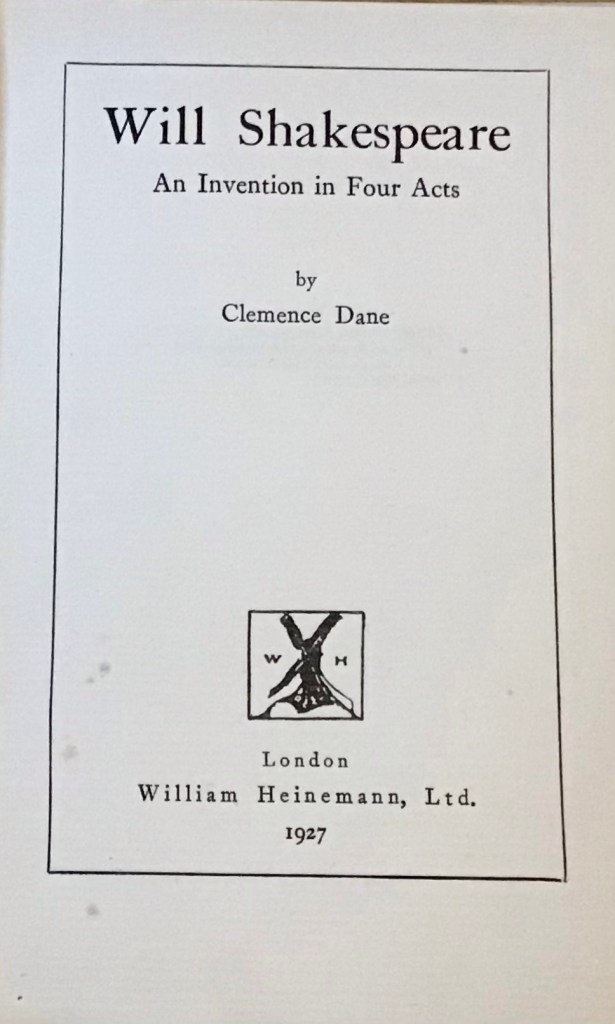
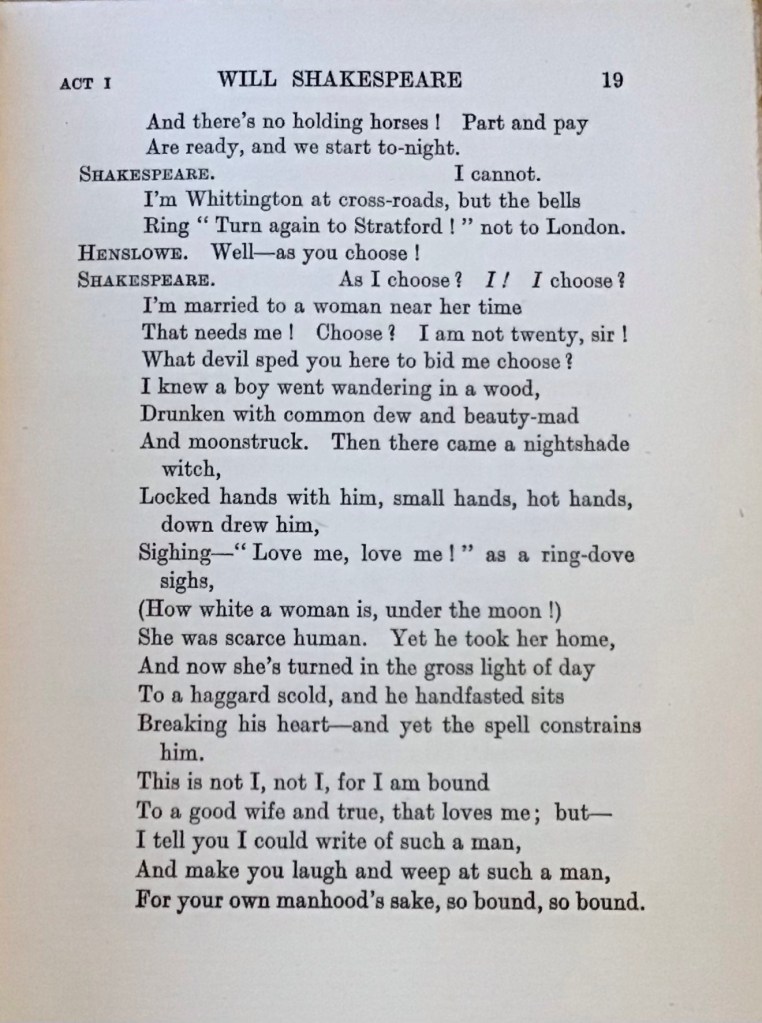
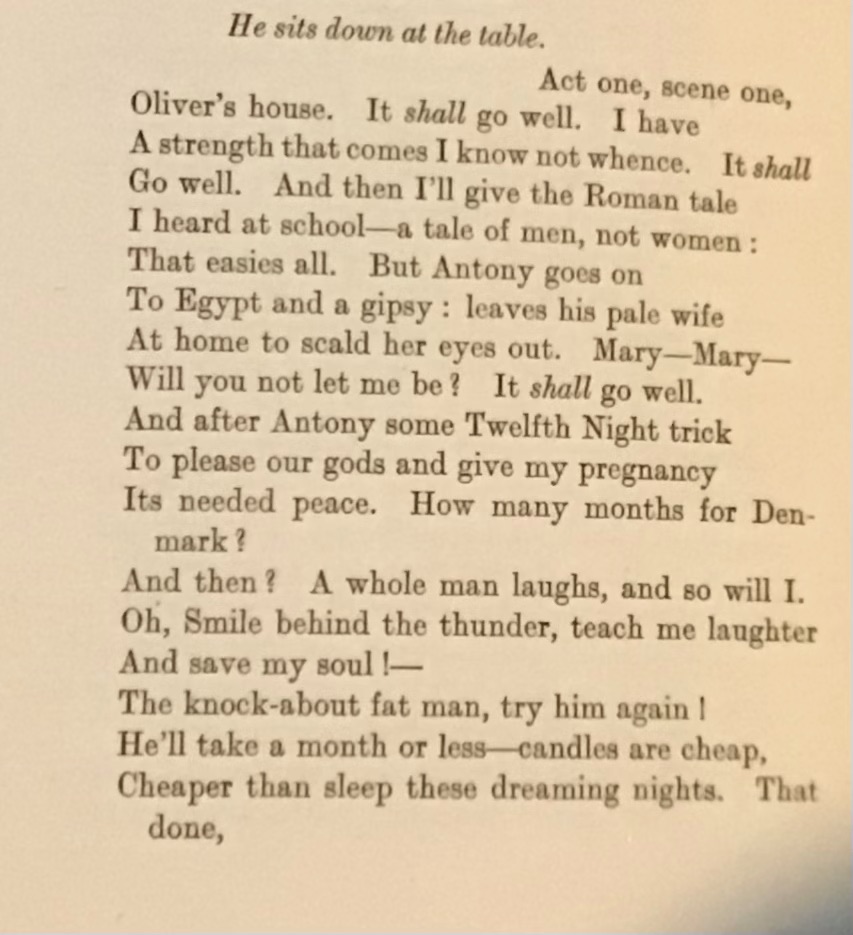
Returning again to Clemence Dane, I have chosen her biographical play about William Shakespeare written between January 1920 and April 1921. Dane’s play was first produced in November 1921 (of which more below). The play returns to the great contradiction that continues to fascinate – Shakespeare, the domestic and public man of Stratford and Shakespeare, writer, Londoner, man of the theatre and court.
All is True?
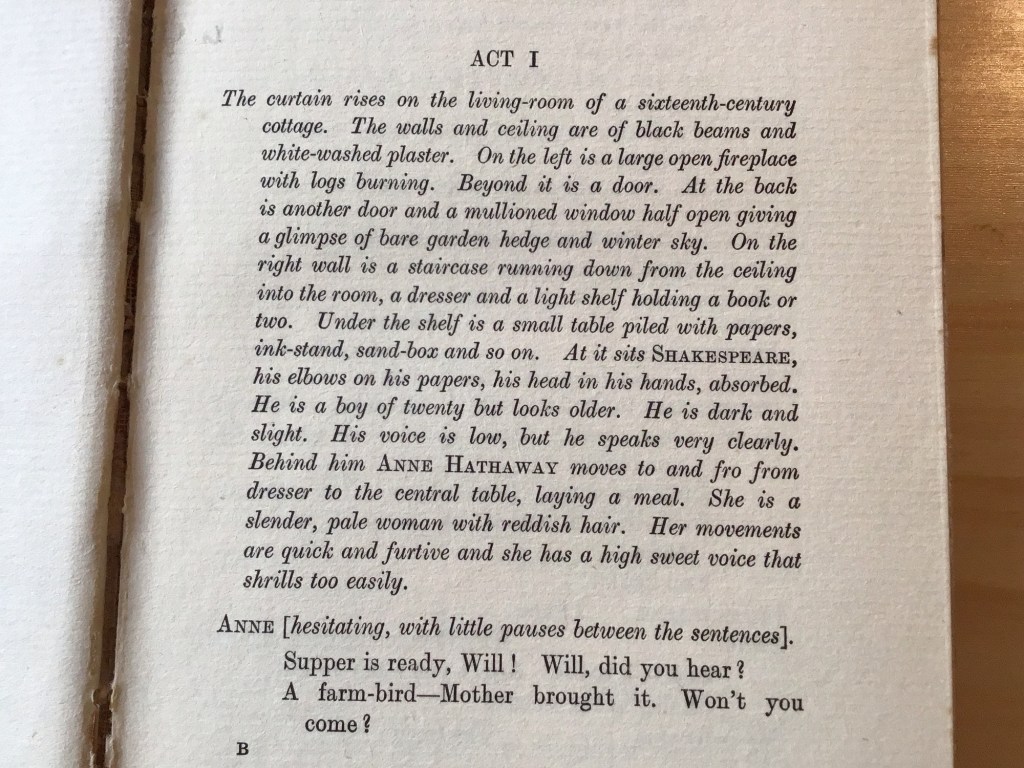
The play begins in Stratford with the young Shakespeare at home wrangling and uneasy with his wife. We are offered an unhappy Shakespeare with his wife literally blocking his light..
‘Sweetheart, you stay the light.’
The household is disturbed by the arrival of Anne’s mother who has met a traveller on the way, the player Henslowe, come to persuade Shakespeare to London. Shakespeare protests he cannot leave the expectant Anne
Shakespeare refuses Henslowe but then falls into talk with Anne only to find her confused and contradictory about the possible due date of the child and Shakespeare believes himself trapped by deception into marriage and leaves with Henslowe.
Once Shakespeare in London he and the players enter the orbit of Elizabeth I portrayed here as extraordinary and fierce and there Shakespeare meets lady-in waiting Mary Fitton. The real Mary Fitton, seen at one time as the possible Dark Lady of the Sonnets, had a number of affairs including one with William Herbert, after Earl of Pembroke. Here in the play, she is initially disdainful as Shakespeare comes to Elizabeth, describing him as ‘the lesser man’ to Marlowe but then as a potential diversion.
‘So Pembroke goes to Ireland! Ay, and comes back, old winter! I can wait – Shakespeare! Will Shakespeare! O charity – I wish it were Marlowe!’
But from then on brilliant and sparkling dialogue between Queen Wasp and King Drone brings them into love and a vision that will lead Shakespeare to ‘Romeo and Juliet’. But after a performance of ‘Romeo and Juliet’ Anne’s mother arrives to tell Shakespeare that not only was a baby born but the child, Shakespeare’s son is desperately ill. Shakespeare finds himself torn between the two worlds and can only reflect on the future as work ahead.
The first production of the play in 1921 was in a ten year period 1919-1929 of productions by the Reandean Company. The Reandean Company was founded in 1919 by Basil Dean (1888-1978) actor, writer and producer and businessman Alec Rea. In the First World War Dean had been a pioneer in organised entertainment for the troops moving to the War Office in 1917. In the Second World War he was to be the director of ENSA. The Reandean produced a number of works including ‘The Constant Nymph’ in 1926. Dane’s play had Philip Merivale as Shakespeare and Claude Rains and Marlowe and Flora Robson as one the shadows of Act I Queen Margaret.
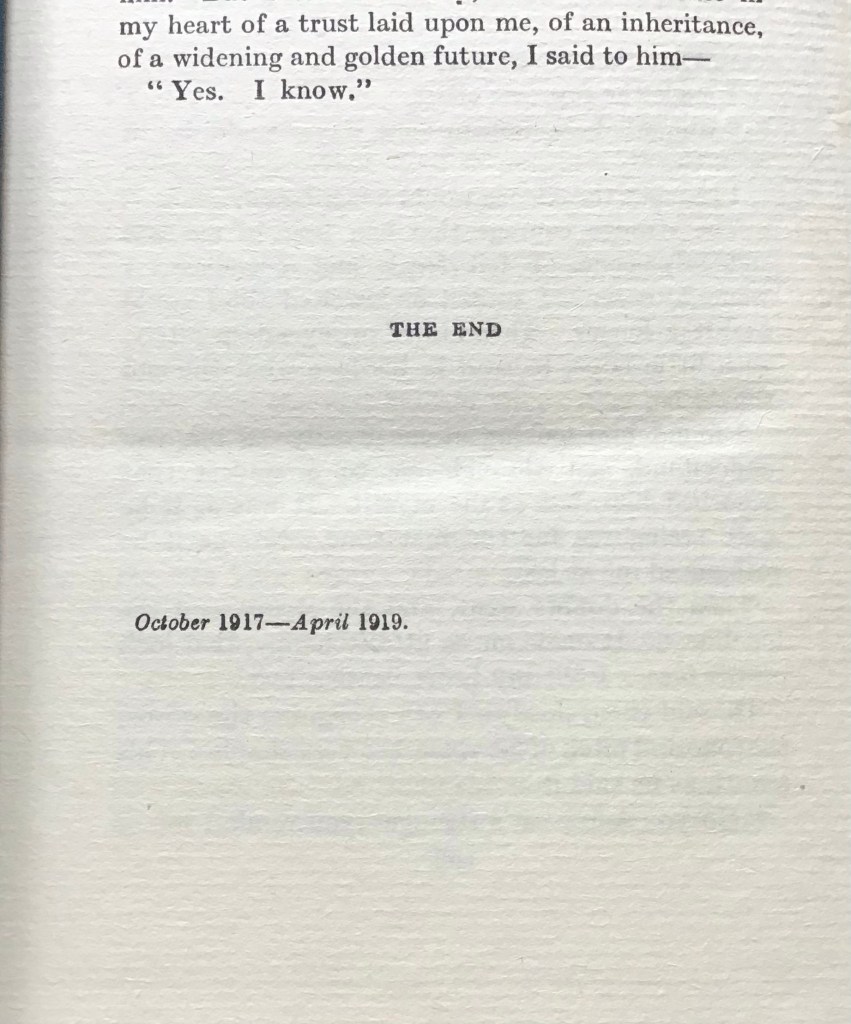
In my previous blog on Clemence Dane and her novel of the theatre of 1931 ‘Broome Stages’ I had intended to blog about some other books published in the early 1930s but Dane proved so interesting that this post is about an earlier novel of her ‘Legend’ written between 1917 and 1919 and published in 1919.
The date is both significant and not. I think it may explain the supernatural elements of the book especially the appearance of an apparition of the central character whose life and character has been the whole substance of the book. An interest in Spritualism and a longing for connection in the last years of the First World War may well have played a part here.
But in many other ways the novel has a very modern feel. It’s short, my 1928 edition has 198 pages and has no subdivisions or chapters. This gives the book a growing intensity as there is no break in the rising and tightening atmosphere. It’s also about celebrity, the rise of sudden success and all it brings with it and about literary biography and the idea of legacy.
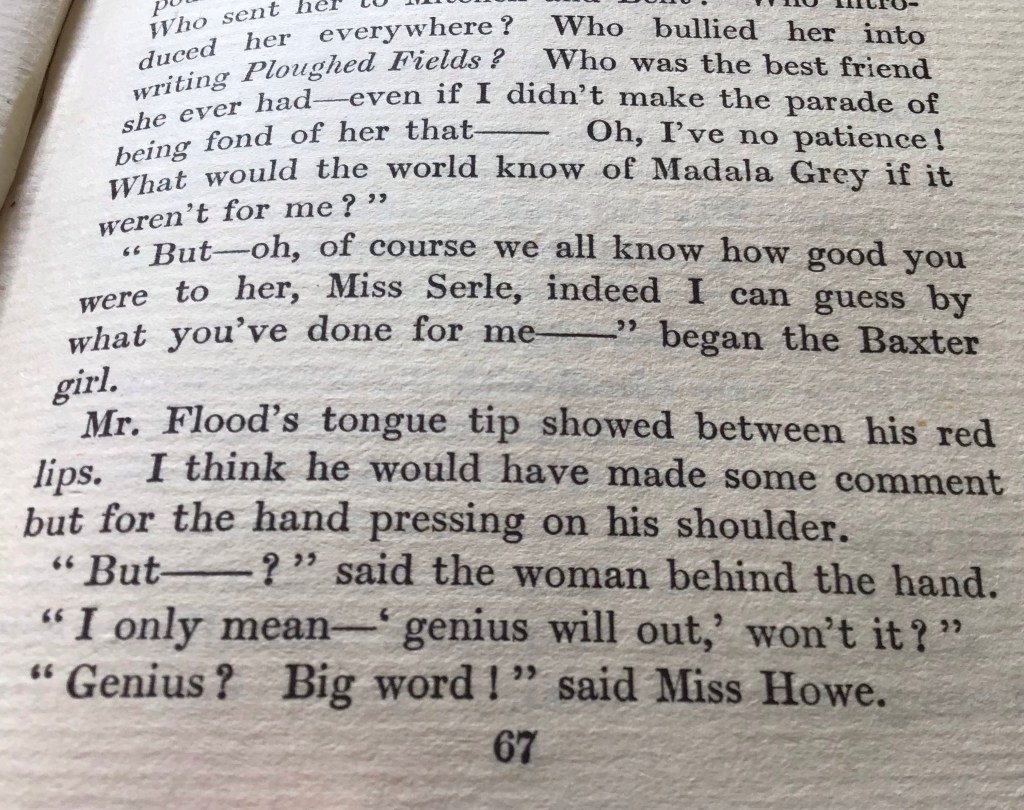
The novel is an account of two hours at a literary at home held by a biographer Anita Serle and is narrated by her 18 year cousin employed as her secretary.
Madala Grey is the subject, the obsession and the idea of all those present though she is not present. She has written a runaway bestseller of a first book and a more questionable second. She has married and is about to give birth. Is she the discovery and product of literary hostess Anita Serle who is writing her biography as Serle insists? Would she have succeeded regardless? Are biographies the truth or just a truth?
This wonderful frontispiece by Rex Whistler sets the tone for a marvellous novel by the important inter-war feminist writer Clemence Dane. Clemence Dane was the pseudonym of Winifred Ashton CBE (1888-1965). Ashton had a successful and varied career in writing beginning with the novel ‘Regiment of Women’ (1914) and ending with a great favourite of mine – a non-fiction work ‘London has a Garden’ in 1964. Highlights in between include the highly successful play of 1921 ‘A Bill of Divorcement’ which went on to be filmed three times and the play of 1949 ‘Marriage Lines.’ Ashton collaborated with writer Helen Simpson on several successful crime novels beginning with ‘Enter Sir John’ in 1928. She had a successful period as a screenwriter and was the recipient of an Academy Award.
But back to the Broomes. Broome stages was the work of a year and is a big novel in all senses of the word. It was the work of a year as Dane makes clear…
A good year’s work
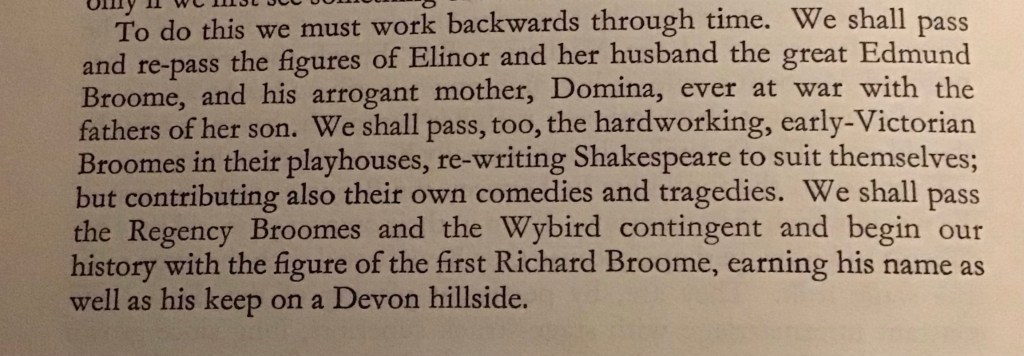
‘Broome Stages’ is a long but highly readable novel from 1931 which follows the fortunes of a great theatrical family over a period of two centuries. What makes it stand out to me is how it captures the emotionally charged, obsessional world who make their professional lives in the world of the theatre.
The novel begins with the birth of the first of the dynasty Richard Broome born in 1715.
The acting story begins with the young boy Dick Broome encounters a crowd unexpectedly round a local tithe barn. He climbs a tree, climbs onto the roof and then literally falls into Fairyland when he falls and ends up in the midst of the strolling players.
We follow Broome’s descendants then through the establishment of a great theatrical dynasty reaching its heights in the nineteenth century with a clutch of London theatres, successful careers in the United States and concludes with the theatrical family facing up to the future challenges posed by the cinema.
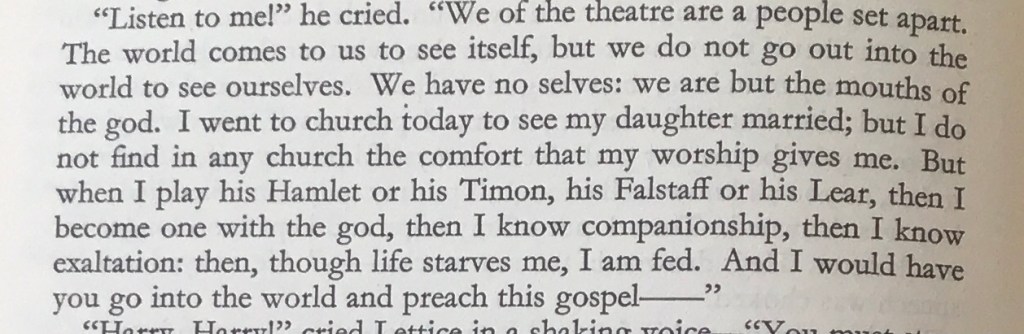
The book captures the world of the theatre vividly but its great strength is capturing the emotional world of the actor, the nature and shades of the obsession to perform.
The nature of the obsession
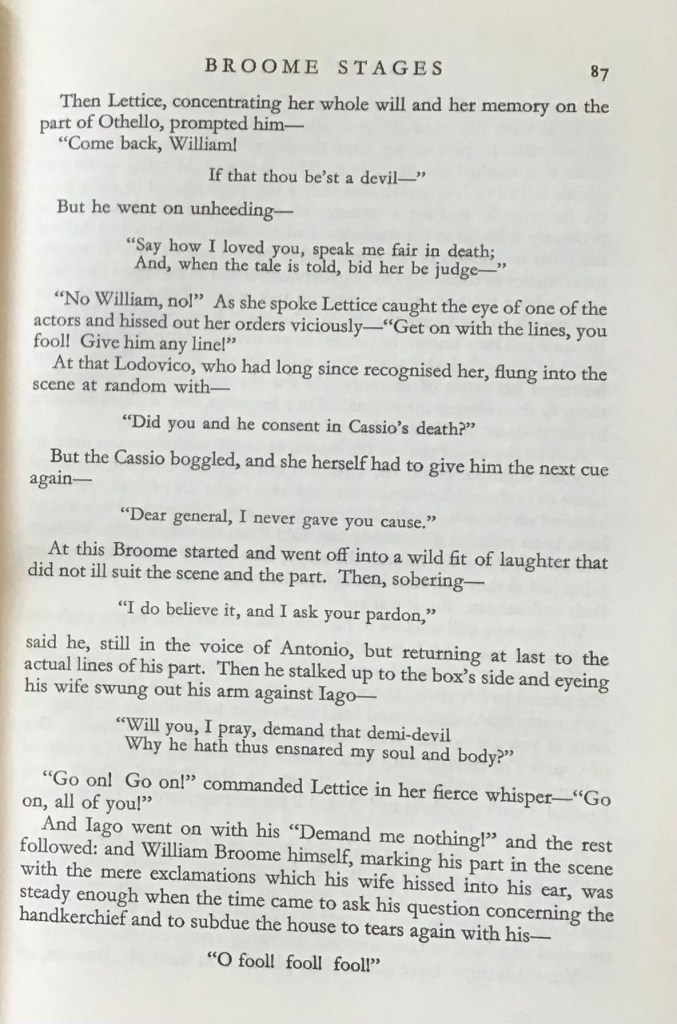
A key moment in the novel captures the great Victorian actor William Broome suddenly at the moment when his customary trance-like performance is interrupted by a surge in the audience and suddenly and shockingly finds himself surrounded by the audience. His estranged wife tries to recover him and his performance.
A wonderful book
I’ll leave the last words to the reviewer in the News Chronicle on July 20th 1931, the novel’s publication day…
‘According to the end-paper the book took exactly one year to write. Ridiculous! It is the work of a life-time. It’s actual period of production simply means that Miss Clemence Dane locked her door on the world, went into retreat for 12 months, rolled up her sleeves, and delivered her mind of its load…Let me say straightway, in positive, unmistakeable words, that this work is mellow, mature and magnificently successful. Compared with it any half-dozen ordinarily reputable novels dwindle to the stature of mere runts.’
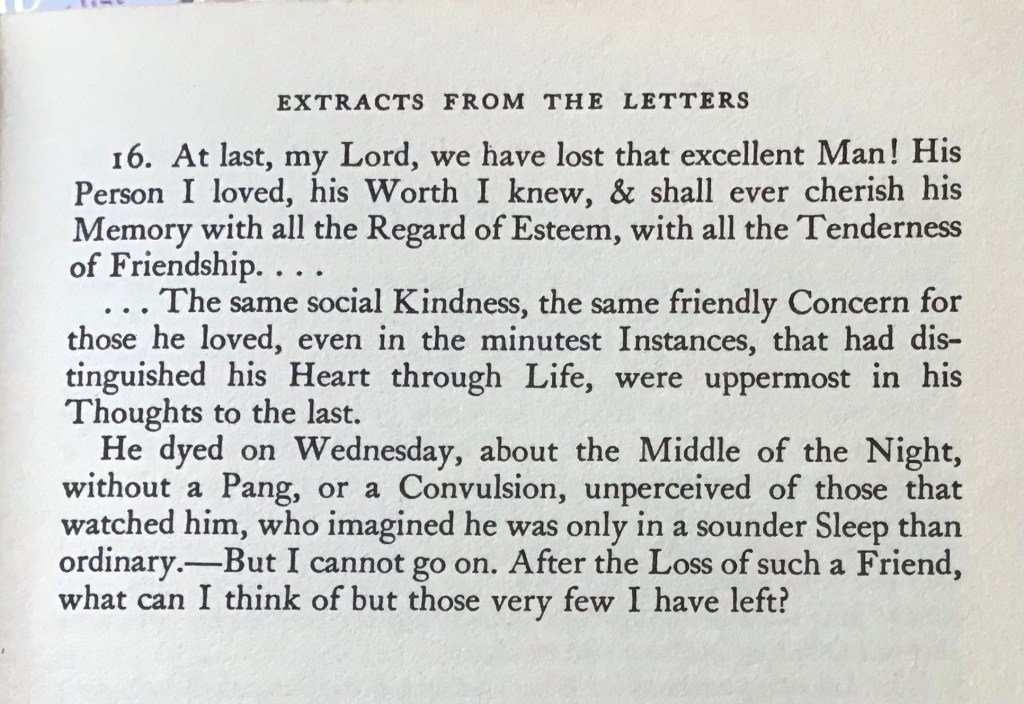
Pope died on May 30th 1744 and the news was sent to the Earl of Orrery by David Mallet in the letter above.
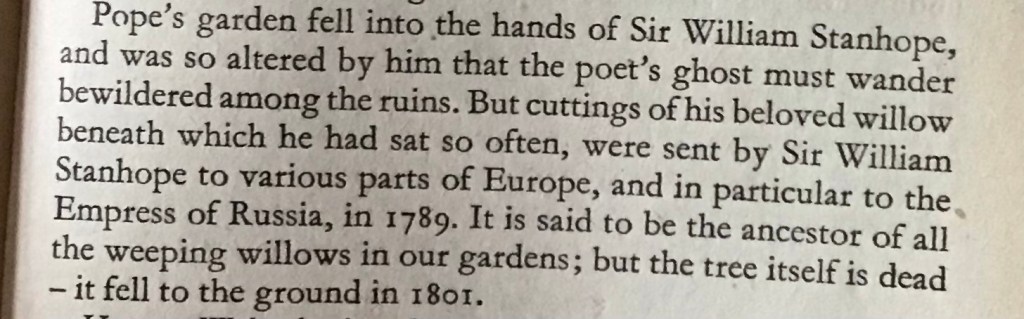
At the end of a year reading Pope’s works and thinking about his life I chose this extract to finish it off because I came away from the reading full of affection for the man and great admiration for his work. I wasn’t expecting it especially because from the very start the contradictions within Pope were more than clear. While he was a kind, loyal and generous he could be cruel and capricious and quick to anger.
Most importantly, it gave me pause to reflect on what it must have been to have lived a life dominated by illness and pain, especially in the eighteenth century.
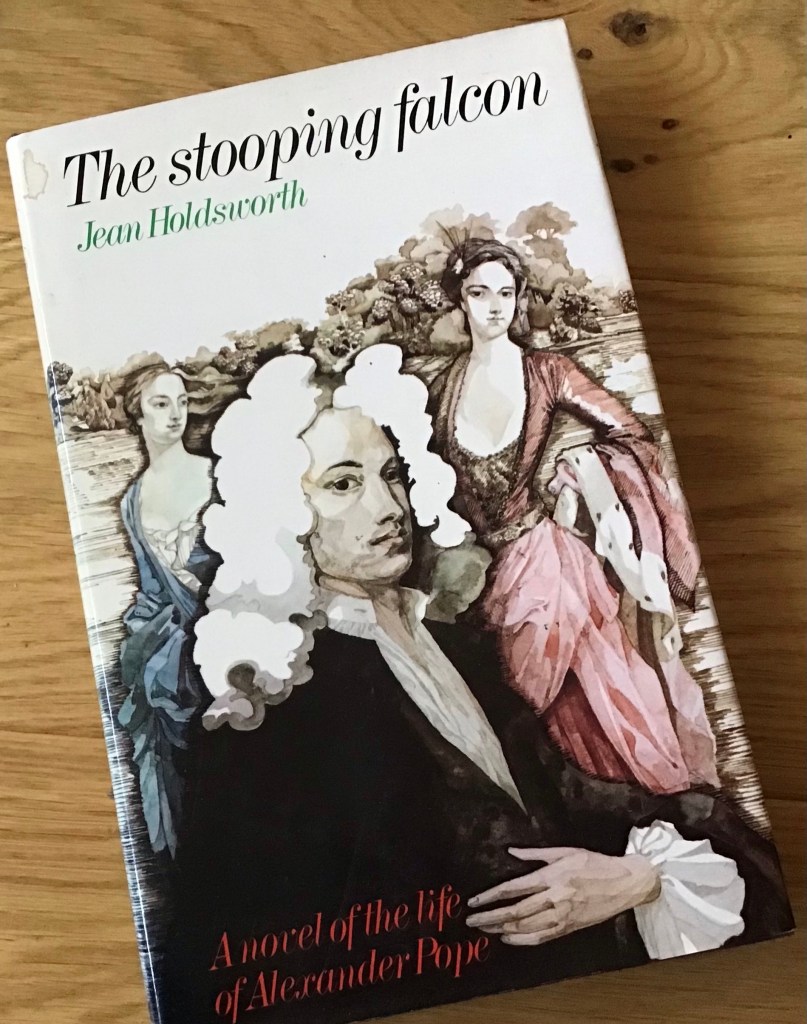
Jean Holdsworth’s novel published in 1977 highlights the contradiction of which readers of Pope become increasingly aware the longer they read Pope’s work and reflect on his life. His character is elusive seeming to alternate between kindness, warmth and generosity to his friends and vituperative and vengeful unkindness to his enemies. All this exists against the background of his persistent ill-health and extended periods of pain.
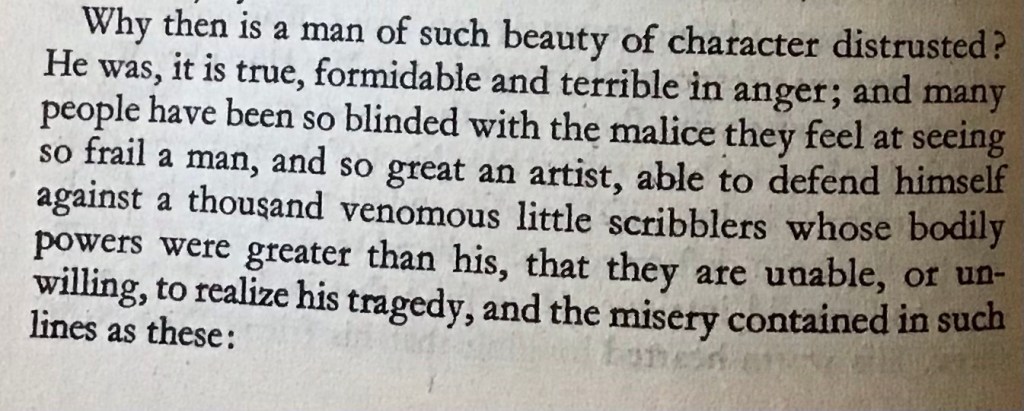
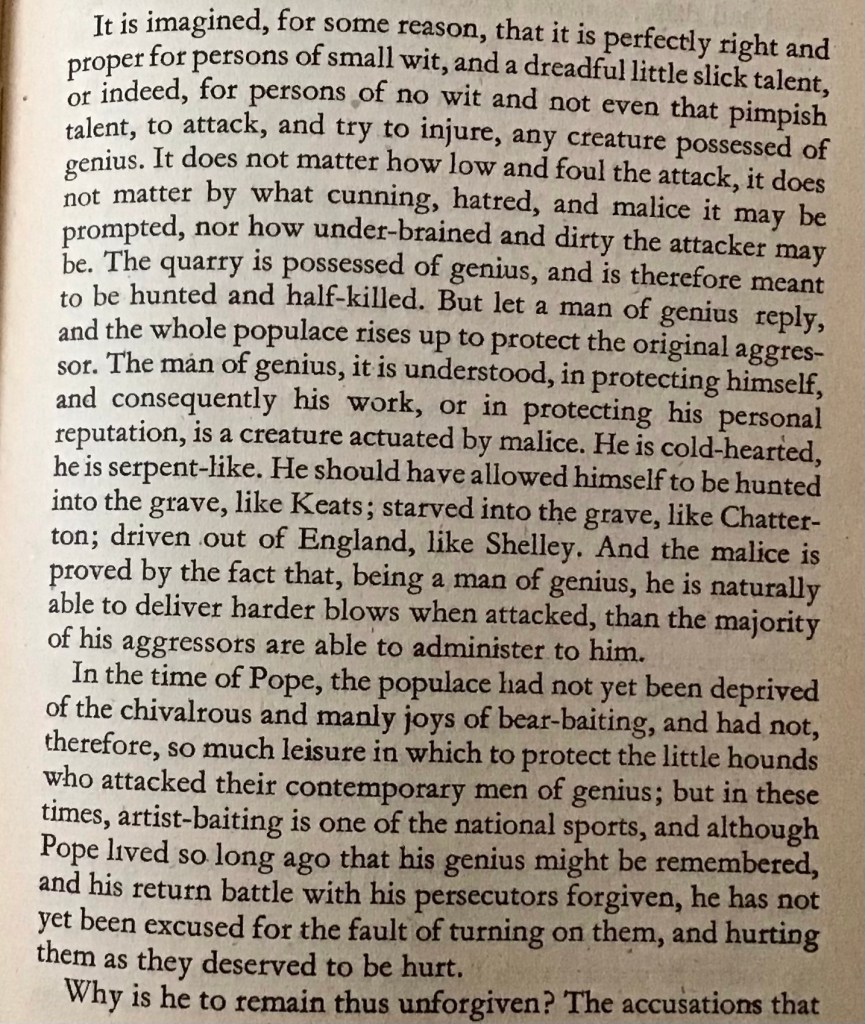
Commentators and biographers saw different facets again in his character. It’s no surprise perhaps that Pope’s character was strongly defended by Edith Sitwell in her 1930 biography. Youthful illness and unhappiness had marked her experience strongly and made her naturally sympathetic to Pope and all he endured.
I feel your pain.
For Sitwell, Pope was a writer above all with no further justification required.
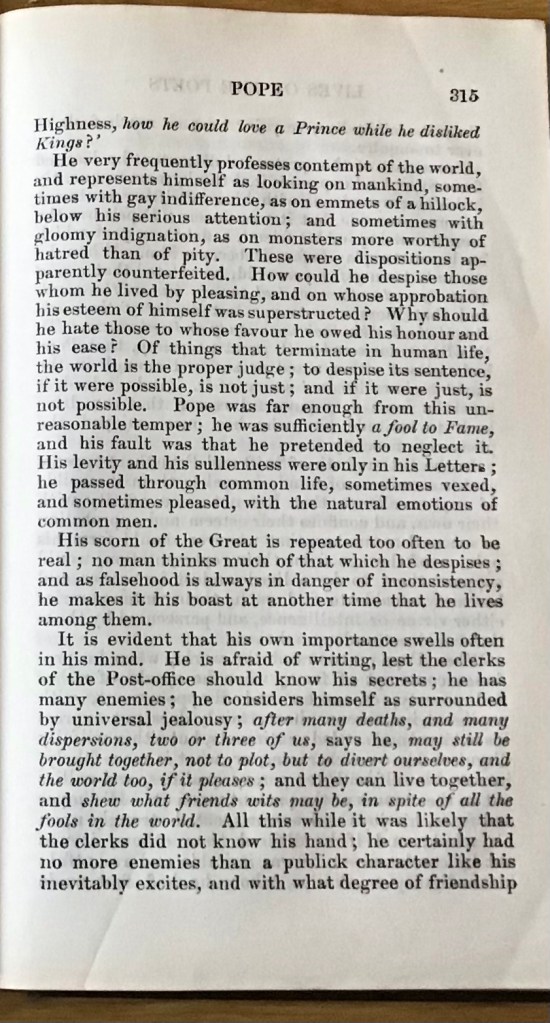
Johnson in his ‘Lives of the Poets’ saw the contradictions but was savage in delineating what he saw as Pope’s vanity and insincerity.
But in the end, I feel, the work forgives and validates.










 The Solitary Reader