2004 saw the release of Michael Gondry’s sci-fi/romance film ‘Eternal Sunshine of the Spotless Mind.’ The film tells the story of Joel and Clementine (Jim Carrey and Kate Winslet) who undergo a mind erasure procedure to erase all memories of their relationship after its end.
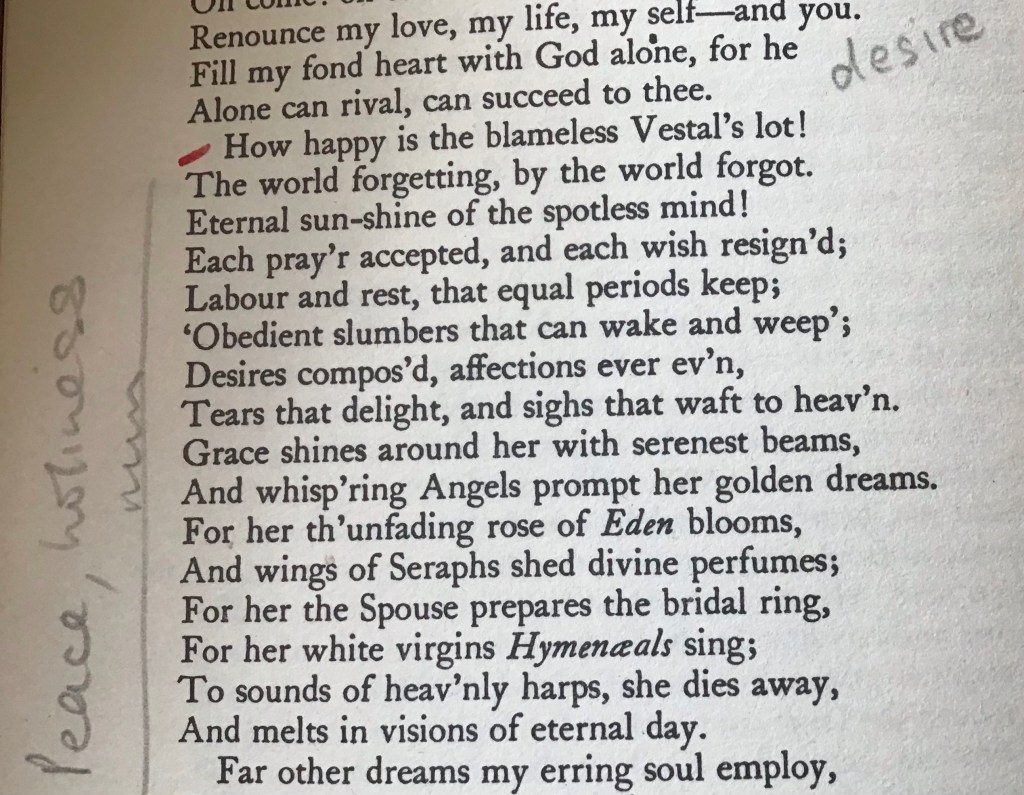
The title is from Pope and a very apt quotation it is. It occurs in a passage from Pope’s 1717 poem ‘Eloisa to Abelard’ – a passage where Eloisa longs for, idealises the life of the nun as a kind of perfect oblivion. She longs too for a deep acceptance of the religious life which must she believes leads to peace.
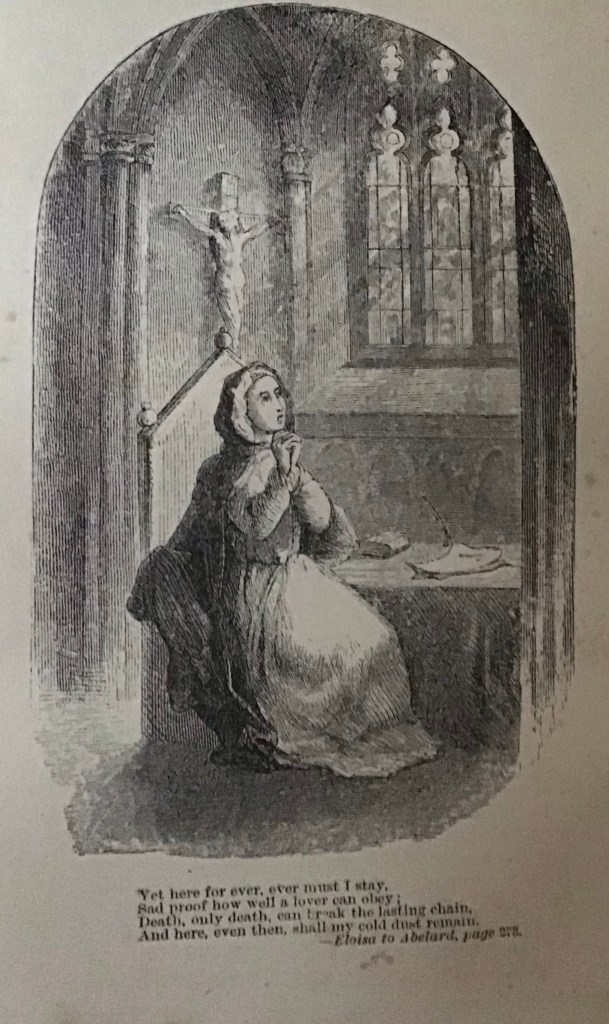
It is too, I suppose, a poem which longs for forgetting. Wanting to forget and to remember.
Pope’s poem is a reworking of the twelfth century lives of theologian Peter Abelard and his lover Heloise. The story had a long history and imaginative hold already by the time Pope chose to retell it. The love affair and illicit marriage of Abelard and Heloise, their forced separation, brutal attack on Abelard leaving him castrated and the two entering the religious life.
Pope’s poem begins long after the events told above. He calls his poem ‘Eloisa and Abelard’ unusually placing Eloisa at the front of the story and it is her voice we hear. Long after their love affair and separation Eloisa reads a letter giving Abelard’s account of their love and is plunged into a reflection into the love and despair of that time and the life that is now hers.
Pope’s last lines of the poem addressed to any future bards who might wish to retell or add to the story ends with the line,
‘He best can paint them who shall feel them most.’
This seems to have been seen as a challenge as a flurry of poems were to appear over the next few years retelling the story, mostly this time from the point of view of Abelard.

 The Solitary Reader